How to Sell Kurtis Online in India: Complete Guide
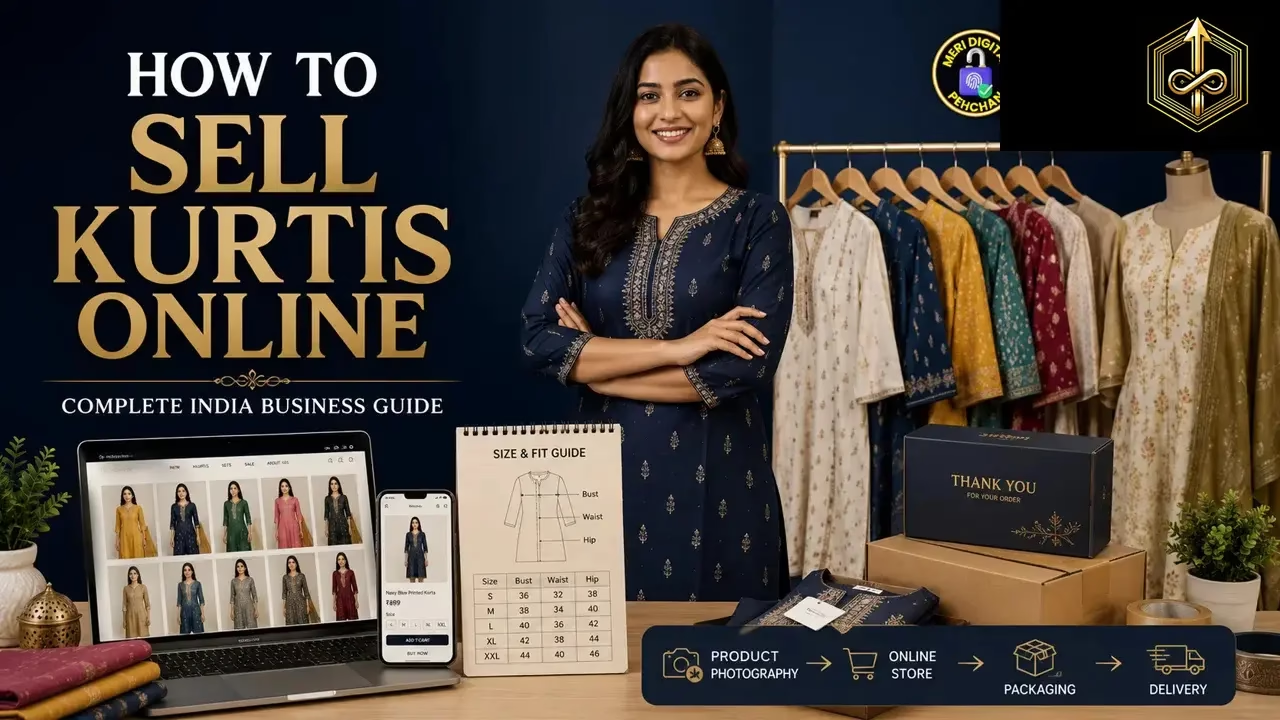
To sell kurtis online in India, build the business around fit confidence, product clarity and repeatable operations. The customer cannot touch the fabric, check the stitching, compare the kurti with her body or ask a salesperson to bring another size. Your photographs, measurements, descriptions, website, WhatsApp process and policies must replace that missing physical experience.
The online kurti category can appear simple because the product is familiar, but it contains difficult operational variables: size consistency, fabric behaviour, colour accuracy, set contents, supplier variation, returns, COD risk and constant price comparison. A sustainable business needs more than attractive designs and daily social-media posts.
Direct answer: Choose a specific kurti buyer and use case, launch a focused assortment with healthy delivered-order contribution, create product-specific measurements and fit notes, produce a complete gallery and movement video, build a mobile-friendly product page and checkout, attract qualified traffic through search, content, creators and ads, use WhatsApp for assisted fit and styling, and improve the collection from delivery, return and repeat-purchase evidence.
Choose the Kurti Business Model
The marketing and operational plan depends on how the product is created and sold.
Common models
- Manufacturer or private label: Controls pattern, fabric, production and branding.
- Curated retailer: Sources finished kurtis from multiple suppliers.
- Wholesaler-to-consumer: Sells standardised inventory at volume.
- Designer or limited collection: Uses distinctive design, small batches or made-to-order production.
- Local boutique going online: Uses existing store, customers and stock as a foundation.
- Marketplace-first seller: Focuses on marketplace demand, listing quality and operations.
- Social-commerce seller: Uses Instagram, Facebook and WhatsApp for discovery and assisted selling.
Clarify whether the business designs, manufactures, curates or resells. Each can be valuable, but the promise must be truthful. Do not create a false artisan or manufacturing story for a sourced product.
Choose the initial online objective
Examples include selling ready stock nationally, launching one category, increasing store customer repeat purchase, testing private-label demand, clearing ageing stock or building a premium brand. The objective determines assortment, content, channel and metrics.
Define the Buyer, Occasion and Style
“Women’s kurtis” is not a market position. Define a context that controls the product and presentation.
Buyer dimensions
- Life stage and daily environment
- Occasion: office, college, daily wear, festive, wedding, travel or gifting
- Silhouette preference: straight, A-line, anarkali, short, long, relaxed or fitted
- Style: minimal, traditional, contemporary, statement or modest
- Comfort and fabric preferences
- Size and fit concerns
- Expected price and service
- Delivery urgency
- Buying platform
- Repeat need
Examples
| Buyer | Need | Product implication | Marketing implication |
|---|---|---|---|
| Working professional | Comfortable, polished outfits for work and events | Reliable fit, practical fabric, pockets and coordinated sets | Office styling, movement, care and repeat wardrobe |
| Festive buyer | Complete photogenic look | Embroidery, dupatta, finish and occasion colour | Complete look, detail, evening light and jewellery |
| Comfort-first customer | Easy daily dressing | Breathable fabric, relaxed fit and simple care | Fit, washing, movement and multi-buy |
| Plus-size buyer | Dependable fit and flattering construction | Dedicated patterns, measurements and fit testing | Diverse model context and honest fit education |
Use actual business evidence
Review the products customers try, return, exchange and buy again. Record fit questions and complaints. Buyer clarity should improve from evidence, not only a planning exercise.
Position the Kurti Brand
Positioning helps the buyer understand why your collection deserves attention.
Possible territories
- Premium workwear kurtis
- Complete festive kurta sets
- Comfort-first cotton everyday wear
- Contemporary modest silhouettes
- Inclusive fit and specialised sizing
- Regional craft and print curation
- Travel-friendly wrinkle-conscious sets
- Affordable coordinated looks
- Limited designer capsules
Create one internal statement
For [specific buyer] who needs [outcome], our kurti collection provides , differentiated by [real advantage], supported by [proof].

Use the statement to approve products, photography, website copy, creator partnerships and ads. A random product that conflicts with the position may generate short-term revenue but weaken brand recognition.
Implementation System for How to Sell Kurtis Online in India: Complete Guide
An online kurti sales system for Indian boutiques, manufacturers and clothing brands with owned inventory should be treated as an operating system, not a collection of isolated tactics. The commercial objective is to help the right kurti buyer choose a suitable style and size while protecting delivered-order contribution. That requires alignment between the promise that creates the enquiry, the product evidence available to the customer, the person or automation that responds, the transaction route and the post-purchase experience.
Begin with a baseline rather than assumptions. Review actual product pages, recent conversations, orders, cancellations, returns and support cases. Separate facts from opinions. If the business cannot connect an enquiry to a delivered order, improve the record before increasing traffic. If the same question appears repeatedly, correct the website or product data instead of permanently adding manual work.
Define the reader and the decision in one sentence. For example: “An existing kurti buyer is deciding whether this garment will fit for office wear and arrive before a stated date.” This is more useful than a broad label such as “women interested in fashion.” It tells the business what information, evidence and fulfilment confidence must be available.
Create a written standard that the owner, marketing team, sales team and fulfilment team can all use. The standard should explain what may be promised, which facts must be verified, where the customer should pay, how consent is recorded, who owns an exception and which outcomes are reviewed every week.
Eight-Part Readiness Scorecard
Score each area from one to five and write evidence beside the score. A number without evidence is decoration. Fix the lowest critical area before adding more campaigns.
1. A defined wearer, occasion and fit preference
Check whether a defined wearer, occasion and fit preference is complete, current and easy for both the customer and team to find. Test it using a real mobile buying situation rather than the editor preview. Record who owns updates and what triggers a recheck. If this information changes by product, variant, location or date, the response must verify the correct version before it is shared.
2. Product-specific garment measurements
Check whether product-specific garment measurements is complete, current and easy for both the customer and team to find. Test it using a real mobile buying situation rather than the editor preview. Record who owns updates and what triggers a recheck. If this information changes by product, variant, location or date, the response must verify the correct version before it is shared.
3. Model measurements, size worn and fit note
Check whether model measurements, size worn and fit note is complete, current and easy for both the customer and team to find. Test it using a real mobile buying situation rather than the editor preview. Record who owns updates and what triggers a recheck. If this information changes by product, variant, location or date, the response must verify the correct version before it is shared.
4. Fabric, lining, stretch and transparency details
Check whether fabric, lining, stretch and transparency details is complete, current and easy for both the customer and team to find. Test it using a real mobile buying situation rather than the editor preview. Record who owns updates and what triggers a recheck. If this information changes by product, variant, location or date, the response must verify the correct version before it is shared.
5. Front, back, side, movement and close-up imagery
Check whether front, back, side, movement and close-up imagery is complete, current and easy for both the customer and team to find. Test it using a real mobile buying situation rather than the editor preview. Record who owns updates and what triggers a recheck. If this information changes by product, variant, location or date, the response must verify the correct version before it is shared.
6. Clear set contents, variants and stock
Check whether clear set contents, variants and stock is complete, current and easy for both the customer and team to find. Test it using a real mobile buying situation rather than the editor preview. Record who owns updates and what triggers a recheck. If this information changes by product, variant, location or date, the response must verify the correct version before it is shared.
7. Mobile size, delivery, exchange and checkout flow
Check whether mobile size, delivery, exchange and checkout flow is complete, current and easy for both the customer and team to find. Test it using a real mobile buying situation rather than the editor preview. Record who owns updates and what triggers a recheck. If this information changes by product, variant, location or date, the response must verify the correct version before it is shared.
8. Fit, quality, RTO and contribution reporting
Check whether fit, quality, RTO and contribution reporting is complete, current and easy for both the customer and team to find. Test it using a real mobile buying situation rather than the editor preview. Record who owns updates and what triggers a recheck. If this information changes by product, variant, location or date, the response must verify the correct version before it is shared.
Design the Full Customer Journey
Discovery
Identify the source, promise and expected intent. A product-specific advertisement, an organic tutorial, a store QR code and an existing-customer message create different expectations. Preserve that context so the first response feels continuous. Remove traffic sources that repeatedly attract people outside the intended product or price context.
Evaluation
Make the core facts visible on the product page and keep a verified evidence library for questions that need assistance. Recommend only after the customer’s stated requirement is understood. A long catalogue is not a recommendation; it transfers the decision work back to the buyer.
Decision
Resolve the real objection with a fact, demonstration, comparison or clear limitation. Do not manufacture urgency or guarantee an outcome the business cannot control. The next step should be singular and obvious: view the exact product, select a variant, use secure checkout or wait for specified evidence.
Transaction
Confirm product, variant, quantity, price, discount, shipping, address, payment status and policy in the order system. Never rely only on a payment screenshot. Provide an order number and explain what will happen next. If COD is offered, use the documented confirmation and risk process consistently.
Delivery and retention
Connect the sale to dispatch, delivery, return and service. Solve problems before sending promotions. Ask for marketing permission separately and state what the person can expect. Retention should be based on relevance, customer value and honest frequency, not on the size of a broadcast list.
Ninety-Day Operating Workflow
Days 1–15: Diagnose
Audit representative conversations and the product pages that produced them. Tag intent, first useful response, evidence supplied, checkout action and final outcome. Interview the sales and fulfilment team about information gaps. Correct dangerous inaccuracies immediately, particularly payment, material, stock, delivery and return statements.
Days 16–30: Build foundations
Standardise product identifiers, evidence folders, price and stock sources, policy modules, business hours and escalation contacts. Create contextual entry links. Define what automation may answer and where a person must take over. Place the most repeated factual answers on the website.
Days 31–60: Run a controlled pilot
Use a limited group of products and traffic sources. Train the team on one conversation framework and secure checkout route. Review open conversations daily. Compare promises with fulfilment. Do not increase traffic until stock, response ownership and order confirmation are reliable.
Days 61–90: Improve with outcomes
Analyse delivered conversion, contribution, sales time, returns, complaints and opt-outs by source and product. Improve the largest uncertainty. Remove unnecessary messages. Expand the assortment or campaign only when service quality and economics remain healthy.
Category-Specific Scenarios
Office straight-kurti page
Show shoulder, bust, waist, hip, sleeve, armhole and length measurements; model measurements and size; side slit, opacity, pocket and movement; then explain the intended ease and care.
Record the evidence used, the recommendation reason and the final outcome. Feed recurring uncertainty back into photography, descriptions, sizing, packaging or policy. The purpose is to make the next customer’s decision easier before the conversation begins.
Festive kurta-set launch
List every included piece, fabric and lining separately. Show full outfit and each component, embroidery close-ups, fastening, movement, packaging and realistic dispatch before the occasion.
Record the evidence used, the recommendation reason and the final outcome. Feed recurring uncertainty back into photography, descriptions, sizing, packaging or policy. The purpose is to make the next customer’s decision easier before the conversation begins.
Plus-size range
Design and grade products intentionally rather than merely extending labels. Use representative fit evidence, product-specific measurements and feedback by cut without making universal fit promises.
Record the evidence used, the recommendation reason and the final outcome. Feed recurring uncertainty back into photography, descriptions, sizing, packaging or policy. The purpose is to make the next customer’s decision easier before the conversation begins.
Measurement Model
Use definitions that connect marketing, sales and operations. Review the following by product and source; a blended site average can hide an expensive campaign or a high-return item.
- Qualified kurti visits
- Track sessions matching intended use, style, price and geography. Compare the trend with product, source and team context. Investigate material changes before scaling or cutting activity.
- Size-chart usage
- Track buyers opening or interacting with fit evidence. Compare the trend with product, source and team context. Investigate material changes before scaling or cutting activity.
- Size availability
- Track demand-relevant variants available on promoted products. Compare the trend with product, source and team context. Investigate material changes before scaling or cutting activity.
- Product-question themes
- Track fit, fabric, contents, colour and delivery uncertainties. Compare the trend with product, source and team context. Investigate material changes before scaling or cutting activity.
- Add-to-cart by variant
- Track product intent segmented by size and colour. Compare the trend with product, source and team context. Investigate material changes before scaling or cutting activity.
- Checkout completion
- Track verified orders from started checkouts. Compare the trend with product, source and team context. Investigate material changes before scaling or cutting activity.
- Assisted-fit conversion
- Track human-guided selections reaching delivery. Compare the trend with product, source and team context. Investigate material changes before scaling or cutting activity.
- Size exchange rate
- Track exchanges by SKU, size, cut and source. Compare the trend with product, source and team context. Investigate material changes before scaling or cutting activity.
- Fit-related return rate
- Track returns linked to measurement or expectation. Compare the trend with product, source and team context. Investigate material changes before scaling or cutting activity.
- Delivered-order rate
- Track placed orders completed successfully. Compare the trend with product, source and team context. Investigate material changes before scaling or cutting activity.
- Contribution by SKU and size
- Track net commercial value after fulfilment and returns. Compare the trend with product, source and team context. Investigate material changes before scaling or cutting activity.
- Repeat size confidence
- Track returning customers purchasing with less assistance. Compare the trend with product, source and team context. Investigate material changes before scaling or cutting activity.
Use delivered orders and contribution as the commercial base. Placed orders, link clicks and response speed remain diagnostic measures, but none proves healthy growth alone. Record reason codes for lost orders, cancellations, RTO, returns and complaints so a rate can lead to a corrective action.
Common Failure Modes and Corrective Actions
1. Depending on S-M-L labels
Labels vary across brands and cuts. Product measurements and the measurement method are essential.
Corrective action: Identify the source of truth, assign one owner, test the corrected journey on mobile and review the next relevant outcomes. Do not label the issue solved because the editor setting was changed.
2. Using pinned model samples without disclosure
Pins, clips or alteration change perceived fit and should be stated when present.
Corrective action: Identify the source of truth, assign one owner, test the corrected journey on mobile and review the next relevant outcomes. Do not label the issue solved because the editor setting was changed.
3. Hiding set contents
If trousers, dupatta, belt or accessories are shown but not included, make the distinction impossible to miss.
Corrective action: Identify the source of truth, assign one owner, test the corrected journey on mobile and review the next relevant outcomes. Do not label the issue solved because the editor setting was changed.
4. Treating fabric names as complete information
Explain feel, thickness, stretch, lining, transparency, shrinkage and care where relevant.
Corrective action: Identify the source of truth, assign one owner, test the corrected journey on mobile and review the next relevant outcomes. Do not label the issue solved because the editor setting was changed.
5. Showing only the front
Back, side, slit, sleeve, neckline, hem and movement views answer buying questions and reduce surprises.
Corrective action: Identify the source of truth, assign one owner, test the corrected journey on mobile and review the next relevant outcomes. Do not label the issue solved because the editor setting was changed.
6. Promoting unavailable sizes
Link campaigns and creator content to current size depth and pause or reroute demand honestly.
Corrective action: Identify the source of truth, assign one owner, test the corrected journey on mobile and review the next relevant outcomes. Do not label the issue solved because the editor setting was changed.
7. Generic occasion claims
Explain why the cut, fabric and details suit work, daily wear, travel or celebration rather than listing every occasion.
Corrective action: Identify the source of truth, assign one owner, test the corrected journey on mobile and review the next relevant outcomes. Do not label the issue solved because the editor setting was changed.
8. Guessing fit in WhatsApp
Use the actual product chart and a comparable garment measurement; state uncertainty instead of promising.
Corrective action: Identify the source of truth, assign one owner, test the corrected journey on mobile and review the next relevant outcomes. Do not label the issue solved because the editor setting was changed.
9. Ignoring batch variation
Record supplier, dye lot or production changes that affect measurements, colour or fabric.
Corrective action: Identify the source of truth, assign one owner, test the corrected journey on mobile and review the next relevant outcomes. Do not label the issue solved because the editor setting was changed.
10. Celebrating orders before delivery
Analyse cancellation, exchange, return, RTO and contribution by SKU, size and source.
Corrective action: Identify the source of truth, assign one owner, test the corrected journey on mobile and review the next relevant outcomes. Do not label the issue solved because the editor setting was changed.
Weekly Review Agenda
- List unresolved payment, delivery, return and complaint cases.
- Review stock, price, policy and evidence changes.
- Compare qualified conversations, placed orders and delivered orders by source.
- Inspect a random sample for accuracy, relevance, tone and permission.
- Identify the most repeated customer uncertainty.
- Assign one website, product, campaign or process correction.
- Review the previous correction against outcomes.
- Confirm team ownership and capacity before increasing traffic.
Keep the meeting focused on causes and decisions. Screenshots of message volume are not a substitute for customer and commercial outcomes. Document what changed, who owns it, the expected signal and the review date.
Fieldwork Prompts for the Owner and Team
- Which customer question consumes the most time, and why is the answer not already visible?
- Which source creates the highest proportion of suitable buyers rather than the most messages?
- Which products need human recommendation, and which should convert without chat?
- Where do agents obtain current stock, price, measurement and policy information?
- What evidence changes a doubtful customer’s decision without exaggeration?
- Which promise is hardest for fulfilment to keep?
- Why do confirmed orders cancel or fail delivery?
- Which return reason began as preventable pre-purchase uncertainty?
- How much sales time is used per delivered order?
- Which customers have clearly asked for future promotional messages?
- When does automation hand off to a named person?
- What would make the next 100 conversations more accurate, not merely faster?
Extended Frequently Asked Questions
How should kurti sizes be presented?
Publish product-specific garment measurements, explain how they were taken, add model context and describe intended fit.
Document the chosen rule for the business, train the team and check it against current platform and legal requirements. Review it when products, staffing, policies or technology change.
How many product photos are needed?
Use enough to show full front, back, side, movement, fabric, construction, fit and set contents without repetition.
Document the chosen rule for the business, train the team and check it against current platform and legal requirements. Review it when products, staffing, policies or technology change.
What if measurements vary slightly?
Set a realistic manufacturing tolerance, quality-control process and disclosure rather than pretending every piece is identical.
Document the chosen rule for the business, train the team and check it against current platform and legal requirements. Review it when products, staffing, policies or technology change.
Should I offer COD?
Model confirmation, RTO, cash cycle and customer preference, then state the policy clearly.
Document the chosen rule for the business, train the team and check it against current platform and legal requirements. Review it when products, staffing, policies or technology change.
How can fit returns be reduced?
Improve pattern consistency, measurements, model context, fit notes, assistance and reason-code analysis.
Document the chosen rule for the business, train the team and check it against current platform and legal requirements. Review it when products, staffing, policies or technology change.
What content can rank organically?
Useful size, fit, fabric, occasion, styling, care and buying guidance connected to relevant collections.
Document the chosen rule for the business, train the team and check it against current platform and legal requirements. Review it when products, staffing, policies or technology change.
Should I sell on marketplaces or my website?
Use channels according to reach, control, economics and customer ownership; maintain accurate product truth everywhere.
Document the chosen rule for the business, train the team and check it against current platform and legal requirements. Review it when products, staffing, policies or technology change.
What makes a kurti brand premium?
Consistent product standard, fit, presentation, service and fulfilment—not price or adjectives alone.
Document the chosen rule for the business, train the team and check it against current platform and legal requirements. Review it when products, staffing, policies or technology change.
Implementation Checklist
- Define the intended buyer, product and decision.
- Publish accurate price, stock, specifications and policies.
- Prepare a defined wearer, occasion and fit preference, product-specific garment measurements, model measurements, size worn and fit note, fabric, lining, stretch and transparency details.
- Create source- and product-specific entry links.
- Assign one owner and an escalation route.
- Use secure product and checkout pages.
- Separate order service from marketing permission.
- Connect conversations to delivery and returns.
- Measure sales labour and contribution.
- Turn repeated questions into website improvements.
- Audit accuracy and tone every week.
- Scale only after the complete journey is reliable.
Build the Right Assortment
An assortment should provide meaningful choice without overwhelming the buyer or operations.
Assortment dimensions
- Core silhouettes
- Size range and depth
- Fabric families
- Colour balance
- Occasion and season
- Price architecture
- Singles versus sets
- Evergreen versus limited
- Hero versus supporting products
Product role classification
- Hero: Communicates the brand.
- Acquisition: Accessible first purchase.
- Contribution: Produces healthy order value.
- Attachment: Bottom, dupatta, layer or accessory.
- Retention: Creates repeat need.
- Seasonal: Fits a demand window.
Launch focused
Start with a collection that can be fully photographed, measured and stocked. Twenty complete products are more useful than two hundred incomplete listings.
Plan size depth
Do not allocate identical quantity to every size without evidence. Use offline sales, historical data, waitlists and returns. Maintain enough depth in the sizes promoted through advertising.
Control Sourcing, Production and Quality
Online scale magnifies quality inconsistency. A sample may photograph well while later units vary in measurements, fabric, print or stitching.
Supplier or production checklist
- Approved fabric and shade
- Pattern and measurement tolerance
- Stitching and seam standard
- Embroidery, print or embellishment placement
- Lining and transparency
- Button, zip and closure quality
- Shrinkage or care information
- Batch identification
- Defect allowance and replacement
- Lead time and restock reliability
Pre-dispatch quality control
- Correct SKU, size and colour
- Measurement spot check where necessary
- Stains, tears, pulls and loose threads
- Stitching and closures
- All set components
- Care label and packaging
- Order match
Do not scale an unstable SKU
If one product repeatedly creates size or quality complaints, pause promotion and fix the pattern, supplier or listing. More traffic will increase damage.
Calculate Pricing and Contribution
Contribution per delivered order = Net selling price − garment cost − finishing or alteration − packaging − payment cost − forward shipping − expected return or RTO cost − variable fulfilment − variable discount
Include hidden variables
- Photography and content
- Size exchanges
- Reverse logistics
- Damaged returned stock
- Marketplace or platform cost
- Customer acquisition
- Quality-control labour
- Packaging
Price architecture
Create entry, core and premium ranges based on actual product differences. Do not use fake reference prices. Explain why a set, fabric or craft costs more through evidence.
Calculate by delivered order
Placed revenue can overstate performance. Include cancellations, returns and RTO when setting acquisition budgets.
Create SKU, Stock and Product Data
Product master
- Product name and SKU
- Category and collection
- Colour and size variants
- Live stock
- Fabric and lining
- Fit and silhouette
- Garment measurements
- Model information
- Set contents
- Care and variation
- Package weight and dimensions
- Cost and price
- Images and video
- Approved claims
- Return reasons
Naming convention
Use a distinctive name plus a clear descriptor, such as “Aarohi Teal Embroidered Cotton Kurta Set”. The title should help the customer and search engine understand the item.
Stock synchronisation
Keep website, marketplace, store and WhatsApp stock consistent. Define reservation and cancellation rules. Overselling damages trust.
Build a Reliable Size and Fit System
Generic S, M and L labels are insufficient when patterns and suppliers vary.
Use product measurements
- Bust
- Waist
- Hip
- Shoulder
- Kurti length
- Sleeve length and opening
- Armhole
- Bottom waist, hip and length
- Dupatta dimensions
Clarify whether measurements are garment measurements or recommended body ranges. Explain tolerance and how to compare with an existing garment.
Fit notes
- Fitted, regular, relaxed or oversized
- Stretch or non-stretch
- Side slits
- Lining and ease
- Body-shape considerations stated respectfully
- Model height, measurements and size worn
Build size assistance
Use an accessible chart, short guide and WhatsApp process. Do not guarantee fit from a label. Help the customer compare measurements and explain exchange terms.
Analyse fit data
Track returns and exchanges by SKU, size and reason. If XL is repeatedly small, do not solve the issue only with customer messaging; inspect the pattern and production.
Create a Conversion-Focused Kurti Gallery
- Clean full-length hero
- Front view
- Back view
- Side view
- Three-quarter or movement
- Fabric close-up
- Craft or print detail
- Neckline, sleeve and closure
- What is included
- Model and fit reference
- Measurement frame
- Care and packaging
Prioritise information
Every image should add a new answer. Do not upload ten versions of the same pose. The first five images should establish full appearance, fit, back or side and an important detail.
Use colour accurately
Control lighting and white balance. Compare exports with the physical garment. State that screens vary, but do not use the disclaimer to excuse misleading colour.
Use the complete premium kurti presentation guide to improve lighting, styling, editing and product pages.
Use Product Video Properly
Product-page video sequence
- Stable full front
- Slow side and back turn
- Walking movement
- Fabric close-up
- Embroidery, print or closure
- Every included piece
- Model measurements and size
Keep video slow enough for evaluation. Discovery reels may be faster, but the product page should support a confident decision.
Show pockets, lining and transparency
Demonstrate features customers commonly ask about. Do not claim comfort or opacity without useful evidence.
Write Complete Product Descriptions
Structure
- Occasion and outcome
- Silhouette and design
- Fabric and lining
- Fit and measurements
- Components
- Craft or print
- Care
- Variation
- Dispatch and policy
Replace adjectives with facts
Instead of “premium soft fabric”, state the material, surface, weight, lining, drape and care that can be supported. Specific information communicates quality.
State exclusions
If jewellery, footwear or a styling belt is not included, say so. If the dupatta is used only for styling, do not create ambiguity.
Build a High-Converting Kurti Website
Homepage
- Clear buyer and position
- Hero collection
- Useful category navigation
- Brand proof
- Strategic products
- Visible policies and support
Collection pages
- Size, colour, occasion, fabric and price filters
- Consistent cards and images
- Price and availability
- Useful sorting
- Quick fit context where possible
Product pages
- Complete gallery and video
- Price, stock and variants
- Short summary
- Size chart and fit help
- Fabric, lining and measurements
- Model information
- Contents and care
- Delivery, exchange and return
- Genuine reviews
- Clear checkout
Mobile check
Test gallery, size chart, selection, cart and payment on real phones. Ensure sticky buttons do not cover information and the selected size persists.
Choose Selling Channels
| Channel | Useful for | Watch for |
|---|---|---|
| Marketplace | Existing category demand | Comparison, returns, costs and weak brand ownership |
| Instagram and WhatsApp | Visual discovery and assisted fit | Manual work and hidden information |
| Own website | Brand, organised catalogue and retention | Traffic and trust responsibility |
| Hybrid | Multiple roles | Inventory and pricing consistency |
Read How to Sell Clothes Online in India for the complete channel and operational framework.
Create a Kurti Content Engine
Education
- Size and measurement
- Fabric and care
- Silhouette and body context
- Occasion styling
- Colour pairing
- Wardrobe planning
Product evidence
- Full views and movement
- Fabric and craft
- Model and size
- Set contents
- Quality control
- Packaging
Brand
- Founder or design perspective
- Collection story
- Sourcing or production
- Behind-the-scenes decisions
- Customer questions
Commercial
- Launch
- Restock
- Complete look
- Best seller
- Genuine stock or deadline
Plan product shoots to create ecommerce images, video, reels, carousels, search images, WhatsApp assets and email creative.
Use SEO and Image Search
Topic clusters
- How to choose kurti size
- Kurti fabric and care
- Occasion and styling guides
- Kurta set comparisons
- Product photography
- Online kurti business marketing
Image SEO
- Original high-quality images
- Descriptive filenames
- Accurate alt text for each view
- Useful captions
- Relevant surrounding content
- Compressed supported format
- Explicit dimensions and stable URLs
“Model wearing a teal embroidered cotton kurta set in side view” is useful alt text. Repeating commercial keywords is not.
Use Social Media and Creators
Format roles
- Reels: movement and discovery
- Carousels: fit, details and comparison
- Stories: launches, questions and daily context
- Live: collection walkthrough
- Founder content: curation and trust
- Customer content: proof with permission
Creator selection
Choose creators whose audience, body context, style, location and credibility fit the buyer. Require size disclosure, full silhouette, movement, details and a clear link. Agree usage rights.
Measure useful outcomes
Track qualified visits, product engagement, checkout and delivered orders rather than views alone.
Run Meta Ads Responsibly
Readiness
- Buyer and message
- Hero product and stock
- Healthy contribution
- Complete page
- Working tracking and checkout
- Fulfilment capacity
- Creative testing plan
Creative themes
- Complete look
- Fit and comfort
- Fabric and craft
- Occasion
- Founder curation
- Customer proof
- Offer
Measure delivered contribution, returns and repeat quality. Use the clothing ads diagnosis guide.
Convert Enquiries on WhatsApp
- Capture product and source.
- Answer price and availability.
- Ask size, occasion or delivery only when useful.
- Recommend a small number of options.
- Share measurements, model, fabric, contents, delivery and policy.
- Resolve the real objection.
- Send direct checkout.
- Follow up with useful information.
- Record the outcome.
Use the complete WhatsApp enquiry-to-order guide.
Build Offers and Increase Order Value
- Kurta set rather than separate items
- Matching dupatta or bottom
- Jewellery or complete-look bundle
- Multi-buy on repeatable basics
- Free-shipping threshold
- Prepaid benefit
- Early access
Calculate contribution and use relevant recommendations. Do not force unrelated add-ons.
Fulfilment, Packaging and Customer Service
Order workflow
- Reserve correct SKU and size.
- Complete quality check.
- Verify all set pieces.
- Fold and protect according to fabric and craft.
- Confirm address and serviceability.
- Dispatch and share tracking.
- Support delivery and issue reporting.
Packaging
Protect the garment from moisture, crushing and embellishment damage. Include care and keep packaging consistent with price while controlling cost.
Customer service
Define ownership, response standard, exchange process and escalation. Do not make the customer repeat the issue to multiple people.
Reduce Returns and RTO
| Reason | Source | Fix |
|---|---|---|
| Size | Chart, pattern or advice | Product measurements and fit notes |
| Colour | Lighting or editing | Colour control and natural-light video |
| Fabric | Vague information | Composition, texture, movement and opacity |
| Missing component | Listing or packing | What-is-included frame and checklist |
| Quality | Supplier or QC | Batch and pre-dispatch control |
| COD RTO | Intent or details | Controlled eligibility and verification |
Build Repeat Purchase
- Accurate delivery
- Care and styling guidance
- Delivery check
- Review request
- Size and preference record
- Relevant collection recommendation
- Early access
- Issue resolution
- Permission-based communication
Use first-product and source cohorts to learn which customers return. Improve the next assortment from repeat behaviour.
Track the Right Metrics
- Qualified sessions
- Collection-to-product click rate
- Size-chart use
- Add-to-cart by SKU and size
- Checkout and purchase rate
- Enquiry-to-order rate
- Average order value
- Contribution per delivered order
- Cancellation, return and RTO
- Return reason by SKU and size
- Repeat purchase
- Customer acquisition cost
90-Day Launch Plan
Days 1–15: Foundation
- Buyer and position
- Assortment and economics
- Supplier and QC
- Product masters
- Policies
Days 16–35: Presentation
- Measure every product
- Produce galleries and video
- Write descriptions
- Optimise images
- Build packaging
Days 36–50: Ecommerce and sales
- Collections and pages
- Mobile checkout
- WhatsApp pipeline
- Team training
- Inventory connection
Days 51–70: Warm launch
- Content system
- Existing-customer launch
- Collect questions
- Fix friction
- Gather genuine proof
Days 71–90: Controlled acquisition
- Search, creators or ads
- Measure delivered economics
- Fix returns
- Build retention
- Plan next collection
Frequently Asked Questions
Can I start a kurti business from home?
Yes, if you can manage product data, sizes, stock, quality, payments, packaging, shipping, support and applicable legal or tax requirements. Start focused.
How many designs should I launch?
Enough to create coherent choice without weakening stock and presentation. There is no universal number.
Which kurti sizes should I stock?
Use evidence from your buyer, offline sales, waitlists and returns. Do not assume one universal size distribution.
Do I need models?
You need accurate fit and scale evidence. Models are useful when measurements and size worn are disclosed, but also include product measurements and detail views.
How do I reduce size returns?
Use product-specific garment measurements, fit notes, model context, comparison guidance and SKU-level return analysis.
Should I show prices on social media?
For standard products, transparent pricing helps serious buyers. Include size, fabric, contents and product link.
Should I offer COD?
Evaluate demand, verification, geography, order value and RTO cost. Use controlled eligibility if appropriate.
How much should I spend on ads?
Set the budget from contribution, acceptable acquisition cost, creative plan and fulfilment capacity. Avoid universal amounts.
Can supplier images be used?
Only with permission and when they accurately represent the product. Original images build stronger trust and differentiation.
How can I make kurtis look premium online?
Use accurate fit, controlled light, complete views, fabric and craft evidence, consistent editing, clear product information and a trustworthy website.
How do I rank kurti images in search?
Use original relevant images, descriptive filenames, accurate alt text, useful surrounding content, technical optimisation and strong pages. Rankings are not guaranteed.
What is the best platform?
Choose based on buyer behaviour, margin, brand control, operations and traffic ability. Many mature businesses use connected channels.
How do I build repeat customers?
Deliver accurately, record size and preferences, provide care and styling value, resolve issues and share relevant collections with permission.
Build Fit Confidence before Scaling Traffic
A kurti business grows online when the customer can understand the product and choose the correct size with confidence. Build assortment, data, presentation, website, sales and delivery as one system.
Build your Kurti Online Sales Engine
Meri Digital Pehchan helps kurti, clothing, saree, boutique and jewellery businesses build online brands and order-generation systems.