Digital Marketing Strategy for Fashion Boutiques in India: Complete Guide
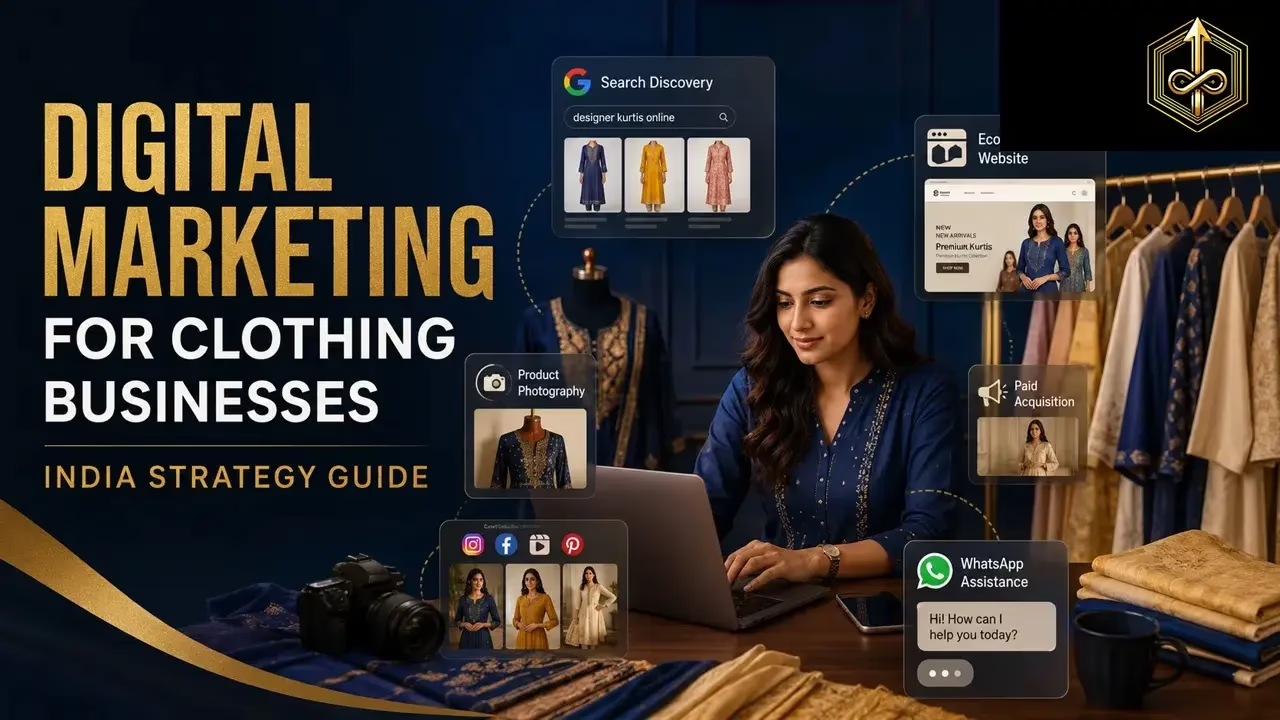
Digital Marketing Strategy for Fashion Boutiques in India: Complete Guide is designed for existing Indian product businesses that already own or control real inventory and want a durable commercial system rather than disconnected marketing activity. The goal is to attract the boutique’s most suitable buyer and turn curation, product knowledge and service into profitable delivered and repeat orders. This guide uses clothing, saree, boutique and jewellery examples while keeping the operating principles applicable to other legitimate product businesses.
Direct answer: Begin with one priority buyer and a commercially suitable product group. Make the product fully understandable online, build an owned mobile buying journey, assign a clear role to each acquisition channel, connect assisted sales to secure checkout, and improve from delivered-order contribution, return reasons and customer experience.
Long-form content alone does not create visibility or sales. Search engines and customers need a page that satisfies a distinct intent, demonstrates real subject knowledge, remains technically accessible and leads naturally to useful next steps. The business also needs inventory, fulfilment and service capable of keeping the promise. Treat every recommendation below as a hypothesis to validate against real customers and order records.
Define the Boutique’s Positioning Before Choosing Channels
Write a one-sentence positioning statement naming the priority buyer, wardrobe or occasion problem, product point of view and reason to trust the boutique. Replace labels such as “fashion for everyone” with an observable choice. Audit whether the current assortment, pricing, photography, store service and social feed support that choice. Positioning is a filter for product buying, content, partnerships and customer experience—not only a line in the profile.
Evidence to collect: Review a defined boutique buyer and wardrobe situation together with complete fit, fabric, styling and set-content evidence. Use a representative sample rather than one best or worst case. Segment by product, source, device or customer situation whenever the blended average would hide an important difference. Record the current baseline, the owner of the next action and the date on which the evidence will be checked again.
Practical decision: Choose one correction that the current team can complete and measure. State what customer behaviour or commercial outcome should change, what must not deteriorate and how long the observation needs to be. Do not increase traffic or catalogue complexity until the underlying product, page, process or capacity is reliable enough to serve the next customer accurately.
Turn Curation Into a Navigable Online Assortment
Build collections around decisions customers recognise: office rotation, lightweight festive dressing, modest occasion wear, easy-care travel, statement jewellery or a defined fabric edit. Keep enough compatible choice without overwhelming the buyer. Lead with items that have reliable size depth and margin. Explain why each product belongs in the edit, and link editorial styling to the exact sellable products.
Evidence to collect: Review a recognisable curation and merchandising point of view together with mobile collections, product pages and secure checkout. Use a representative sample rather than one best or worst case. Segment by product, source, device or customer situation whenever the blended average would hide an important difference. Record the current baseline, the owner of the next action and the date on which the evidence will be checked again.
Practical decision: Choose one correction that the current team can complete and measure. State what customer behaviour or commercial outcome should change, what must not deteriorate and how long the observation needs to be. Do not increase traffic or catalogue complexity until the underlying product, page, process or capacity is reliable enough to serve the next customer accurately.
Build a Boutique Product-Truth Standard
For every garment record SKU, price, garment measurements, measurement method, model context, fabric, lining, stretch, transparency, set contents, care, colour note, stock and dispatch. Capture front, back, side, movement and useful construction details. If the boutique sells sarees or jewellery, add the category-specific scale, drape, closure, material and care fields. One source of truth should feed website and staff replies.
Evidence to collect: Review accurate stock, size, price and product facts together with local, social, search and paid discovery mapped to intent. Use a representative sample rather than one best or worst case. Segment by product, source, device or customer situation whenever the blended average would hide an important difference. Record the current baseline, the owner of the next action and the date on which the evidence will be checked again.
Practical decision: Choose one correction that the current team can complete and measure. State what customer behaviour or commercial outcome should change, what must not deteriorate and how long the observation needs to be. Do not increase traffic or catalogue complexity until the underlying product, page, process or capacity is reliable enough to serve the next customer accurately.
Design a Local and Digital Discovery Mix
Map each channel to a job. Local search and a complete business profile serve nearby intent. Instagram and creator content demonstrate curation and styling. Search articles answer durable buying questions. Paid campaigns amplify validated products and messages. Store events, packaging and receipts can invite customers into permissioned digital continuity. Every source should land on a relevant page rather than an unexplained generic home screen.
Evidence to collect: Review complete fit, fabric, styling and set-content evidence together with structured WhatsApp assistance and customer permission. Use a representative sample rather than one best or worst case. Segment by product, source, device or customer situation whenever the blended average would hide an important difference. Record the current baseline, the owner of the next action and the date on which the evidence will be checked again.
Practical decision: Choose one correction that the current team can complete and measure. State what customer behaviour or commercial outcome should change, what must not deteriorate and how long the observation needs to be. Do not increase traffic or catalogue complexity until the underlying product, page, process or capacity is reliable enough to serve the next customer accurately.
Use Content to Help the Buyer Decide
Create content from real fitting-room, WhatsApp, return and styling questions. Useful topics include how a cut fits, how to compare garment measurements, what a fabric feels like, how to style one item repeatedly, what a set contains and when an occasion order must be placed. Pair inspiration with product truth. A reel that earns views but sends the wrong expectation is not successful boutique marketing.
Evidence to collect: Review mobile collections, product pages and secure checkout together with delivery, return, repeat and contribution reporting. Use a representative sample rather than one best or worst case. Segment by product, source, device or customer situation whenever the blended average would hide an important difference. Record the current baseline, the owner of the next action and the date on which the evidence will be checked again.
Practical decision: Choose one correction that the current team can complete and measure. State what customer behaviour or commercial outcome should change, what must not deteriorate and how long the observation needs to be. Do not increase traffic or catalogue complexity until the underlying product, page, process or capacity is reliable enough to serve the next customer accurately.
Make Personal Service Scalable Without Losing Humanity
Define what can be answered from the product page, what needs a short structured chat and what deserves an appointment. Give staff access to current facts and evidence. Ask only questions that change the recommendation. Record the chosen product, customer preference, promised next step and outcome. Use templates as factual modules, while keeping a named human responsible for judgement and exceptions.
Evidence to collect: Review local, social, search and paid discovery mapped to intent together with a defined boutique buyer and wardrobe situation. Use a representative sample rather than one best or worst case. Segment by product, source, device or customer situation whenever the blended average would hide an important difference. Record the current baseline, the owner of the next action and the date on which the evidence will be checked again.
Practical decision: Choose one correction that the current team can complete and measure. State what customer behaviour or commercial outcome should change, what must not deteriorate and how long the observation needs to be. Do not increase traffic or catalogue complexity until the underlying product, page, process or capacity is reliable enough to serve the next customer accurately.
Create a Mobile Conversion Journey
Test the home, collection, product, cart and checkout on a real phone. Make navigation readable and non-overlapping; keep product, price, variant and primary action clear; expose size, delivery and exchange information; and remove pop-ups that block evaluation. Use secure payment and provide an order number. The boutique’s visual personality should support product clarity rather than compete with it.
Evidence to collect: Review structured WhatsApp assistance and customer permission together with a recognisable curation and merchandising point of view. Use a representative sample rather than one best or worst case. Segment by product, source, device or customer situation whenever the blended average would hide an important difference. Record the current baseline, the owner of the next action and the date on which the evidence will be checked again.
Practical decision: Choose one correction that the current team can complete and measure. State what customer behaviour or commercial outcome should change, what must not deteriorate and how long the observation needs to be. Do not increase traffic or catalogue complexity until the underlying product, page, process or capacity is reliable enough to serve the next customer accurately.
Coordinate Stock, Fulfilment and Marketing
Marketing must know which products and sizes can be sold, replenished and dispatched. Reserve stock consistently across store and online orders. Set daily packing and service capacity. Communicate delays early. Review cancellation, exchange, RTO and returns by product and campaign. A launch is successful only when customers receive the product and experience that the content promised.
Evidence to collect: Review delivery, return, repeat and contribution reporting together with accurate stock, size, price and product facts. Use a representative sample rather than one best or worst case. Segment by product, source, device or customer situation whenever the blended average would hide an important difference. Record the current baseline, the owner of the next action and the date on which the evidence will be checked again.
Practical decision: Choose one correction that the current team can complete and measure. State what customer behaviour or commercial outcome should change, what must not deteriorate and how long the observation needs to be. Do not increase traffic or catalogue complexity until the underlying product, page, process or capacity is reliable enough to serve the next customer accurately.
Build Retention Around Relevance
After resolving the order, request feedback and marketing permission separately. Record broad preferences such as size confidence, category and occasion only when useful and appropriate. Send a small number of relevant launches, styling guides, care notes or restock messages. Do not turn every past enquiry into a broadcast target. Repeat trust grows from accurate first delivery and considerate communication.
Evidence to collect: Review a defined boutique buyer and wardrobe situation together with complete fit, fabric, styling and set-content evidence. Use a representative sample rather than one best or worst case. Segment by product, source, device or customer situation whenever the blended average would hide an important difference. Record the current baseline, the owner of the next action and the date on which the evidence will be checked again.
Practical decision: Choose one correction that the current team can complete and measure. State what customer behaviour or commercial outcome should change, what must not deteriorate and how long the observation needs to be. Do not increase traffic or catalogue complexity until the underlying product, page, process or capacity is reliable enough to serve the next customer accurately.
Run a 90-Day Boutique Growth Cycle
In month one, choose the position, audit customers and prepare a focused capsule. In month two, rebuild product evidence, mobile destinations, local discovery and a measured content rhythm. In month three, run controlled acquisition, review delivered contribution and correct the largest bottleneck. Expand only after stock, service, returns and cash remain stable. Document each decision so the system improves beyond the founder’s memory.
Evidence to collect: Review a recognisable curation and merchandising point of view together with mobile collections, product pages and secure checkout. Use a representative sample rather than one best or worst case. Segment by product, source, device or customer situation whenever the blended average would hide an important difference. Record the current baseline, the owner of the next action and the date on which the evidence will be checked again.
Practical decision: Choose one correction that the current team can complete and measure. State what customer behaviour or commercial outcome should change, what must not deteriorate and how long the observation needs to be. Do not increase traffic or catalogue complexity until the underlying product, page, process or capacity is reliable enough to serve the next customer accurately.
The Strategy Record to Maintain
Keep a working record with the selected buyer, products, excluded segments, promise, required evidence, channel roles, page destinations, stock and service limits, permissible acquisition cost, owners and review dates. This turns strategy into accountable operating choices. Update the record when product economics, platform conditions, customer questions, laws or operational capacity materially change.
For each experiment, write the hypothesis, primary outcome, guardrails, budget, duration and decision rule before launch. Afterward, preserve the result even when it is disappointing. Reliable negative evidence prevents the business from repeating expensive ideas and is more valuable than a screenshot chosen to make activity look successful.
Continue Through the Online Sales Engine
Use these related Meri Digital Pehchan guides to implement the next part of the system:
- Digital marketing for a clothing business
- How to sell kurtis online in India
- How to sell clothes online in India
- WhatsApp selling strategy
Implementation System for Digital Marketing Strategy for Fashion Boutiques in India: Complete Guide
A digital marketing system for established Indian fashion boutiques with real clothing, saree or accessory inventory should be treated as an operating system, not a collection of isolated tactics. The commercial objective is to attract the boutique’s most suitable buyer and turn curation, product knowledge and service into profitable delivered and repeat orders. That requires alignment between the promise that creates the enquiry, the product evidence available to the customer, the person or automation that responds, the transaction route and the post-purchase experience.
Begin with a baseline rather than assumptions. Review actual product pages, recent conversations, orders, cancellations, returns and support cases. Separate facts from opinions. If the business cannot connect an enquiry to a delivered order, improve the record before increasing traffic. If the same question appears repeatedly, correct the website or product data instead of permanently adding manual work.
Define the reader and the decision in one sentence. For example: “An existing kurti buyer is deciding whether this garment will fit for office wear and arrive before a stated date.” This is more useful than a broad label such as “women interested in fashion.” It tells the business what information, evidence and fulfilment confidence must be available.
Create a written standard that the owner, marketing team, sales team and fulfilment team can all use. The standard should explain what may be promised, which facts must be verified, where the customer should pay, how consent is recorded, who owns an exception and which outcomes are reviewed every week.
Eight-Part Readiness Scorecard
Score each area from one to five and write evidence beside the score. A number without evidence is decoration. Fix the lowest critical area before adding more campaigns.
1. A defined boutique buyer and wardrobe situation
Check whether a defined boutique buyer and wardrobe situation is complete, current and easy for both the customer and team to find. Test it using a real mobile buying situation rather than the editor preview. Record who owns updates and what triggers a recheck. If this information changes by product, variant, location or date, the response must verify the correct version before it is shared.
2. A recognisable curation and merchandising point of view
Check whether a recognisable curation and merchandising point of view is complete, current and easy for both the customer and team to find. Test it using a real mobile buying situation rather than the editor preview. Record who owns updates and what triggers a recheck. If this information changes by product, variant, location or date, the response must verify the correct version before it is shared.
3. Accurate stock, size, price and product facts
Check whether accurate stock, size, price and product facts is complete, current and easy for both the customer and team to find. Test it using a real mobile buying situation rather than the editor preview. Record who owns updates and what triggers a recheck. If this information changes by product, variant, location or date, the response must verify the correct version before it is shared.
4. Complete fit, fabric, styling and set-content evidence
Check whether complete fit, fabric, styling and set-content evidence is complete, current and easy for both the customer and team to find. Test it using a real mobile buying situation rather than the editor preview. Record who owns updates and what triggers a recheck. If this information changes by product, variant, location or date, the response must verify the correct version before it is shared.
5. Mobile collections, product pages and secure checkout
Check whether mobile collections, product pages and secure checkout is complete, current and easy for both the customer and team to find. Test it using a real mobile buying situation rather than the editor preview. Record who owns updates and what triggers a recheck. If this information changes by product, variant, location or date, the response must verify the correct version before it is shared.
6. Local, social, search and paid discovery mapped to intent
Check whether local, social, search and paid discovery mapped to intent is complete, current and easy for both the customer and team to find. Test it using a real mobile buying situation rather than the editor preview. Record who owns updates and what triggers a recheck. If this information changes by product, variant, location or date, the response must verify the correct version before it is shared.
7. Structured WhatsApp assistance and customer permission
Check whether structured WhatsApp assistance and customer permission is complete, current and easy for both the customer and team to find. Test it using a real mobile buying situation rather than the editor preview. Record who owns updates and what triggers a recheck. If this information changes by product, variant, location or date, the response must verify the correct version before it is shared.
8. Delivery, return, repeat and contribution reporting
Check whether delivery, return, repeat and contribution reporting is complete, current and easy for both the customer and team to find. Test it using a real mobile buying situation rather than the editor preview. Record who owns updates and what triggers a recheck. If this information changes by product, variant, location or date, the response must verify the correct version before it is shared.
Design the Full Customer Journey
Discovery
Identify the source, promise and expected intent. A product-specific advertisement, an organic tutorial, a store QR code and an existing-customer message create different expectations. Preserve that context so the first response feels continuous. Remove traffic sources that repeatedly attract people outside the intended product or price context.
Evaluation
Make the core facts visible on the product page and keep a verified evidence library for questions that need assistance. Recommend only after the customer’s stated requirement is understood. A long catalogue is not a recommendation; it transfers the decision work back to the buyer.
Decision
Resolve the real objection with a fact, demonstration, comparison or clear limitation. Do not manufacture urgency or guarantee an outcome the business cannot control. The next step should be singular and obvious: view the exact product, select a variant, use secure checkout or wait for specified evidence.
Transaction
Confirm product, variant, quantity, price, discount, shipping, address, payment status and policy in the order system. Never rely only on a payment screenshot. Provide an order number and explain what will happen next. If COD is offered, use the documented confirmation and risk process consistently.
Delivery and retention
Connect the sale to dispatch, delivery, return and service. Solve problems before sending promotions. Ask for marketing permission separately and state what the person can expect. Retention should be based on relevance, customer value and honest frequency, not on the size of a broadcast list.
Ninety-Day Operating Workflow
Days 1–15: Diagnose
Audit representative conversations and the product pages that produced them. Tag intent, first useful response, evidence supplied, checkout action and final outcome. Interview the sales and fulfilment team about information gaps. Correct dangerous inaccuracies immediately, particularly payment, material, stock, delivery and return statements.
Days 16–30: Build foundations
Standardise product identifiers, evidence folders, price and stock sources, policy modules, business hours and escalation contacts. Create contextual entry links. Define what automation may answer and where a person must take over. Place the most repeated factual answers on the website.
Days 31–60: Run a controlled pilot
Use a limited group of products and traffic sources. Train the team on one conversation framework and secure checkout route. Review open conversations daily. Compare promises with fulfilment. Do not increase traffic until stock, response ownership and order confirmation are reliable.
Days 61–90: Improve with outcomes
Analyse delivered conversion, contribution, sales time, returns, complaints and opt-outs by source and product. Improve the largest uncertainty. Remove unnecessary messages. Expand the assortment or campaign only when service quality and economics remain healthy.
Category-Specific Scenarios
Workwear boutique positioning
Curate polished repeat-wear kurtis and sets for a defined professional buyer. Show fit, fabric, opacity, pockets, care and styling, and publish useful office-wardrobe guidance linked to in-stock edits.
Record the evidence used, the recommendation reason and the final outcome. Feed recurring uncertainty back into photography, descriptions, sizing, packaging or policy. The purpose is to make the next customer’s decision easier before the conversation begins.
Occasion saree boutique
Merchandise by event and wearing preference. Provide full drape, border, pallu, blouse piece, fabric behaviour, colour and delivery evidence, with scheduled consultation for complex decisions.
Record the evidence used, the recommendation reason and the final outcome. Feed recurring uncertainty back into photography, descriptions, sizing, packaging or policy. The purpose is to make the next customer’s decision easier before the conversation begins.
Local boutique launch online
Start with top customer groups and a focused capsule. Use store QR codes, Google business visibility, permissioned WhatsApp and social content to direct customers to the owned product and order journey.
Record the evidence used, the recommendation reason and the final outcome. Feed recurring uncertainty back into photography, descriptions, sizing, packaging or policy. The purpose is to make the next customer’s decision easier before the conversation begins.
Measurement Model
Use definitions that connect marketing, sales and operations. Review the following by product and source; a blended site average can hide an expensive campaign or a high-return item.
- Qualified boutique visits
- Track sessions matching style, occasion, price and geography. Compare the trend with product, source and team context. Investigate material changes before scaling or cutting activity.
- Curated-collection engagement
- Track buyers moving through a coherent edit into products. Compare the trend with product, source and team context. Investigate material changes before scaling or cutting activity.
- In-stock size coverage
- Track available demand-relevant variants. Compare the trend with product, source and team context. Investigate material changes before scaling or cutting activity.
- Fit and styling assistance
- Track consultations completed accurately and their outcomes. Compare the trend with product, source and team context. Investigate material changes before scaling or cutting activity.
- Product-page engagement
- Track use of galleries, size, fabric and policy evidence. Compare the trend with product, source and team context. Investigate material changes before scaling or cutting activity.
- Checkout completion
- Track verified orders from active carts. Compare the trend with product, source and team context. Investigate material changes before scaling or cutting activity.
- Delivered-order rate
- Track orders completed after cancellation, RTO and return. Compare the trend with product, source and team context. Investigate material changes before scaling or cutting activity.
- Return reason by edit
- Track fit, colour, fabric, styling or quality outcomes. Compare the trend with product, source and team context. Investigate material changes before scaling or cutting activity.
- Full-price share
- Track orders won without permanent discounting. Compare the trend with product, source and team context. Investigate material changes before scaling or cutting activity.
- Contribution by channel
- Track net value after marketing and variable costs. Compare the trend with product, source and team context. Investigate material changes before scaling or cutting activity.
- Repeat purchase interval
- Track customers returning for a relevant wardrobe need. Compare the trend with product, source and team context. Investigate material changes before scaling or cutting activity.
- Local-to-online migration
- Track store customers choosing permissioned digital discovery or ordering. Compare the trend with product, source and team context. Investigate material changes before scaling or cutting activity.
Use delivered orders and contribution as the commercial base. Placed orders, link clicks and response speed remain diagnostic measures, but none proves healthy growth alone. Record reason codes for lost orders, cancellations, RTO, returns and complaints so a rate can lead to a corrective action.
Common Failure Modes and Corrective Actions
1. Trying to serve every fashion buyer
A boutique becomes memorable through a clear wearer, use case, product standard and curation—not a catalogue for everyone.
Corrective action: Identify the source of truth, assign one owner, test the corrected journey on mobile and review the next relevant outcomes. Do not label the issue solved because the editor setting was changed.
2. Posting inventory without merchandising
Organise products into useful edits and explain how pieces solve a wardrobe or occasion decision.
Corrective action: Identify the source of truth, assign one owner, test the corrected journey on mobile and review the next relevant outcomes. Do not label the issue solved because the editor setting was changed.
3. Using supplier photos only
Original fit, fabric, movement, styling and founder-curation evidence create trust and differentiation.
Corrective action: Identify the source of truth, assign one owner, test the corrected journey on mobile and review the next relevant outcomes. Do not label the issue solved because the editor setting was changed.
4. Confusing personal service with unstructured DMs
Preserve consultation context, use current product facts and return the customer to secure, trackable checkout.
Corrective action: Identify the source of truth, assign one owner, test the corrected journey on mobile and review the next relevant outcomes. Do not label the issue solved because the editor setting was changed.
5. Running local and online stock separately
One stock truth prevents selling unavailable sizes and protects in-store and online service.
Corrective action: Identify the source of truth, assign one owner, test the corrected journey on mobile and review the next relevant outcomes. Do not label the issue solved because the editor setting was changed.
6. Discounting to compete with marketplaces
Use curation, fit help, limited selection, quality control and customer continuity as value.
Corrective action: Identify the source of truth, assign one owner, test the corrected journey on mobile and review the next relevant outcomes. Do not label the issue solved because the editor setting was changed.
7. Ignoring local demand
Store visitors, neighbourhood search, events and customer referrals can seed permissioned online growth.
Corrective action: Identify the source of truth, assign one owner, test the corrected journey on mobile and review the next relevant outcomes. Do not label the issue solved because the editor setting was changed.
8. Buying followers or broad reach
A small audience of suitable buyers can be more valuable than large unqualified engagement.
Corrective action: Identify the source of truth, assign one owner, test the corrected journey on mobile and review the next relevant outcomes. Do not label the issue solved because the editor setting was changed.
9. Scaling content before operations
More demand exposes size, stock, packing, delivery and support weaknesses.
Corrective action: Identify the source of truth, assign one owner, test the corrected journey on mobile and review the next relevant outcomes. Do not label the issue solved because the editor setting was changed.
10. Measuring likes instead of outcomes
Connect content and campaigns to qualified visits, delivered orders, returns, repeat and contribution.
Corrective action: Identify the source of truth, assign one owner, test the corrected journey on mobile and review the next relevant outcomes. Do not label the issue solved because the editor setting was changed.
Weekly Review Agenda
- List unresolved payment, delivery, return and complaint cases.
- Review stock, price, policy and evidence changes.
- Compare qualified conversations, placed orders and delivered orders by source.
- Inspect a random sample for accuracy, relevance, tone and permission.
- Identify the most repeated customer uncertainty.
- Assign one website, product, campaign or process correction.
- Review the previous correction against outcomes.
- Confirm team ownership and capacity before increasing traffic.
Keep the meeting focused on causes and decisions. Screenshots of message volume are not a substitute for customer and commercial outcomes. Document what changed, who owns it, the expected signal and the review date.
Fieldwork Prompts for the Owner and Team
- Which customer question consumes the most time, and why is the answer not already visible?
- Which source creates the highest proportion of suitable buyers rather than the most messages?
- Which products need human recommendation, and which should convert without chat?
- Where do agents obtain current stock, price, measurement and policy information?
- What evidence changes a doubtful customer’s decision without exaggeration?
- Which promise is hardest for fulfilment to keep?
- Why do confirmed orders cancel or fail delivery?
- Which return reason began as preventable pre-purchase uncertainty?
- How much sales time is used per delivered order?
- Which customers have clearly asked for future promotional messages?
- When does automation hand off to a named person?
- What would make the next 100 conversations more accurate, not merely faster?
Extended Frequently Asked Questions
What makes boutique marketing different?
Curation, product knowledge, personal fit or styling help, local trust and a focused point of view can differentiate it.
Document the chosen rule for the business, train the team and check it against current platform and legal requirements. Review it when products, staffing, policies or technology change.
Does a boutique need a website?
An owned website centralises product evidence, stock, secure checkout, search visibility, analytics and customer continuity.
Document the chosen rule for the business, train the team and check it against current platform and legal requirements. Review it when products, staffing, policies or technology change.
How often should the boutique post?
Use a sustainable launch, education and customer-question rhythm tied to useful destinations and measurable outcomes.
Document the chosen rule for the business, train the team and check it against current platform and legal requirements. Review it when products, staffing, policies or technology change.
Should prices be shown?
Yes. Accurate visible pricing lets suitable buyers self-qualify and reduces repetitive messages.
Document the chosen rule for the business, train the team and check it against current platform and legal requirements. Review it when products, staffing, policies or technology change.
How can a boutique compete with marketplaces?
Compete on curation, evidence, service, trust, fit and owned customer relationships rather than only price.
Document the chosen rule for the business, train the team and check it against current platform and legal requirements. Review it when products, staffing, policies or technology change.
Are influencers required?
No. Use relevant creators only when audience, product fit, disclosure, rights and measurement are defined.
Document the chosen rule for the business, train the team and check it against current platform and legal requirements. Review it when products, staffing, policies or technology change.
How can local customers support online growth?
Invite explicit permission through receipts, QR codes, events and service, then provide useful digital access and follow-up.
Document the chosen rule for the business, train the team and check it against current platform and legal requirements. Review it when products, staffing, policies or technology change.
What is the key growth metric?
Profitable delivered and retained customers, supported by conversion, return, service and channel diagnostics.
Document the chosen rule for the business, train the team and check it against current platform and legal requirements. Review it when products, staffing, policies or technology change.
Implementation Checklist
- Define the intended buyer, product and decision.
- Publish accurate price, stock, specifications and policies.
- Prepare a defined boutique buyer and wardrobe situation, a recognisable curation and merchandising point of view, accurate stock, size, price and product facts, complete fit, fabric, styling and set-content evidence.
- Create source- and product-specific entry links.
- Assign one owner and an escalation route.
- Use secure product and checkout pages.
- Separate order service from marketing permission.
- Connect conversations to delivery and returns.
- Measure sales labour and contribution.
- Turn repeated questions into website improvements.
- Audit accuracy and tone every week.
- Scale only after the complete journey is reliable.
Build Your Online Sales Engine
Meri Digital Pehchan helps established Indian clothing, saree, boutique and jewellery businesses improve buyer clarity, product presentation, website conversion, traffic, WhatsApp sales and retention.