Digital Marketing for Clothing Business: Complete Guide
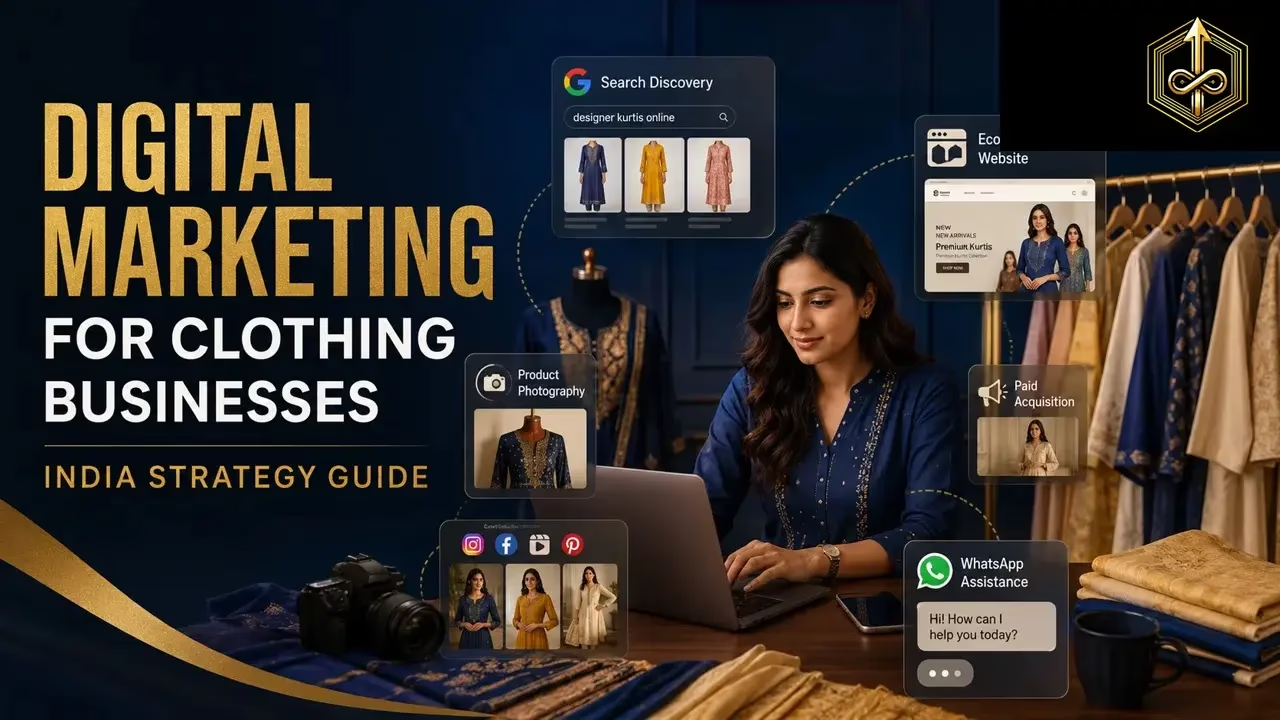
A successful digital marketing strategy for a clothing business is not a posting calendar or an advertising campaign. It is a connected system that makes the right buyer notice the collection, understand its fit and value, trust the brand, complete an order and return for another purchase.
Clothing is highly visual, but visual appeal alone is not enough. Online customers also need sizing, fabric, colour, delivery, exchange and credibility information. Marketing therefore cannot be separated from merchandising, product photography, website conversion, WhatsApp selling and operations.
Direct answer: Build your clothing digital marketing in seven connected layers: define the buyer and brand position, select commercially viable hero products, create complete visual and written product evidence, build a mobile-friendly ecommerce path, publish content for every buying stage, use search, creators and paid traffic according to clear roles, and measure delivered-order contribution plus repeat purchase before scaling.
What a Clothing Digital Marketing Strategy Must Do
A clothing marketing system has five jobs:
- Create relevant awareness: Reach people who could genuinely value and afford the products.
- Build desire: Help the buyer imagine the garment in her life, occasion or identity.
- Reduce purchase risk: Provide accurate fit, fabric, colour, quality, delivery and policy information.
- Make purchase easy: Provide a clear product page, checkout or assisted-sales path.
- Build a relationship: Deliver well, learn preferences and create relevant reasons to return.
Marketing fails when it is measured only at the first job. Reach and engagement can look impressive while product pages, checkout, fulfilment and retention remain weak. The complete strategy must follow the customer from first discovery to delivered order and repeat purchase.
Separate objectives from channels
Instagram is a channel, not an objective. Meta Ads is a channel, not a strategy. SEO is a channel, not a promise. Begin with the business objective: launch a collection, acquire first-time buyers, sell a hero product, increase average order value, reactivate past customers or build local store traffic. Then select the channel and message suited to that objective.
Define the primary constraint
Before adding activity, identify the weakest layer:
- Not enough relevant people know the brand.
- People see the brand but do not understand the product.
- They understand but do not trust the quality, fit or seller.
- They trust but find the website or checkout difficult.
- They order but returns, RTO or fulfilment destroy contribution.
- They receive the product but do not buy again.
The strategy should repair the current constraint instead of automatically spending more on traffic.
Buyer Clarity and Brand Positioning
A clothing brand becomes recognisable through the customers and situations it chooses to serve. “Women’s fashion” is too broad to guide products or marketing.
Define the buyer through context
- Life stage and daily environment
- Primary occasions
- Preferred silhouettes and styling intensity
- Comfort, modesty and fit requirements
- Expected price and service level
- Common disappointments with online clothing
- Discovery platforms
- Decision criteria
- Reasons to return
A working professional buying elevated office ethnic wear responds to different imagery and information than a wedding guest buying festive statement wear. The buyer definition controls models, backgrounds, content, collection structure, product copy, offers and advertising.
Position the brand with a meaningful choice
Possible clothing positions include:
- Complete occasion-ready ethnic sets
- Premium everyday handloom
- Comfort-first workwear
- Contemporary modest dressing
- Inclusive or specialised fit
- Regional craft curation
- Minimal travel-friendly wardrobes
- Statement festive collections
- Affordable coordinated looks
A position is credible when product, price, presentation and service reinforce it. Do not claim “luxury” while using inconsistent supplier images, hidden policies and unpredictable dispatch.
Write the internal positioning brief
We help [specific buyer] achieve [desired clothing outcome] through [collection or product territory], differentiated by [real advantage], proven through [evidence].
Use this sentence to evaluate every product and campaign. If a product does not support the position, decide whether it belongs in another collection or should not be promoted.
Practical Market and Customer Research
Good clothing research is not copying competitor reels. It combines customer evidence, category observation and internal economics.
Review customer conversations
Analyse enquiries, reviews, returns and support tickets. Record repeated questions about size, fabric, transparency, colour, length, lining, delivery and exchange. These questions should shape product pages and content.
Review buying and return data
- Products with high first-time conversion
- Products with high repeat purchase
- Sizes or styles with higher return rates
- Products bought together
- Channels producing delivered orders
- Collections attracting bargain-only traffic
- Reasons orders are cancelled or returned
Study competitors by system, not imitation
Compare positioning, collection architecture, photography, product information, pricing, reviews, policies, checkout and customer service. Identify gaps you can genuinely serve. Do not copy a campaign without understanding the competitor’s economics, audience and brand.
Run customer interviews
Speak with recent buyers, repeat buyers and suitable non-buyers. Ask what triggered the search, what alternatives were considered, what created doubt, what information was missing and what happened after delivery. Avoid questions that invite only compliments.
Collection, Offer and Commercial Readiness
Marketing cannot rescue a collection that has no clear buyer, weak quality, unstable stock or insufficient contribution.
Classify product roles
- Hero: Communicates the brand and attracts attention.
- Acquisition: Accessible entry point for new buyers.
- Contribution: Produces healthy delivered-order value.
- Attachment: Increases basket value through complementary purchase.
- Retention: Creates a natural reason to buy again.
- Seasonal: Fits a genuine occasion or demand window.
Calculate contribution before acquisition
Contribution per delivered order = Net product revenue − product cost − finishing − packaging − payment cost − forward shipping − expected returns or RTO − variable fulfilment − variable discounts
Compare contribution with customer acquisition cost. If first-order economics are thin, build bundles, better product mix or credible repeat purchase before scaling.
Build offers around customer value
Useful clothing offers can include coordinated sets, complete looks, free-shipping thresholds, prepaid benefits, early access, limited collection drops or styling support. Use genuine terms and calculate the effect on margin.
Do not discount to fix weak communication
If customers cannot see the fabric, fit or quality, lowering the price may create more orders but not a stronger brand. Fix the evidence first.
Product Presentation as Marketing
Every product gallery is an advertisement, salesperson and fit assistant. It must attract attention and answer questions.
Minimum clothing gallery
- Clean full-length hero
- Front view
- Back view
- Side or three-quarter view
- Fabric close-up
- Craft or construction detail
- Neckline and sleeve
- Movement video
- What is included
- Model measurements and size worn
- Product measurements
- Packaging or care
Write evidence-rich descriptions
Explain outcome, silhouette, material, lining, transparency, fit, measurements, components, care, variation, dispatch and policy. Replace generic adjectives with facts.
Use a consistent production standard
Document lighting, background, crop, model information, editing limits, filenames, alt text and quality control. Consistency builds brand recognition and operational efficiency.
Use the complete premium kurti presentation audit to improve galleries and product pages.
Website and Conversion Infrastructure
A clothing website should reduce decisions, not create more confusion.
Homepage
- Clear buyer and category position
- Current hero collection
- Useful navigation
- Product and brand proof
- Best-selling or strategic products
- Visible policies and support
- Mobile speed
Collection pages
- Filters by size, category, occasion, colour, fit or fabric where relevant
- Consistent product cards
- Price and availability
- Useful sorting
- Contextual editorial guidance
Product pages
- Complete gallery and video
- Price, sizes and stock
- Fit and product measurements
- Model information
- Material, lining and care
- Contents
- Delivery and policy
- Genuine reviews
- Clear add-to-cart
- Relevant complements
Checkout
Test on a real phone. Ensure selected size and colour persist, errors are clear, payment choices work, shipping is understood and confirmation appears immediately.
Read How to Sell Clothes Online in India for the full operational and ecommerce roadmap.
Map the Clothing Customer Journey
| Stage | Customer question | Marketing job | Useful content |
|---|---|---|---|
| Discovery | Is this relevant to me? | Connect product with buyer and occasion | Short video, search guide, creator styling |
| Evaluation | Will it fit, look and feel right? | Provide evidence | Gallery, measurements, fabric, reviews, comparison |
| Trust | Can I safely buy from this business? | Show identity, service and policy | Founder, customer proof, fulfilment, clear terms |
| Purchase | How do I order the right variant? | Remove friction | Product link, size help, secure checkout |
| Delivery | Will the promise be kept? | Communicate and fulfil | Confirmation, tracking, support and care |
| Retention | What should I buy next? | Use preferences responsibly | Relevant launch, complement, styling and loyalty |
Implementation System for Digital Marketing for Clothing Business: Complete Guide
A digital marketing system for Indian clothing brands, boutiques and manufacturers with owned inventory should be treated as an operating system, not a collection of isolated tactics. The commercial objective is to attract the right clothing buyer, reduce fit and product uncertainty, and grow profitable delivered and repeat orders. That requires alignment between the promise that creates the enquiry, the product evidence available to the customer, the person or automation that responds, the transaction route and the post-purchase experience.
Begin with a baseline rather than assumptions. Review actual product pages, recent conversations, orders, cancellations, returns and support cases. Separate facts from opinions. If the business cannot connect an enquiry to a delivered order, improve the record before increasing traffic. If the same question appears repeatedly, correct the website or product data instead of permanently adding manual work.
Define the reader and the decision in one sentence. For example: “An existing kurti buyer is deciding whether this garment will fit for office wear and arrive before a stated date.” This is more useful than a broad label such as “women interested in fashion.” It tells the business what information, evidence and fulfilment confidence must be available.
Create a written standard that the owner, marketing team, sales team and fulfilment team can all use. The standard should explain what may be promised, which facts must be verified, where the customer should pay, how consent is recorded, who owns an exception and which outcomes are reviewed every week.
Eight-Part Readiness Scorecard
Score each area from one to five and write evidence beside the score. A number without evidence is decoration. Fix the lowest critical area before adding more campaigns.
1. A sharply defined clothing buyer and occasion
Check whether a sharply defined clothing buyer and occasion is complete, current and easy for both the customer and team to find. Test it using a real mobile buying situation rather than the editor preview. Record who owns updates and what triggers a recheck. If this information changes by product, variant, location or date, the response must verify the correct version before it is shared.
2. A focused assortment and merchandising logic
Check whether a focused assortment and merchandising logic is complete, current and easy for both the customer and team to find. Test it using a real mobile buying situation rather than the editor preview. Record who owns updates and what triggers a recheck. If this information changes by product, variant, location or date, the response must verify the correct version before it is shared.
3. Garment measurements and fit standards
Check whether garment measurements and fit standards is complete, current and easy for both the customer and team to find. Test it using a real mobile buying situation rather than the editor preview. Record who owns updates and what triggers a recheck. If this information changes by product, variant, location or date, the response must verify the correct version before it is shared.
4. Fabric, lining, transparency and care evidence
Check whether fabric, lining, transparency and care evidence is complete, current and easy for both the customer and team to find. Test it using a real mobile buying situation rather than the editor preview. Record who owns updates and what triggers a recheck. If this information changes by product, variant, location or date, the response must verify the correct version before it is shared.
5. Complete on-model and detail photography
Check whether complete on-model and detail photography is complete, current and easy for both the customer and team to find. Test it using a real mobile buying situation rather than the editor preview. Record who owns updates and what triggers a recheck. If this information changes by product, variant, location or date, the response must verify the correct version before it is shared.
6. Mobile collection, product and checkout pages
Check whether mobile collection, product and checkout pages is complete, current and easy for both the customer and team to find. Test it using a real mobile buying situation rather than the editor preview. Record who owns updates and what triggers a recheck. If this information changes by product, variant, location or date, the response must verify the correct version before it is shared.
7. Source-aware assisted selling and follow-up
Check whether source-aware assisted selling and follow-up is complete, current and easy for both the customer and team to find. Test it using a real mobile buying situation rather than the editor preview. Record who owns updates and what triggers a recheck. If this information changes by product, variant, location or date, the response must verify the correct version before it is shared.
8. Return-reason and delivered-contribution analysis
Check whether return-reason and delivered-contribution analysis is complete, current and easy for both the customer and team to find. Test it using a real mobile buying situation rather than the editor preview. Record who owns updates and what triggers a recheck. If this information changes by product, variant, location or date, the response must verify the correct version before it is shared.
Design the Full Customer Journey
Discovery
Identify the source, promise and expected intent. A product-specific advertisement, an organic tutorial, a store QR code and an existing-customer message create different expectations. Preserve that context so the first response feels continuous. Remove traffic sources that repeatedly attract people outside the intended product or price context.
Evaluation
Make the core facts visible on the product page and keep a verified evidence library for questions that need assistance. Recommend only after the customer’s stated requirement is understood. A long catalogue is not a recommendation; it transfers the decision work back to the buyer.
Decision
Resolve the real objection with a fact, demonstration, comparison or clear limitation. Do not manufacture urgency or guarantee an outcome the business cannot control. The next step should be singular and obvious: view the exact product, select a variant, use secure checkout or wait for specified evidence.
Transaction
Confirm product, variant, quantity, price, discount, shipping, address, payment status and policy in the order system. Never rely only on a payment screenshot. Provide an order number and explain what will happen next. If COD is offered, use the documented confirmation and risk process consistently.
Delivery and retention
Connect the sale to dispatch, delivery, return and service. Solve problems before sending promotions. Ask for marketing permission separately and state what the person can expect. Retention should be based on relevance, customer value and honest frequency, not on the size of a broadcast list.
Ninety-Day Operating Workflow
Days 1–15: Diagnose
Audit representative conversations and the product pages that produced them. Tag intent, first useful response, evidence supplied, checkout action and final outcome. Interview the sales and fulfilment team about information gaps. Correct dangerous inaccuracies immediately, particularly payment, material, stock, delivery and return statements.
Days 16–30: Build foundations
Standardise product identifiers, evidence folders, price and stock sources, policy modules, business hours and escalation contacts. Create contextual entry links. Define what automation may answer and where a person must take over. Place the most repeated factual answers on the website.
Days 31–60: Run a controlled pilot
Use a limited group of products and traffic sources. Train the team on one conversation framework and secure checkout route. Review open conversations daily. Compare promises with fulfilment. Do not increase traffic until stock, response ownership and order confirmation are reliable.
Days 61–90: Improve with outcomes
Analyse delivered conversion, contribution, sales time, returns, complaints and opt-outs by source and product. Improve the largest uncertainty. Remove unnecessary messages. Expand the assortment or campaign only when service quality and economics remain healthy.
Category-Specific Scenarios
Workwear kurti capsule
Position around repeatable office dressing rather than generic ethnic wear. Show fit across relevant body contexts, garment measurements, pockets, opacity, movement, care and styling combinations; link content to the exact capsule.
Record the evidence used, the recommendation reason and the final outcome. Feed recurring uncertainty back into photography, descriptions, sizing, packaging or policy. The purpose is to make the next customer’s decision easier before the conversation begins.
Occasion saree edit
Organise by occasion and wearing preference, then show drape, border scale, pallu, blouse piece, weight and dispatch. Use educational search content to answer fabric and styling decisions.
Record the evidence used, the recommendation reason and the final outcome. Feed recurring uncertainty back into photography, descriptions, sizing, packaging or policy. The purpose is to make the next customer’s decision easier before the conversation begins.
Boutique co-ord launch
Use a waitlist only with explicit expectations, verify size depth before promotion, release a complete product page, then combine creator styling, founder explanation and retargeting based on evidence consumed.
Record the evidence used, the recommendation reason and the final outcome. Feed recurring uncertainty back into photography, descriptions, sizing, packaging or policy. The purpose is to make the next customer’s decision easier before the conversation begins.
Measurement Model
Use definitions that connect marketing, sales and operations. Review the following by product and source; a blended site average can hide an expensive campaign or a high-return item.
- Qualified collection visits
- Track sessions matching the intended style, occasion, price and geography. Compare the trend with product, source and team context. Investigate material changes before scaling or cutting activity.
- Product discovery depth
- Track movement from content or collection to relevant product views. Compare the trend with product, source and team context. Investigate material changes before scaling or cutting activity.
- Size-guide engagement
- Track use of measurement and fit information before selection. Compare the trend with product, source and team context. Investigate material changes before scaling or cutting activity.
- Variant availability
- Track priority sizes and colours in stock when demand arrives. Compare the trend with product, source and team context. Investigate material changes before scaling or cutting activity.
- Add-to-cart by size
- Track cart intent segmented by garment and variant. Compare the trend with product, source and team context. Investigate material changes before scaling or cutting activity.
- Checkout completion
- Track carts that become verified orders. Compare the trend with product, source and team context. Investigate material changes before scaling or cutting activity.
- Assisted-fit conversion
- Track fit enquiries that reach a suitable order and delivery. Compare the trend with product, source and team context. Investigate material changes before scaling or cutting activity.
- Delivered-order rate
- Track orders completed after cancellation, RTO and returns. Compare the trend with product, source and team context. Investigate material changes before scaling or cutting activity.
- Return reason by SKU
- Track fit, colour, fabric, quality and expectation outcomes. Compare the trend with product, source and team context. Investigate material changes before scaling or cutting activity.
- Contribution by product and source
- Track net value after discounts, marketing and variable costs. Compare the trend with product, source and team context. Investigate material changes before scaling or cutting activity.
- Repeat purchase interval
- Track time until a genuinely relevant next clothing purchase. Compare the trend with product, source and team context. Investigate material changes before scaling or cutting activity.
- Full-price share
- Track orders won through product value rather than repeated discounting. Compare the trend with product, source and team context. Investigate material changes before scaling or cutting activity.
Use delivered orders and contribution as the commercial base. Placed orders, link clicks and response speed remain diagnostic measures, but none proves healthy growth alone. Record reason codes for lost orders, cancellations, RTO, returns and complaints so a rate can lead to a corrective action.
Common Failure Modes and Corrective Actions
1. Marketing to every woman
Age and gender labels are too broad. Occasion, wardrobe problem, style preference, value expectation and purchase readiness create better decisions.
Corrective action: Identify the source of truth, assign one owner, test the corrected journey on mobile and review the next relevant outcomes. Do not label the issue solved because the editor setting was changed.
2. Using only aesthetic images
Editorial visuals create desire, but commerce needs front, back, movement, detail, scale, fit and set-content evidence.
Corrective action: Identify the source of truth, assign one owner, test the corrected journey on mobile and review the next relevant outcomes. Do not label the issue solved because the editor setting was changed.
3. Confusing body and garment size
Ambiguous charts and generic labels produce avoidable exchanges. State how measurements were taken and show model context.
Corrective action: Identify the source of truth, assign one owner, test the corrected journey on mobile and review the next relevant outcomes. Do not label the issue solved because the editor setting was changed.
4. Constant discounting
Frequent price promotion weakens value memory, attracts comparison-led buyers and can make paid acquisition unviable.
Corrective action: Identify the source of truth, assign one owner, test the corrected journey on mobile and review the next relevant outcomes. Do not label the issue solved because the editor setting was changed.
5. Sending traffic to a generic home page
A product or collection promise should continue on the relevant mobile destination with a clear next action.
Corrective action: Identify the source of truth, assign one owner, test the corrected journey on mobile and review the next relevant outcomes. Do not label the issue solved because the editor setting was changed.
6. Overproducing social content
More posts do not solve unclear positioning, missing product truth, weak distribution or poor follow-up.
Corrective action: Identify the source of truth, assign one owner, test the corrected journey on mobile and review the next relevant outcomes. Do not label the issue solved because the editor setting was changed.
7. Ignoring return language
Fit, colour, fabric and expectation reasons are marketing research and should change pages, photography and targeting.
Corrective action: Identify the source of truth, assign one owner, test the corrected journey on mobile and review the next relevant outcomes. Do not label the issue solved because the editor setting was changed.
8. Separating ads from stock
Campaigns must reflect sellable sizes, replenishment and dispatch capacity to avoid wasted acquisition and disappointment.
Corrective action: Identify the source of truth, assign one owner, test the corrected journey on mobile and review the next relevant outcomes. Do not label the issue solved because the editor setting was changed.
9. Copying trend content
A recognisable brand selects trends through a specific buyer, product standard and point of view.
Corrective action: Identify the source of truth, assign one owner, test the corrected journey on mobile and review the next relevant outcomes. Do not label the issue solved because the editor setting was changed.
10. Optimising placed orders only
Clothing economics must include cancellation, RTO, exchange, return and support labour by product and source.
Corrective action: Identify the source of truth, assign one owner, test the corrected journey on mobile and review the next relevant outcomes. Do not label the issue solved because the editor setting was changed.
Weekly Review Agenda
- List unresolved payment, delivery, return and complaint cases.
- Review stock, price, policy and evidence changes.
- Compare qualified conversations, placed orders and delivered orders by source.
- Inspect a random sample for accuracy, relevance, tone and permission.
- Identify the most repeated customer uncertainty.
- Assign one website, product, campaign or process correction.
- Review the previous correction against outcomes.
- Confirm team ownership and capacity before increasing traffic.
Keep the meeting focused on causes and decisions. Screenshots of message volume are not a substitute for customer and commercial outcomes. Document what changed, who owns it, the expected signal and the review date.
Fieldwork Prompts for the Owner and Team
- Which customer question consumes the most time, and why is the answer not already visible?
- Which source creates the highest proportion of suitable buyers rather than the most messages?
- Which products need human recommendation, and which should convert without chat?
- Where do agents obtain current stock, price, measurement and policy information?
- What evidence changes a doubtful customer’s decision without exaggeration?
- Which promise is hardest for fulfilment to keep?
- Why do confirmed orders cancel or fail delivery?
- Which return reason began as preventable pre-purchase uncertainty?
- How much sales time is used per delivered order?
- Which customers have clearly asked for future promotional messages?
- When does automation hand off to a named person?
- What would make the next 100 conversations more accurate, not merely faster?
Extended Frequently Asked Questions
Which channel is best for clothing marketing?
Choose channels according to the buyer journey and content advantage. Search, social, email and WhatsApp play different roles and should share one product truth.
Document the chosen rule for the business, train the team and check it against current platform and legal requirements. Review it when products, staffing, policies or technology change.
How often should a clothing brand post?
Use a sustainable rhythm tied to launches, education and customer questions. Frequency without distribution and conversion logic is not a strategy.
Document the chosen rule for the business, train the team and check it against current platform and legal requirements. Review it when products, staffing, policies or technology change.
Do influencers improve sales?
They can when audience, content rights, disclosure, product fit and measurement are defined. Evaluate delivered contribution and useful assets.
Document the chosen rule for the business, train the team and check it against current platform and legal requirements. Review it when products, staffing, policies or technology change.
How can a boutique compete with large marketplaces?
Win through curation, fit help, product knowledge, recognisable identity, service and owned customer continuity.
Document the chosen rule for the business, train the team and check it against current platform and legal requirements. Review it when products, staffing, policies or technology change.
Should size charts be standard?
Create a consistent measurement method, but publish product-specific garment measurements whenever construction or fit differs.
Document the chosen rule for the business, train the team and check it against current platform and legal requirements. Review it when products, staffing, policies or technology change.
Are discounts necessary for first orders?
No. Product relevance, proof, service and risk reduction can be stronger acquisition levers.
Document the chosen rule for the business, train the team and check it against current platform and legal requirements. Review it when products, staffing, policies or technology change.
What content supports SEO?
Publish useful category, fit, fabric, occasion, care and buying guidance connected naturally to product and collection pages.
Document the chosen rule for the business, train the team and check it against current platform and legal requirements. Review it when products, staffing, policies or technology change.
What is the most important metric?
Profitable delivered and retained customer outcomes, supported by funnel, fit and return diagnostics.
Document the chosen rule for the business, train the team and check it against current platform and legal requirements. Review it when products, staffing, policies or technology change.
Implementation Checklist
- Define the intended buyer, product and decision.
- Publish accurate price, stock, specifications and policies.
- Prepare a sharply defined clothing buyer and occasion, a focused assortment and merchandising logic, garment measurements and fit standards, fabric, lining, transparency and care evidence.
- Create source- and product-specific entry links.
- Assign one owner and an escalation route.
- Use secure product and checkout pages.
- Separate order service from marketing permission.
- Connect conversations to delivery and returns.
- Measure sales labour and contribution.
- Turn repeated questions into website improvements.
- Audit accuracy and tone every week.
- Scale only after the complete journey is reliable.
Build a Clothing Content System
Educational content
- Fit and measurement education
- Fabric and care
- Occasion selection
- Styling and colour coordination
- Wardrobe planning
- Product comparisons
Product evidence
- Front, back, detail and movement
- Model and size context
- What is included
- Quality control
- Packaging and delivery
- Customer use
Brand and authority
- Founder or design point of view
- Collection selection
- Craft or sourcing process
- Behind-the-scenes decisions
- Answers to difficult questions
- Honest limitations
Commercial content
- Collection reveal
- Restock
- Best seller
- Bundle or complete look
- Genuine deadline
- Direct product demonstration
Create content from one production day
A complete shoot should produce ecommerce images, product video, discovery reels, carousels, WhatsApp assets, search images, email creative and creator briefing references. Plan these deliverables before capture.
Use a content brief
For every piece, define buyer, stage, message, proof, format, destination and metric. This prevents posting activity without a commercial role.
Search and Image SEO
Search content should answer real questions and connect to relevant products or category pages.
Topic clusters
- How to sell or buy specific clothing categories
- Size and fit guides
- Fabric comparisons and care
- Occasion and styling guides
- Product photography and presentation
- Online clothing business marketing
- Website and conversion guidance
On-page basics
- One clear primary intent
- Useful title and description
- Descriptive headings
- Original examples and frameworks
- Relevant internal links
- Author and business credibility
- Mobile readability
- Regular factual review
Image SEO
- Original, high-quality images
- Descriptive filenames
- Accurate alt text
- Useful captions
- Relevant surrounding text
- Compressed WebP or suitable format
- Explicit dimensions
- Stable crawlable URLs
Metadata helps search engines understand an image, but no implementation guarantees a specific ranking. The image must be useful and relevant to the page.
Instagram and Social Media
For a complete channel-specific implementation, use the Instagram marketing strategy for clothing brands in India, including profile setup, product-evidence formats, campaign planning, website continuity, WhatsApp conversion and delivered-order measurement.
Use formats by purpose
- Reels for movement, transformation and discovery
- Carousels for education, comparison and detail
- Stories for daily context and interaction
- Lives for collection walkthroughs
- Static editorial for brand mood
- Customer content for proof
Improve product tagging and destination
Every commercial post should connect to the exact product or collection. Generic profile links and “DM for price” create unnecessary friction.
Build repeatable series
Examples: fit clinic, fabric Friday, three ways to style, founder’s edit, buyer question of the week, one product in motion and complete-look breakdown. Series create recognition and reduce content planning effort.
Measure useful signals
Review saves, shares, qualified profile visits, product clicks, meaningful enquiries, checkout and delivered orders. Avoid treating views as revenue.
Creator and Influencer Strategy
Select creators whose audience and styling context match the buyer. Evaluate content clarity, credibility, engagement quality, location and ability to show fit.
Brief creators to show evidence
- Full silhouette
- Movement
- Fabric or craft detail
- Model measurements and size
- What is included
- Honest fit and styling
- Clear product link
- Required disclosure
Define usage rights
Agree whether the brand may use content on its website, advertisements, email or product pages, and for how long. Do not assume gifting transfers unlimited rights.
Track with context
Use links, codes and campaign periods, but recognise that some creator impact appears through later search or direct visits. Combine quantitative tracking with customer-source questions.
Email and WhatsApp Marketing
Use owned communication to support service and relevant repeat buying. Collect consent and honour preferences.
Useful email flows
- Welcome and brand orientation
- Product-view or cart assistance
- Order and delivery
- Care and styling
- Review request
- Relevant cross-sell
- Collection launch
- Win-back
WhatsApp assisted selling
Capture product context, answer the question, qualify only what matters, recommend a small number of products, share complete evidence, resolve objections, send checkout and follow up with value. Use the complete WhatsApp enquiry-to-order guide.
Meta Ads Strategy
Advertising should begin after the product, page, economics and tracking are ready.
Creative strategy
Test different customer motives and evidence:
- Occasion outcome
- Fit and comfort
- Fabric and craft
- Complete look
- Founder curation
- Customer proof
- Offer
Campaign role
- Prospecting for new relevant audiences
- Retargeting product viewers or engaged visitors
- Collection launch
- Customer retention or cross-sell where permitted
- Creative testing
Measure beyond platform reports
Compare placed and delivered orders, contribution, cancellations, returns, RTO and repeat quality. Maintain consistent attribution rules and avoid claiming precision the data cannot support.
Use the clothing ads diagnosis guide before increasing budgets.
Campaign and Collection Launch Planning
Launch phases
- Research: Buyer, occasion, hero products and objections.
- Asset production: Product pages, images, videos, emails, ads and scripts.
- Pre-launch: Education, inspiration and expectation.
- Launch: Clear availability, price, proof and checkout.
- Follow-up: Objection content, customer questions and relevant urgency.
- Review: Delivered-order and customer-quality analysis.
Build an offer brief
- Objective
- Target buyer
- Products
- Price and terms
- Stock and deadline truth
- Contribution impact
- Creative message
- Destination
- Support process
- Success and stop conditions
Retention and Customer Value
Retention is driven first by product and delivery accuracy. Marketing cannot compensate for repeated disappointment.
Use preference data responsibly
Record size, colour, category, occasion and purchase history when useful and permitted. Recommend products based on relevance, not because a message slot is available.
Increase value through service
- Care and styling guidance
- Early access
- Complementary-product recommendations
- Accurate replenishment or restock messages
- VIP appointments or previews
- Responsive issue resolution
Track cohort behaviour
Compare repeat purchase by acquisition source, collection and first product. A channel that creates slightly more expensive but loyal customers may be stronger than one producing cheap one-time orders.
Measurement and Attribution
Core metrics
- Qualified sessions
- Product-view rate
- Add-to-cart rate
- Checkout-start rate
- Purchase rate
- Average order value
- Contribution per delivered order
- Customer acquisition cost
- Cancellation, return and RTO
- Enquiry-to-order rate
- Repeat-purchase rate
- Revenue and contribution from existing customers
Marketing quality metrics
- Creative fatigue
- Search impressions for relevant queries
- Content saves and qualified clicks
- Creator traffic quality
- Lead-source quality
- Email or WhatsApp conversion
Use a weekly diagnosis
Ask: Did the problem occur at traffic, product view, add to cart, checkout, payment, delivery or retention? Then inspect the relevant buyer, product, creative, page or operational layer.
Team, Tools and Workflow
A clothing marketing operation needs clear ownership across merchandising, creative, ecommerce, performance, sales and fulfilment.
Weekly rhythm
- Monday: inventory, campaign and priority review
- Tuesday: content and product-page production
- Wednesday: campaign and search optimisation
- Thursday: sales conversation and customer-question review
- Friday: delivered-order economics and creative learning
- Monthly: collection, retention and brand review
Create approval standards
Define who approves product facts, claims, pricing, creative, page publication, advertising spend and policy exceptions. This reduces errors and delays.
90-Day Implementation Plan
Days 1–15: Foundation
- Define buyer and position
- Audit collection and economics
- Select hero products
- Review customer questions and returns
- Set measurement definitions
Days 16–35: Presentation and conversion
- Produce complete galleries
- Build product masters
- Rewrite product pages
- Improve navigation, size help and policies
- Test mobile checkout
Days 36–50: Content and owned channels
- Create content pillars and series
- Build search topics
- Configure email and WhatsApp processes
- Train sales support
- Create launch assets
Days 51–70: Controlled acquisition
- Launch to warm audience
- Test creators or small paid campaigns
- Measure lead and order quality
- Fix friction
- Build retargeting and follow-up
Days 71–90: Optimise and scale carefully
- Increase investment in proven products and messages
- Improve weak product pages
- Build retention campaigns
- Review cohorts
- Plan the next collection from evidence
Frequently Asked Questions
Which digital marketing channel is best for a clothing business?
No channel is universally best. Use the channel where the target buyer discovers and evaluates clothing, then connect it to a strong product page and sales system. Search, social, creators, email, WhatsApp and ads can have different roles.
Should a new clothing brand start with Instagram or a website?
Use social to validate and create discovery, but build a structured website when you need organised products, sizing, policies, secure checkout, analytics and retention. The two should be connected.
How often should a clothing brand post?
Choose a sustainable frequency based on quality and business capacity. Consistent useful content is stronger than high-frequency repetitive posting.
What content sells clothes online?
Content that shows fit, movement, fabric, detail, occasion, styling, customer proof and trust supports purchase. Every piece should have a clear buyer stage and next action.
How much should a clothing business spend on ads?
Base the test budget on contribution, target acquisition cost, creative plan and fulfilment capacity. Avoid universal daily-budget advice.
How do I reduce clothing returns through marketing?
Improve product-specific measurements, fit notes, model context, fabric and colour accuracy, set contents, care and policy clarity. Analyse return reasons by SKU and size.
Should prices be shown on Instagram?
For standard products, transparent pricing usually helps serious buyers. Custom products can show a starting price and explain variables.
Does influencer marketing work for clothing brands?
It can when the creator’s audience, style, credibility and content fit the product. Use clear briefs, rights and tracking. Do not choose only by follower count.
How long does SEO take for a clothing business?
There is no reliable universal timeline. Search growth depends on competition, site quality, authority, technical health, content usefulness and consistency. Focus on building a durable topic cluster and measuring relevant impressions and conversions.
Should I use AI-generated product images?
Do not allow AI to change the garment, fit, colour, print or details. Real product photography should remain the source of truth for product pages. Stylised imagery must not mislead customers.
How can an offline clothing shop use digital marketing?
Digitise stock and product data, select a focused online collection, create complete presentation, build a website or assisted-sales path, use existing customers for learning and launch gradually.
What is the most important marketing metric?
No single metric is enough. Delivered-order contribution, customer acquisition cost, return behaviour and repeat purchase together reveal whether growth is healthy.
Build the System before Scaling the Media Budget
Clothing digital marketing works when brand, product, page, traffic, sales and operations reinforce one another. Start with the buyer and product truth, build evidence and conversion, then use channels to scale what is already coherent.
Build your clothing Online Sales Engine
Meri Digital Pehchan helps clothing, saree, kurti and boutique businesses build online brands and order-generation systems through Buyer Clarity, Product Presentation, Converting Website and Traffic.