Direct answer: An effective Instagram marketing strategy for a clothing brand does not begin with posting more reels. It begins with one clearly defined buyer, a commercially suitable product collection, complete product evidence and a simple route from discovery to a product page, WhatsApp assistance or checkout. Use Instagram to earn attention and demonstrate the product; use your owned website to hold accurate information and complete transactions; use WhatsApp to resolve genuine decision friction; and use delivered-order, return and repeat-purchase data to decide what to scale.
Instagram can help an established Indian clothing business show fabric, fit, finish, styling and founder credibility in ways a static catalogue cannot. It can also create a lot of activity without creating a dependable business. Views, likes and followers are not the same as product understanding, qualified demand, paid orders, delivered orders or contribution after returns. A clothing brand therefore needs an Instagram operating system, not a random content calendar.
This guide is written for clothing, saree, kurti, ethnic-wear and boutique owners who already have products or inventory. It is not a “start a business with no product” guide. The recommendations assume that the business can confirm stock, describe products accurately, fulfil orders and support customers. Platform features and recommendations change, so verify current account-specific guidance inside Instagram’s professional dashboard. Meta says its Best Practices area covers creation, engagement, reach, monetization and guidelines, with personalised tips for professional accounts. Treat that first-party guidance as the platform reference and treat every outside tactic as a test, not a promise.
The Role of Instagram in a Clothing Business
Instagram is strongest when it reduces uncertainty before a customer reaches the buying page. A shopper may discover a silhouette through a reel, inspect embroidery in a carousel, see the drape in a Story, read fit guidance in the caption and then visit the product page. That sequence is commercially useful because every piece helps the buyer make a better decision. A reel that entertains an unrelated audience but sends nobody toward a suitable product may be successful as media and unsuccessful as marketing.
Give Instagram five defined jobs. First, attract the right type of customer through recognisable products, occasions and problems. Second, communicate the brand’s point of view so the customer understands why the collection is different. Third, demonstrate product truth through accurate colour, scale, movement, fit and construction. Fourth, move interested people to an owned destination or a structured sales conversation. Fifth, gather questions and objections that improve product pages, merchandising and future content. Do not make Instagram the only place where price, size, care, dispatch and return information exists.
Instagram is not a replacement for stock discipline, product-market fit or customer service. If the content generates enquiries for sold-out sizes, the page hides prices, messages are answered inconsistently or the delivered product differs from the visual promise, additional reach can make the problem larger. The correct sequence is to stabilise the product and buying journey, publish evidence-led content, learn from qualified customer behaviour and only then increase distribution.
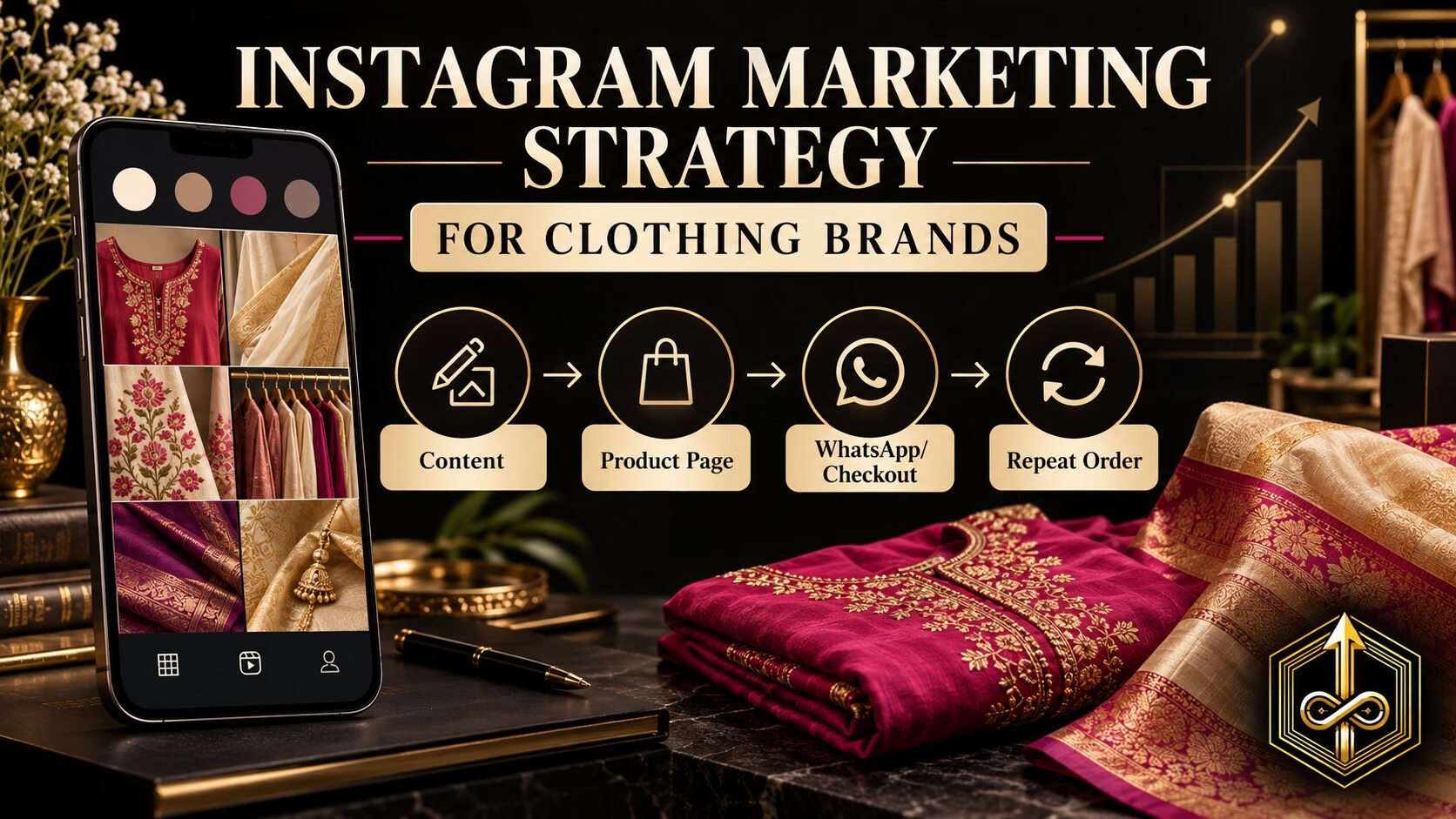
The Instagram-to-order path
Map one primary path for each campaign: content to collection page to product page to checkout; content to product page to WhatsApp assistance to secure checkout; or content to a local-store visit when the commercial goal is offline footfall. A post should not send people to a crowded link page containing ten unrelated choices. The destination should continue the exact promise, product and context of the content. If the reel presents festive silk kurtis, the link should not open the generic homepage and force the visitor to search again.
Start With Buyer Clarity and Commercial Focus
The first stage of the MDP Online Sales Engine is Buyer Clarity. “Women who like fashion” is too broad to guide a content decision. Define the buyer by her situation, desired outcome, decision criteria and hesitation. A stronger definition might be: a working woman buying polished cotton kurta sets for office and small occasions, who wants breathable fabric, reliable sizing, easy care and a complete look without luxury pricing. Another might be: a saree buyer choosing a family-wedding gift who cares about authenticity, presentation, delivery confidence and exchange support.
Use actual evidence. Review recent delivered orders, exchanges, returns, product questions, store conversations, search queries and WhatsApp chats. Identify which products attract profitable customers, which questions delay purchase and which expectations create returns. Separate a customer who admires the product from a customer likely to buy, receive and keep it. If the brand sells both daily wear and premium occasion wear, it may need different content series, landing pages and follow-up scripts because the buying decisions are different.
Create a one-page buyer brief with the following fields: purchase situation; product category; normal comparison set; preferred price context; required product proof; size or fit concern; delivery deadline; payment concern; likely objection; desired post-purchase outcome; and next relevant purchase. Use the brief to reject content ideas that might be visually appealing but commercially irrelevant.
Choose a product lane before a content lane
Content should support a product and merchandising decision. Select a hero collection with adequate stock, reliable fulfilment, acceptable contribution after variable costs and a clear reason to choose. Surround it with compatible products that help the buyer browse without becoming overwhelmed. If a boutique has hundreds of one-off pieces, create curated edits by occasion, silhouette, fabric or price context instead of posting an unrelated item every day.
A product lane also prevents the account from looking inconsistent. For one operating cycle, the brand might lead with “easy festive dressing for intimate celebrations,” “work-ready kurta sets for warm weather,” or “handloom sarees with transparent weave and care guidance.” This is not a permanent limitation. It is a focused learning window in which the team can connect content themes to products, questions and sales outcomes.
For a deeper method, use the ideal customer research guide for product businesses. The output should influence the products you feature, the proof you show, the language you use and the destination you choose—not sit unused in a document.
Build an Instagram Profile That Converts Interest Into Action
A clothing brand profile has a few seconds to answer: What do you sell? Who is it for? Why should I trust this account? Where do I buy or ask for help? Start with a recognisable profile image, an account name that includes the brand and a searchable category cue where natural, and a bio that communicates the product lane and service area without exaggerated claims. Avoid filling the bio with awards, emojis and slogans while leaving the offer unclear.
A useful bio structure is: category and primary buyer; distinctive product or buying benefit; location or delivery coverage when material; and one next action. Example: “Contemporary kurta sets for working women | Clear fabric and fit details | Ships across India | Shop the latest workwear edit.” Do not copy that wording blindly. Adapt it to the truth of the business.
The main link should lead to a fast, mobile-readable destination. Use a direct collection page during a focused campaign. If the business needs multiple destinations, keep the choice architecture small: shop clothing, view new arrivals, get size help and visit the store. Track each destination separately. Test the link in a logged-out browser and on a normal mobile data connection.
Highlights as a decision library
Use Story Highlights as compact buying guides, not as a scrapbook. Good highlight groups include New Arrivals, Bestsellers, Size Help, Fabrics, How to Order, Delivery, Exchanges, Reviews and Store. A saree brand may add Weaves and Blouse Details. A boutique may add Customisation only if it has a controlled and accurately communicated customisation process.
Each highlight should be current. Remove expired offers and contradictory policies. Begin each group with a cover slide that states what the viewer will learn. Keep text large enough for mobile reading, use plain language and show the product whenever possible. If the final slide asks the viewer to message or shop, connect it to the correct product or support route.
Pinned posts that orient a new visitor
Pin a small set of posts that explain the brand: a clear brand-and-buyer introduction, a product-proof or bestseller guide, and a buying-path post covering shop, size support and policies. A new visitor should not need to scroll through months of festival greetings to understand the business. Revisit pinned posts whenever the assortment, positioning or ordering method changes.
Create Product Evidence, Not Decorative Content
Product Presentation is the second stage of the MDP Online Sales Engine. Clothing is difficult to judge online because the customer cannot touch fabric, test weight, see true colour under different light or try the fit. Your content must deliberately replace those missing senses with evidence. A beautiful model image can create desire, but one image rarely answers the full buying decision.
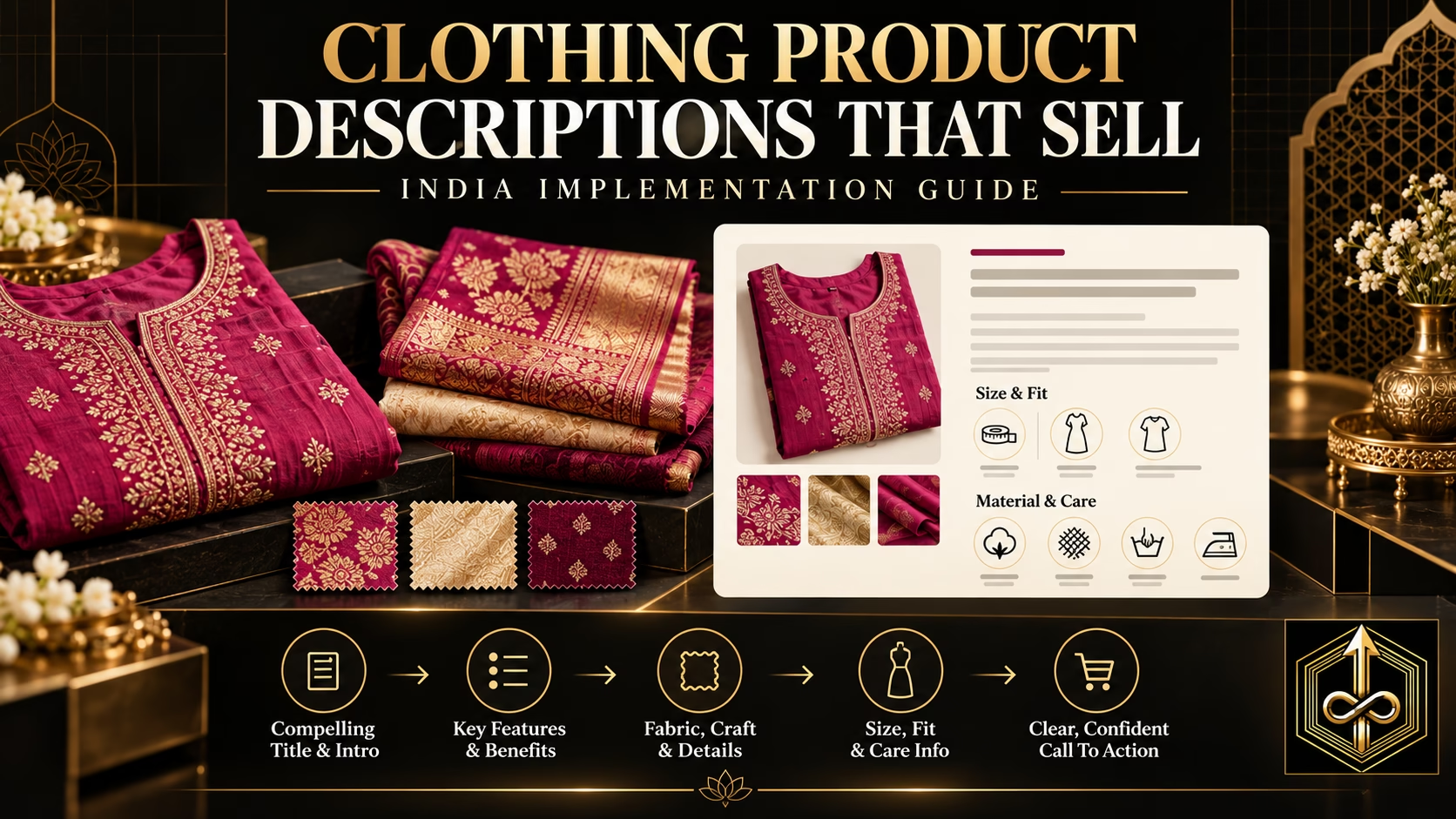
For every priority product, plan a minimum evidence set: full front and back views; close details; fabric texture; movement or drape; scale reference; neckline, sleeve and hem; closure; lining; pockets where relevant; styling options; size worn with model measurements; garment measurements; care; what is included; and a realistic colour note. Show the saree pallu, border, body, blouse piece and transparency. Show a kurta set as separate pieces and together. Show premium stitching and finishing rather than claiming “premium quality” without proof.
Keep image processing consistent and honest. Correct exposure and white balance, but do not alter the colour or shape so aggressively that the delivered garment surprises the buyer. When metallic zari, sequins or textured fabric behaves differently under light, demonstrate it in video and state that screen settings and lighting can affect appearance. Product truth is a conversion asset and a return-reduction asset.
The ecommerce product photography guide explains the complete shot system. Instagram should reuse that accurate product library instead of becoming a separate world with more attractive but less reliable visuals.
Build an evidence matrix
Create rows for the customer’s questions and columns for the evidence format. “How does it fall?” may need a walking clip. “Is it transparent?” may need backlighting and lining information. “Will it fit my arm?” may need sleeve opening measurements. “Is the embroidery heavy?” may need a close-up, reverse-side view and garment weight where the team can measure it accurately. “Can it arrive before an event?” needs a truthful dispatch and delivery path, not a reel.
This matrix makes content production efficient. One organised shoot can create product-page images, reel clips, carousel details, Stories and sales-team references. It also prevents the social team from repeatedly asking the warehouse to find a product because the required media was not captured during the shoot.
Build a Repeatable Clothing Content System
A content system starts with customer decisions, not a fixed number of posts. Create four strategic content pillars and several repeatable series within each pillar. The pillars can be adjusted by brand, but a practical structure is Discovery, Product Understanding, Trust and Conversion.
1. Discovery content
Discovery content helps a suitable non-follower recognise a problem, occasion, style or product category. Examples include three ways to style one kurta set; how to choose a saree for a daytime wedding; the difference between two fabrics; office-to-dinner outfit transitions; and what to check before buying an embroidered garment online. The product remains central, but the first frame communicates the situation rather than opening with a generic logo animation.
2. Product-understanding content
This pillar helps an interested person evaluate. Use close-up carousels, try-on demonstrations, measurement explainers, fabric comparisons, construction details, care tests and “what you receive” videos. A clothing business often underproduces this content because it seems less glamorous. Yet this is where uncertainty is removed. Build the post around one real decision rather than cramming every feature into one reel.
3. Trust content
Show the people and operating system behind the brand: founder selection process, quality checks, packing, stock verification, store footage, customer support practices and policy explanations. Use genuine customer feedback only with appropriate permission and context. Do not manufacture reviews, imply results that did not occur or present gifted collaboration content as independent customer opinion.
4. Conversion content
Conversion content presents a clear collection, product, deadline or next action. It may announce a restock, launch a festive edit, explain a limited production quantity or guide people to size support. Scarcity must be real. A permanent “last few hours” message trains customers not to trust the brand. Conversion content works better when the earlier pillars have already created desire, evidence and confidence.
Turn pillars into recurring series
Recurring series reduce planning time and build audience expectations. A kurti brand might use “Fit Check Monday,” “Fabric Under Real Light,” “One Set, Three Occasions,” “Inside the Stitch” and “Friday New Arrival.” A saree business might use “Weave Notes,” “Pallu and Border View,” “Blouse Pairing,” “Drape in Motion” and “Care Without Damage.” A boutique can use “Customer Brief to Finished Look” only when it has consent and can show the process truthfully.
Do not force every series to continue. After a reasonable test window, retain series that attract the intended audience, generate product views, saves, qualified messages and orders without increasing mismatch or returns. Redesign or stop series that attract irrelevant engagement. Content consistency means a consistent commercial purpose, not repeating a weak idea forever.
Give Every Instagram Format a Job
Meta’s official Instagram Best Practices announcement explains that professional-dashboard guidance is organised around creation, engagement, reach, monetisation and guidelines, and that it can include personalised account tips. Because platform guidance can change, review it inside the account instead of relying on an old universal rule about reel length, hashtags or posting frequency.
Reels: demonstrate and earn attention
Use reels for movement, transformation, process and a clear visual comparison. The opening should help the right shopper understand the topic quickly. Show the garment early. Use on-screen text that can be read without audio, but do not cover the neckline, border or fit detail being demonstrated. A useful reel has a beginning, evidence and next step: identify the situation, show the product solving or fitting it, clarify one decision and direct the viewer to the product page or caption.
Do not treat trending audio as the strategy. Use it only when it supports the brand and the content remains understandable. Original spoken explanations can create stronger category authority for a founder-led boutique. Always keep a clean master of product footage so it can be reused on the website or advertisements without platform-specific text obstructing the product.
Carousels: explain a considered decision
Carousels suit fit guides, fabric comparisons, styling sequences, product details and checklists. The first slide should make one specific promise. Subsequent slides should progress logically, not repeat the same photograph. For a saree: full view, weave, border, pallu, blouse piece, transparency, drape, care and shop prompt. For a kurta set: complete look, kurta details, bottoms, dupatta, fabric, fit, measurements, care and link.
Stories: assist the active audience
Stories can support new arrivals, restocks, questions, store moments, polls and time-bound launches. Use interaction tools to learn, but do not mistake a playful poll for purchase intent. Save durable answers to Highlights. If many people ask the same question in Stories, update the product page and sales reference so the answer does not disappear after one day.
Live sessions: reduce complex uncertainty
A live session can present a collection, compare fabrics, answer fit questions and demonstrate drape. Prepare a running order, product codes, stock source, moderator and buying links. Do not depend on memory for price or policy. After the session, cut useful sections into shorter content and add the durable information to relevant product pages.
Broadcast and direct messaging: use permission and restraint
One-to-many and direct messaging features should deliver expected value. Do not add people to repeated promotional communication without appropriate permission. Segment announcements by relevance when possible. A customer interested in workwear should not receive every bridal launch. Respecting attention improves brand trust and makes future messages more useful.
Connect Instagram to a Converting Website
A Converting Website is the third stage of the MDP Online Sales Engine. Instagram creates context, but the website should become the source of transaction truth. The landing page must match the product, visual and promise that earned the click. If a reel says “shop breathable office kurta sets,” link to that collection, retain the same product names and make size, fabric, delivery and exchange information easy to find.
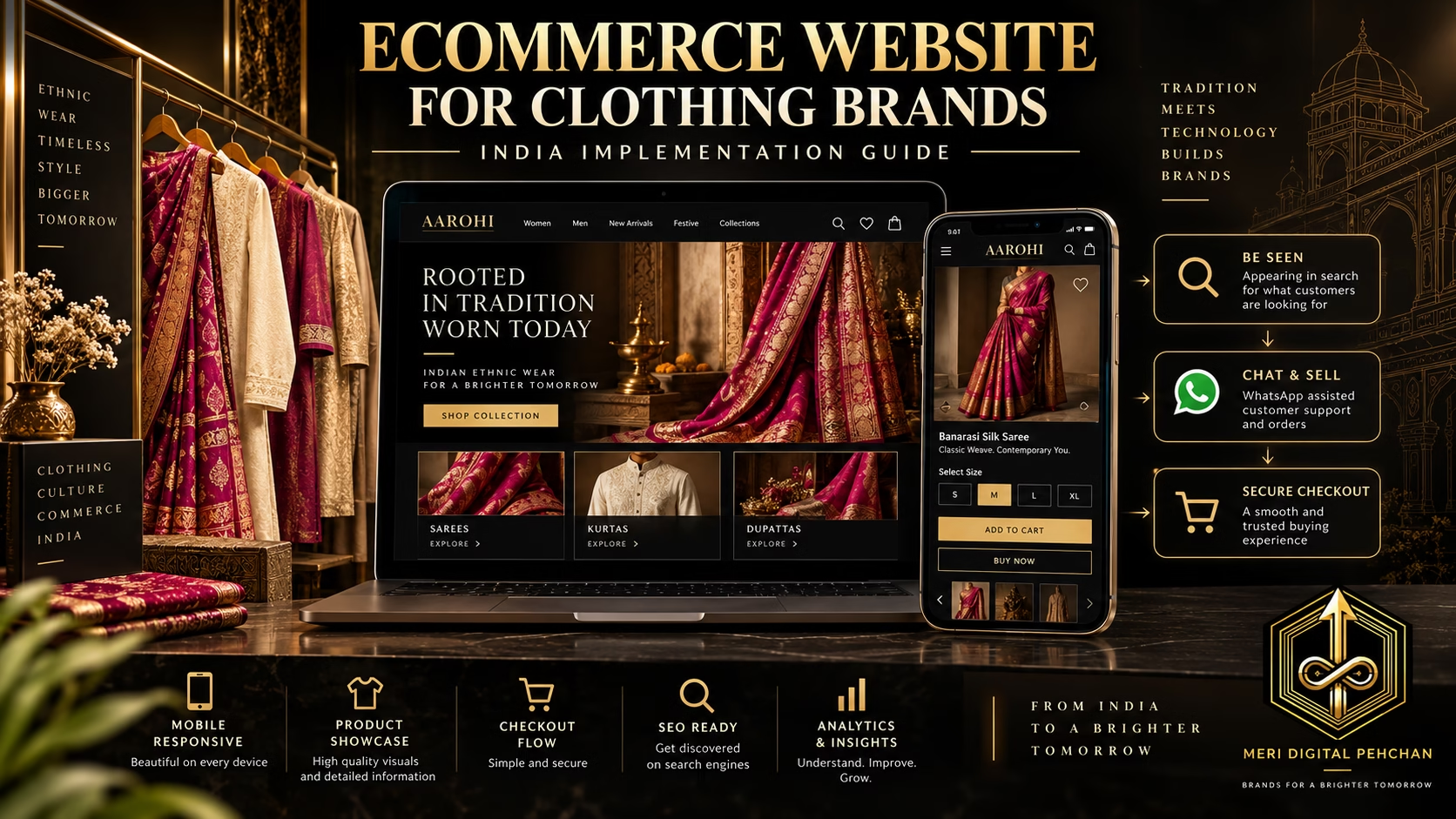
Build mobile-first product pages because many Instagram sessions continue on a phone. Prioritise a clear product title, price, selected variant state, accurate media, size support, material, measurements, care, what is included, dispatch information, delivery estimate logic, returns or exchange terms, secure payment and accessible contact. Keep the primary action visible without covering important content. Test variant selection, error messages, coupon behaviour, payment failures and order confirmation.
Avoid sending every visitor directly to WhatsApp when the product can be purchased independently. That creates unnecessary labour and delays. Also avoid hiding the price to manufacture enquiries. A useful assisted path offers help for fit, styling, gifting, availability or high-consideration products while keeping the normal purchase route complete.
Use the ecommerce product-page optimisation guide to audit the destination. Instagram marketing cannot compensate for a product page that loads slowly, hides decision information or makes checkout difficult.
Create campaign-specific continuity
For each major content series, document the destination URL, product group, audience, offer terms, stock owner and support owner. Use campaign parameters consistently so analytics can distinguish Instagram bio, Stories, creator links, organic content and paid distribution. Keep the naming system readable. The goal is not to create hundreds of confusing campaign names; it is to identify which message and placement led to meaningful product behaviour and orders.
Use WhatsApp as Assisted Conversion
WhatsApp/Sales Conversion is the next stage of the MDP engine. A customer arriving from Instagram should not have to repeat everything she just viewed. Use a product-specific link or prefilled context where appropriate, and train the responder to open the linked product before asking questions. Begin with permission and a helpful diagnosis: “Are you deciding between sizes, checking delivery, or comparing colours?” Ask only what is necessary.
Keep a product information source for the sales team: product code, price, live stock, measurements, model details, fabric, lining, care, dispatch, delivery logic, exchange terms, compatible products and secure payment link. Do not rely on screenshots that go out of date. If stock changes, the website and sales source should change together.
A good sales conversation clarifies the need, shares specific evidence, recommends honestly, resolves a real objection and returns the customer to a secure checkout or trackable order process. It does not send twenty catalogue images without context or pressure the customer with false urgency. Follow up only when there is a reason: requested stock confirmation, an incomplete decision, a promised measurement or a genuinely closing launch window.
Measure the path beyond message volume. Record whether the enquiry was relevant, whether a recommendation was made, whether checkout began, whether payment succeeded, whether the order was delivered and whether a return followed. The WhatsApp enquiry conversion guide provides the full assisted-sales process.
Plan Clothing Launches and Campaigns as a Sequence
A collection launch is not one announcement post. It is a sequence that moves the right buyer from relevance to product understanding to decision. Begin with the commercial plan: products included, stock by size, launch date, fulfilment capacity, pricing, policy, campaign destination, support coverage and stop conditions. Confirm that every featured item has complete media and data before the teaser begins.
Pre-launch phase
Introduce the customer situation and design intent without revealing every product. Show materials, colour story, problem solved, behind-the-scenes choices and a clear launch date. Collect questions. If the collection is for festive office events, explain the balance between polish, comfort and repeat styling. Use genuine reminders only when the feature is available to the account and the date is fixed.
Launch phase
Publish the hero visual, collection overview and direct shopping destination. Follow with item-specific evidence: fit, fabric, detail, styling and availability. Keep support prepared for repeated questions. Monitor page loading, variant selection, checkout and payment. If a product sells out, update content and links rather than continuing to buy attention for unavailable stock.
Decision-support phase
Answer the questions created by the launch. Compare silhouettes, show real-light colour, explain size selection, demonstrate mix-and-match value and clarify delivery. This phase is often more commercially useful than another generic announcement because it addresses the reasons interested shoppers have not yet decided.
Post-launch learning
Review which content brought suitable sessions, which products were viewed, which questions appeared, which sizes moved, which orders were delivered and which expectations created returns. Preserve the media and insight. A launch should improve the next product brief, shoot list, page and content system—not disappear into an engagement report.
Work With Creators Responsibly
Select creators by audience and product fit, not follower count alone. Review the creator’s normal content, audience geography, comment quality, visual accuracy, disclosure behaviour and ability to explain clothing. A creator who can show fit, fabric and occasion honestly may be more useful than one who produces a polished transition for an unrelated audience.
Write a clear brief: product truth; mandatory and prohibited claims; required views; sizing information; delivery date; review rights for factual errors; content usage rights; advertising usage rights; exclusivity; disclosure; live period; link or code; and reporting. Do not script a personal opinion the creator does not hold. Do not ask the creator to hide that a product, fee, discount, trip or other value was provided.
The official ASCI Guidelines for Influencer Advertising in Digital Media state that influencer advertisements need a clear disclosure when a material connection exists, and that material connection is not limited to cash payment. Review the latest applicable ASCI guidance and legal requirements with qualified counsel for the campaign. The brand and creator should agree on compliance before publishing, not after a complaint.
Measure creator activity through attributable visits, product engagement, assisted conversations, orders, delivery and return quality where the data is available and lawful to use. A discount code can help attribution but can also change purchase behaviour. Creator content may also create value as licensed product evidence or paid creative. Define the job before deciding whether the collaboration worked.
Use Paid Distribution After the Message and Journey Are Validated
Traffic is the next stage of the Online Sales Engine. Organic Instagram work can reveal useful product demonstrations, objections and messages. Paid distribution can then expose those validated ideas to more suitable people. It should not be used to rescue an unclear product, inaccurate page or unreliable fulfilment process.
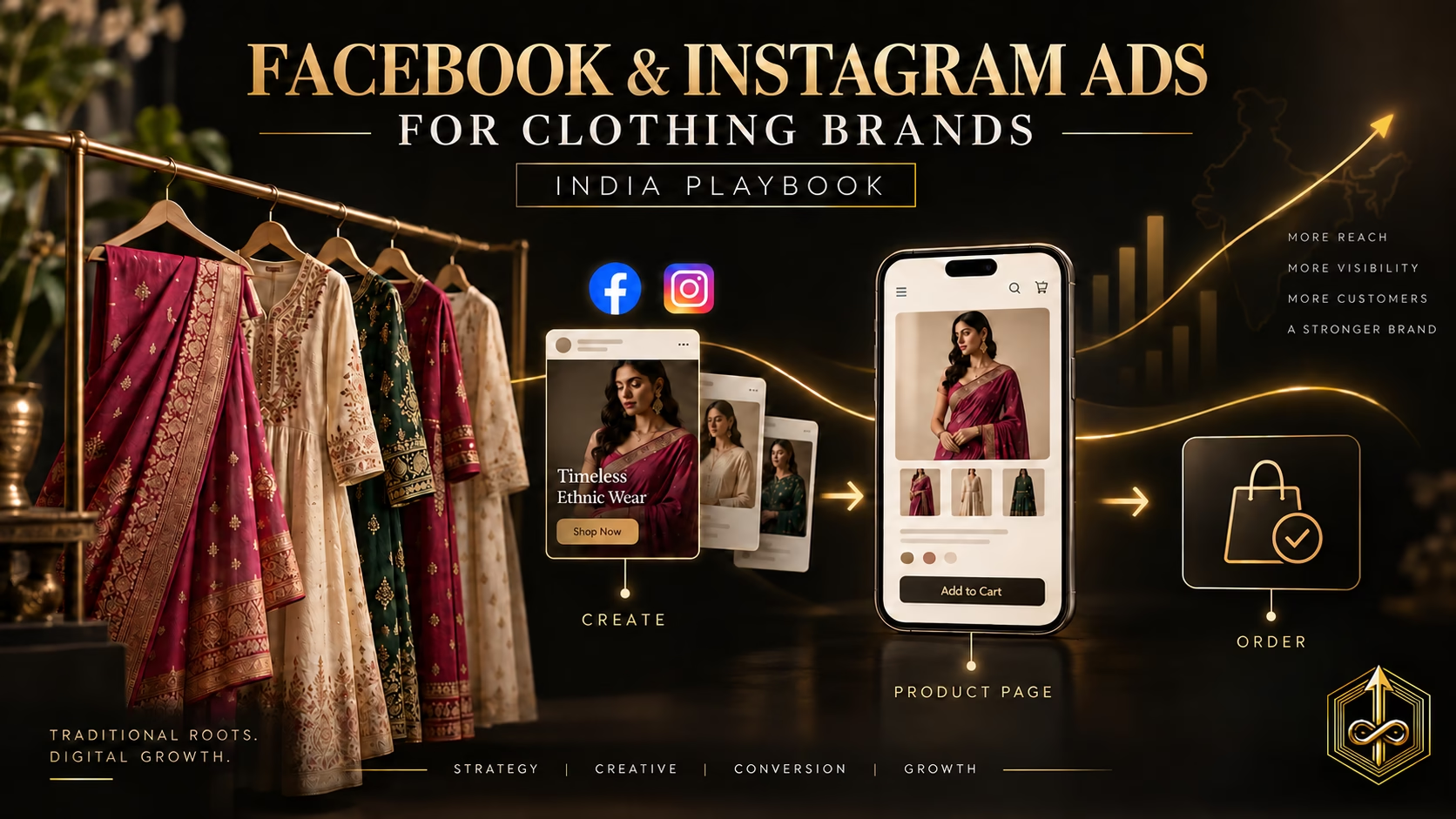
Separate campaign jobs. Discovery campaigns introduce the category or customer situation. Consideration campaigns demonstrate the product and direct people to a relevant page. Sales campaigns ask for a transaction when tracking, stock and checkout are ready. Retargeting should remain proportionate to the size and quality of the eligible audience. Do not repeatedly chase someone with the same sold-out item.
Before spending, verify the destination on common mobile devices, event firing, browser-and-server deduplication where implemented, value and currency, consent requirements, product availability and support coverage. Establish the business guardrails: permissible acquisition cost, minimum contribution, return assumptions, daily cash exposure and review window. The Meta Ads for ecommerce guide explains the diagnosis from impression to delivered order.
Creative testing should change one meaningful hypothesis at a time. Test a buyer problem, product angle, evidence style, opening or destination. Do not call every minor edit a new strategy. Document the hypothesis before launch and evaluate the result across the complete journey. A cheaper click is not automatically a better customer.
Measure the Journey to Delivered Orders
Instagram metrics are useful when they answer a decision. Reach can indicate distribution. Watch behaviour can show whether a reel retained attention. Saves may indicate reference value. Shares may indicate relevance. Profile visits and follows can show account interest. Link clicks and product views can show commercial movement. None of these alone proves profitable demand.
Create a weekly scorecard with four layers. Content quality: intended buyer, product, format, theme, hook and evidence shown. Platform response: reach to followers and non-followers where available, watch or carousel behaviour, saves, shares, profile actions and qualified messages. Website behaviour: loaded sessions, collection views, product views, size interactions, add-to-cart and checkout. Commercial outcome: payments, cancellations, returns, delivered orders, contribution and repeat purchase. Use only metrics the business can define and collect reliably.
Read the layers together. High reach with low suitable profile activity may mean the content attracted the wrong audience. Strong product views with weak add-to-cart may indicate product, price, evidence or page friction. Many WhatsApp chats with few recommendations may indicate unclear enquiries or a weak sales process. Paid orders with high cancellation or return rates may indicate mismatch. Do not blame the algorithm before checking the complete path.
Use cohorts and annotations
Annotate launches, stockouts, website changes, creator posts, offers and tracking interruptions. Compare products and customer groups with similar economics. Review new and repeat customers separately. A blended monthly number can hide that one collection improved while another deteriorated. Avoid drawing a large conclusion from one exceptional reel or one unusually strong day.
Create decision rules
Before a test, state the question, observation window, primary outcome, guardrails and next action. Example: “Will a fabric-in-motion reel send more suitable shoppers to the linen-kurta collection without increasing size-related questions?” The team can then compare with another evidence format and inspect the downstream behaviour. A decision rule creates learning even when the result is weak.
Practical Examples for Indian Clothing Businesses
Example 1: Established kurti brand with many enquiries but weak orders
The diagnosis may reveal that reels show styling but never disclose fabric, garment measurements, model measurements or the matching bottom. The profile sends everyone to WhatsApp, where the team shares a generic catalogue. The correction is not simply more reels. Select a stocked workwear edit, create accurate evidence, build complete product pages, produce a series around fit and office occasions, link each post to the relevant page and reserve WhatsApp for size or delivery help. Measure product views, size interactions, checkout and delivered orders alongside messages.
Example 2: Saree store with strong offline trust but an inconsistent online account
The store posts every new saree as a quick counter video, often without product code, weave, fabric, length, blouse details or a stable buying link. Customers repeatedly type “price please.” Build a defined saree presentation template. Each reel shows full body, border, pallu and drape; the caption includes the product code and essential facts; the website page contains complete details; and the Story link opens that item. Add Highlights for Weaves, Blouse, Delivery, Exchanges and Store. Use the offline expertise as educational content rather than hiding information to increase comments.
Example 3: Premium boutique launching a small occasion-wear collection
The boutique should not imitate a mass seller’s posting volume. Begin with the collection’s buyer and occasion, confirm appointment or online ordering capacity, and capture the construction details that justify the positioning. Use founder-led explanation, controlled try-on media, close finishing, realistic lead times and an application or consultation path only where the purchase genuinely requires assistance. Publish the service boundaries clearly. A premium experience comes from precision and reliability, not from removing useful information.
Example 4: Multi-category clothing shop moving online
Posting menswear, kidswear, sarees and bridal outfits in one unstructured stream makes it difficult to learn what the account represents. Do not upload the whole shop at once. Choose one commercially strong buyer-product lane for a campaign, build the collection and content path, and use profile navigation to keep other categories accessible. Compare lane-level results before expanding. The method reduces confusion without forcing the business to abandon its broader inventory.
Example 5: Clothing brand with viral content and high returns
The team may celebrate reach while customer feedback shows colour, fit or fabric expectations were wrong. Audit the exact posts that drove the returned orders. Compare the visual promise, caption, page information, sales messages and delivered product. Correct misleading lighting, missing measurements or exaggerated language. Add decision-support content and improve quality control. Reduce distribution until the expectation gap is fixed. Retention and Scaling begin with a correctly represented and delivered first order.
Thirty-Day Instagram Marketing Implementation Plan
Days 1–5: Evidence and diagnosis
Export the recent content list and annotate product, buyer, format, destination and outcome. Review recent customer conversations, delivered orders, returns and stock. Select one buyer-product lane. Write the commercial objective and guardrails. Audit the Instagram profile, pinned posts, Highlights, links and account-specific Best Practices guidance. Record the current baseline without trying to make it look better.
Days 6–10: Product and destination readiness
Choose the hero collection and verify size-level stock. Complete the product evidence matrix and shoot missing assets. Improve collection and product pages. Test the mobile journey, checkout, payment and confirmation. Prepare the sales reference and product-specific WhatsApp path. Decide which information belongs on Instagram, the website and the assisted conversation.
Days 11–15: Build the content library
Create several repeatable assets from one organised production cycle: discovery reels, evidence carousels, product demonstrations, founder explanations, Story sequences and decision-support clips. Write accessible on-screen text, accurate captions and one clear action. Save clean master files. Build a publishing board with owner, due date, product, buyer, destination and measurement fields.
Days 16–22: Publish and support
Publish a balanced sequence rather than all conversion posts together. Monitor comments and messages for genuine questions. Answer accurately, update the page when a question repeats and save useful answers to Highlights. Check links and stock daily during the active campaign. Hold a short team review focused on evidence and customer movement, not personal opinions about whether a post “looked good.”
Days 23–27: Validate and distribute
Identify content that reached the intended audience and created meaningful product behaviour. If the website, tracking and economics are reliable, consider controlled paid distribution of a proven message. Set a defined budget and review window. Do not increase spend merely because a reel received attention. Keep a comparison asset so the test answers a useful question.
Days 28–30: Review the full commercial path
Review content, profile actions, sessions, product behaviour, conversations, payments, delivery status and early return signals. Identify the strongest buyer-message-product combination and the biggest constraint. Keep one effective series, improve one weak part of the path and stop one activity that creates effort without evidence of value. Write the next cycle’s hypothesis before producing more content.
Team Operating System and Quality Control
Assign clear ownership. The merchandiser selects products and stock. The product owner confirms facts. The content lead plans and produces. The website owner maintains destinations and tracking. The sales owner maintains response quality. The fulfilment owner reports cancellations and returns. One person may hold several roles in a small business, but the responsibility must still be explicit.
Use a pre-publish check: correct product and code; price and offer; colour; fabric; size information; spelling; claim evidence; link; stock; rights and consent; disclosure where required; readable mobile text; caption; alt text where supported; and next action. After publishing, click the link, open the destination and confirm that the product can actually be purchased or supported.
Maintain a content asset register. Store original file, edited file, product, shoot date, model permissions, creator agreement, usage rights, expiry, caption, destinations and campaign use. This protects the brand from using content outside agreed rights and reduces the cost of finding assets later.
Hold a weekly customer-language review. Collect exact recurring questions without publishing personal details. Turn the findings into product-page changes, content briefs, sales references and product-development feedback. The best Instagram strategy becomes smarter because the business learns from customers, not because the team guesses more frequently.
Retention and Scaling After the First Order
Retention and Scaling are the final stages of the MDP Online Sales Engine. Do not ask a new customer to buy again before confirming that the first order was delivered correctly and any issue was resolved. Use post-purchase content to improve the experience: care guidance, draping or styling, storage, alteration notes and product-specific support.
Request feedback separately from marketing permission. If the customer agrees, use authentic feedback with context. Do not convert a private support message into public advertising without permission. Segment future communication by product and purchase cycle. A customer who bought a festive saree may value blouse pairing or care information; she may not need daily promotional messages.
Build repeat-order content around relevance: compatible separates, new colourways, care products where appropriate, seasonal occasions and collection previews. Measure repeat contribution after communication, incentive and service costs. Scale only when the team can maintain product truth, response time, fulfilment and support for the larger volume.
Common Instagram Marketing Mistakes Clothing Brands Should Avoid
- Posting without a buyer-product focus: the account becomes a mixed catalogue and attracts inconsistent demand.
- Hiding price and information: comments increase, but serious buyers face extra friction and the team answers the same question repeatedly.
- Using only polished model imagery: desire is created without enough evidence about fit, fabric and construction.
- Copying trends without relevance: the content may reach people who enjoy the format but do not need the product.
- Sending every visitor to the homepage: the buying context is lost between content and destination.
- Sending every visitor to WhatsApp: the sales team becomes a manual product page, response slows and attribution weakens.
- Buying reach before fixing the journey: more people encounter the same product, page, stock or service problem.
- Measuring likes as sales performance: the business cannot tell whether the account created delivered demand.
- Using false scarcity or unsupported claims: short-term pressure damages long-term trust.
- Ignoring creator disclosure and rights: the brand creates compliance, reputation and reuse risk.
- Failing to learn from returns: expectation problems remain inside content and product pages.
- Changing everything after one post: the team never produces comparable evidence.
Instagram Marketing Checklist for Clothing Brands
Strategy
- One priority buyer and buying situation are documented.
- One hero collection has sufficient stock and acceptable economics.
- The role of Instagram is defined within the full sales system.
- Every campaign has a product, destination, owner and commercial objective.
- Success includes delivered-order quality, not only engagement.
Profile
- The account clearly states category, buyer value and next action.
- The profile image is recognisable at small size.
- The main link opens a relevant, working mobile destination.
- Pinned posts explain the brand, evidence and buying path.
- Highlights contain current product, size, delivery, exchange and trust information.
Product presentation
- Priority products have full views, details, movement and scale.
- Fabric, fit, model details, garment measurements and care are accurate.
- Colour editing does not misrepresent the product.
- Each common objection is matched to visible evidence.
- Clean master assets are stored for website and advertising use.
Content
- The plan balances discovery, product understanding, trust and conversion.
- Every post has one useful job and one appropriate next step.
- On-screen text is readable and does not hide the garment.
- Captions contain accurate product context rather than vague adjectives.
- Recurring customer questions become new evidence or page updates.
Conversion
- Content and destination communicate the same product and promise.
- Product pages are mobile-ready and contain decision information.
- WhatsApp preserves product context and returns customers to secure checkout.
- Stock, price and policy are consistent across account, website and team.
- Checkout, payment and confirmation have been tested.
Governance and measurement
- Creator collaborations include disclosure, accuracy and usage-right terms.
- The team follows current platform, ASCI and applicable legal guidance.
- Content, website, sales and fulfilment data can be reviewed together.
- Tests have written hypotheses, guardrails and decision rules.
- Scale decisions account for cancellations, returns, contribution and capacity.
Frequently Asked Questions
How often should a clothing brand post on Instagram?
Use a frequency the team can sustain without sacrificing product accuracy, customer support or fulfilment. There is no useful universal number for every account. Review the account-specific Best Practices guidance in the professional dashboard, then test a consistent schedule across a defined period. Measure whether the right audience moves toward product understanding and orders, not whether the team reached an arbitrary posting target.
Are reels better than carousels for clothing brands?
They perform different jobs. Reels are useful for movement, demonstration, process and discovery. Carousels are useful for considered comparisons, details, measurements, styling steps and saved references. Use the format that best communicates the customer decision, then compare downstream product behaviour. A weak reel does not become strategic because reels are popular, and a clear carousel can be commercially valuable without going viral.
Should prices be shown on Instagram?
In most ordinary retail journeys, clear price information reduces unnecessary friction and mismatched enquiries. Keep the website as the current source of truth and avoid placing a price in evergreen content when it may change without a process to update the post. For customised or variable work, explain what determines the price and provide a structured consultation path rather than using “DM for price” as a blanket tactic.
Should a clothing brand sell only through Instagram and WhatsApp?
Instagram and WhatsApp can support discovery and assisted decisions, but an owned website gives the brand a stable destination for product information, policies, search visibility, checkout, measurement and customer experience. The ideal channel mix depends on the product and business, but critical information should not be trapped inside disappearing Stories or manual chat. Read the website, marketplace and Instagram channel comparison for the trade-offs.
Do hashtags still matter for Instagram marketing?
Do not build the strategy around a fixed hashtag formula. Use accurate, relevant descriptions and any account-appropriate discovery features without stuffing unrelated terms. Platform guidance changes, and Meta’s professional-dashboard Best Practices area is the right place to review current advice for the account. The commercial fundamentals remain product relevance, useful creative, a coherent destination and customer experience.
How can a saree business turn Instagram views into orders?
Show complete product evidence, identify the saree with a stable code, provide price and essential details, link to the exact product page and offer WhatsApp support for genuine questions. Demonstrate body, border, pallu, blouse piece, weave, transparency and drape. Measure product views, qualified conversations, checkout, delivery and returns. The detailed guide to selling sarees online in India covers the full system.
How can a kurti brand reduce size-related questions and returns?
Publish garment measurements, model body measurements and size worn; explain ease and silhouette; show the garment on suitable reference bodies when possible; demonstrate sleeve and length; and keep the size chart product-specific when measurements vary. Train WhatsApp staff to recommend from measurements rather than guessing. Feed return reasons back into the product page and content brief.
Should a clothing brand boost posts?
Use paid distribution only after defining the audience, commercial goal, destination, tracking and economics. A post with engagement is not automatically suitable for sales. Choose the campaign setup that matches the objective, verify events and product availability, set a controlled budget and examine the complete path to delivered orders. Do not use boosting as the default response to weak organic performance.
What should be measured every week?
Review content inputs, suitable reach and engagement, profile actions, loaded website sessions, product views, size interactions, carts, checkout, qualified WhatsApp conversations, payments, cancellations, delivery, returns and contribution where reliable. Annotate launches and stockouts. The exact scorecard should remain small enough that the team actually uses it to make decisions.
How long does an Instagram strategy take to work?
There is no honest universal timeline. A business with trusted products, accurate pages, strong stock and existing customers starts from a different position than one repairing product-market fit or fulfilment. Use short learning cycles for content and page changes, but evaluate commercial quality through delivery and returns, which takes longer. The objective is a compounding evidence and customer system, not a promised number of days.
Can Instagram alone build a premium clothing brand?
Instagram can express the brand and create discovery, but premium positioning must remain consistent across product design, presentation, pricing logic, website, packaging, service, delivery and post-purchase experience. Premium is not a black-and-gold template or a high price. It is a coherent promise supported by product truth and reliable execution.
What is the first change a clothing business should make?
Choose one stocked product group and map the full path from an Instagram post to product evidence, page, support, checkout, delivery and return feedback. Identify the largest evidence gap or friction point and correct it before increasing content volume. That single mapped journey gives the team a practical starting point and produces better information for the next decision.
Final Strategy: Build an Instagram-to-Order Engine
The best Instagram marketing strategy for a clothing brand is not a bag of growth tricks. It is a connected Online Sales Engine. Buyer Clarity decides whom and what to feature. Product Presentation replaces the information a customer loses online. The Converting Website holds accurate facts and transaction paths. Traffic distributes validated messages. WhatsApp and Sales resolve genuine uncertainty. Retention and Scaling turn a correctly delivered first order into a durable customer relationship.
Begin with one buyer-product lane, one complete destination and one evidence-led content cycle. Publish deliberately, observe the full journey and improve the constraint that actually limits delivered orders. When every post helps a suitable customer discover, understand, trust or buy the right product, Instagram becomes part of the business system rather than a daily demand for content.