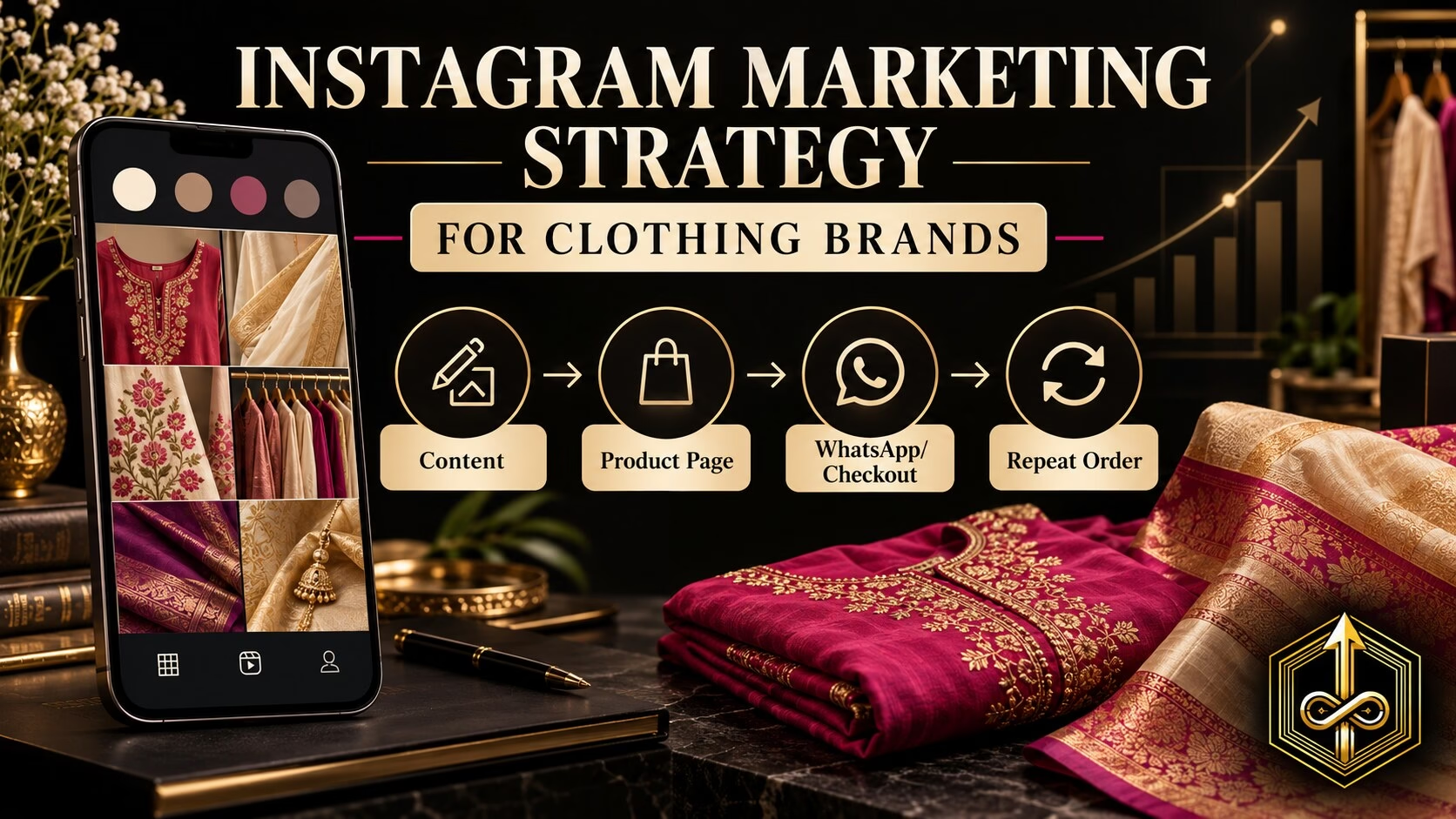
How to Sell Clothes Online in India: Complete Clothing Business Guide
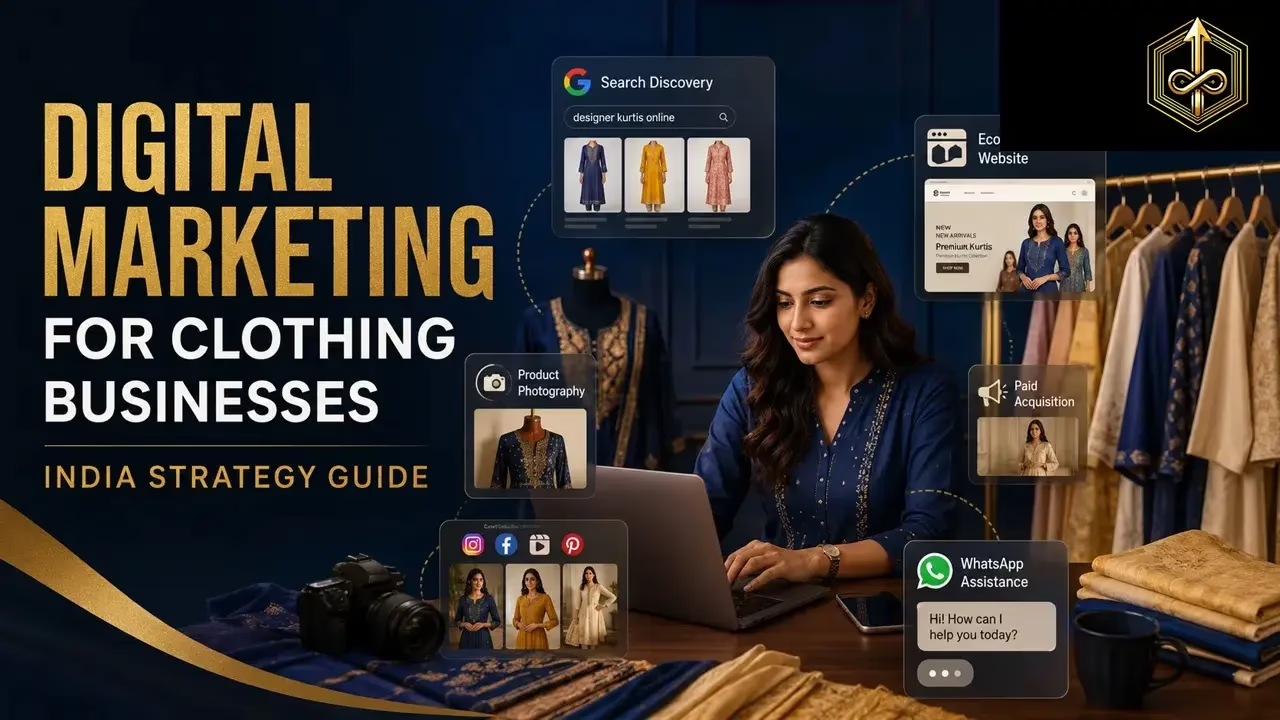
Website implementation resource: Use the clothing ecommerce website guide for Indian brands to turn this selling roadmap into a practical store architecture, product-page, fit, checkout, SEO and measurement specification.
To sell clothes online in India, build a complete buying system—not only a social-media page or ecommerce website. The customer must understand the garment, judge fit and fabric, trust the seller, select the correct variant, pay easily and receive exactly what was promised.
Clothing ecommerce is difficult because the customer cannot try the garment. Colour, fabric, drape, size, cut, lining, transparency, contents and delivery all create uncertainty. Strong online clothing brands reduce that uncertainty before asking for payment.
Direct answer: Choose one clothing buyer and a focused collection, calculate delivered-order contribution, build accurate product photography and size information, use a mobile converting website, attract qualified traffic, convert assisted enquiries systematically and improve returns and repeat purchase before scaling.
Define the wearer, occasion, style, budget, fit concerns and desired outcome.
Select products with demand, stock reliability and healthy delivered contribution.
Show fit, fabric, colour, craft, movement and contents accurately.
Build sizing, product pages, policies, proof and checkout around the decision.
Use search, content, creators, referrals and ads with clear intent.
Handle size, fabric, trust, delivery and price objections consistently.
Improve delivery, exchange, repeat purchase, contribution and capacity.
Choose the Right Clothing Business Model
Your operating model changes inventory, product development, photography, margins and delivery.
Manufacturer or designer
You control design and production but must manage sampling, fabric, pattern, sizing, quality and production cash flow.
Curated reseller or boutique
You select existing products and compete through curation, presentation, service and brand position. Supplier consistency and duplicate products are major risks.
Made-to-order
Lower finished-stock risk but longer delivery, measurement, expectation and cancellation complexity.
Custom or bespoke
High assistance and product-data requirements. Scope, measurement, revision and payment terms must be documented.
Marketplace-led
Access to purchase traffic but stronger comparison, platform rules and margin pressure.
Own-brand D2C
More control over brand, customer and retention but you must build demand and trust.
Choose one primary model for launch. A business can evolve, but mixing every model without clear operations creates confusion.
Step 1: Choose a Clear Niche and Buyer
“Ladies’ wear” is too broad. Clothing decisions are connected to occasion, identity, comfort, fit and price.
Positioning formula
Buyer + occasion/problem + product territory + style + reason to choose.
Examples
- Elegant ethnic workwear for professionals who want dependable sizing and easy styling
- Premium festive kurta sets for women who want coordinated occasion looks
- Lightweight sarees for office and day events with clear drape guidance
- Plus-size contemporary ethnic wear built around product-specific garment measurements
Buyer brief
- Age and life context where relevant
- Occasion
- Style identity
- Price expectation
- Fit and body concerns
- Fabric preferences
- Delivery urgency
- Trust concerns
- Discovery channels
- Language
Do not position only through price
“Affordable” is easy to copy. Build selection, fit, fabric, styling, craft, service or convenience into the reason to choose.
Step 2: Build a Focused Launch Collection
Collection filters
- Clear buyer and occasion
- Reliable supplier or production
- Manageable variants
- Strong presentation potential
- Healthy contribution
- Acceptable return risk
- Logical cross-sell
Collection architecture
- Hero products
- Entry products
- Alternative colours or fits
- Complete sets
- Complementary pieces
- Limited experiments
Control SKU complexity
Every colour-size combination creates inventory and data work. Begin with enough variety to serve the buyer, not every possible variant.
Use pre-launch evidence
Offline sales, customer questions, waitlists, small-batch launches and controlled content response can guide selection. Do not treat likes as confirmed demand.
Step 3: Build Sourcing, Manufacturing and Quality Control
Supplier evaluation
- Product consistency
- Size consistency
- Fabric and colour accuracy
- Reorder reliability
- Defect handling
- Documentation
- Lead time
- Packaging and transport
Manufacturing controls
- Approved sample
- Fabric and trim specification
- Pattern and measurement chart
- Stitching and seam standard
- Colour and print approval
- In-line and final QC
- Batch record
Garment QC
- Measurements
- Stitching and seam
- Loose threads
- Buttons, zip, hook and closure
- Embroidery or print placement
- Lining
- Stains, holes and damage
- Set contents
- Size and SKU label
Do not scale ads for a product with repeated quality or measurement problems.
Step 4: Price From Delivered-Order Economics
Contribution per delivered order = Net selling price − garment cost − finishing/alteration − packaging − payment cost − forward shipping − expected return/RTO cost − variable fulfilment − discount
Include
- Fabric or product cost
- Cutting, stitching, finishing and wastage
- Quality control
- Packaging
- Payment and platform costs
- Forward and reverse logistics
- Alteration, damage and restocking
- Content and photography allocation
- Customer acquisition
- Business overhead
- Required contribution
Do not use universal markup
Product risk, service, brand position and acquisition differ. Build price from actual economics and customer value.
Calculate by SKU and size when needed
Fabric use, production cost or return behaviour may vary. A blended average can hide a problem.
Step 5: Create SKU and Inventory Discipline
Every garment needs
- Unique SKU
- Size and colour codes
- Live quantity
- Fabric and lining record
- Measurement chart version
- QC status
- Package dimensions and weight
- Product media
- Return reason history
Stock reservation
Define when stock is reserved during cart, manual order or COD confirmation. Avoid selling the same unit offline and online.
Reorder rules
Use lead time, sales velocity, season, size mix and supplier reliability. Do not reorder only from total units sold.
Step 6: Create Conversion-Focused Clothing Photography
12-image gallery
- Clean front hero
- Three-quarter view
- Full back
- Side profile
- Fabric macro
- Craft or finishing macro
- Neckline, sleeve and closure
- What is included
- Model measurements and size
- Measurement guide
- Movement or lifestyle
- Packaging
Colour accuracy
Use controlled light and consistent editing. Compare final images with the sample. Explain minor display variation without using it to excuse oversaturation.
Model truth
- Height
- Relevant measurements
- Size worn
- Pinning or alteration
- Heel height when relevant
- Accessories not included
Video
Show movement, drape, fit, pockets, closure, dupatta and fabric. Avoid effects that hide the product.
Use the complete framework in the premium kurti presentation guide.
Step 7: Build a Reliable Size and Fit System
Separate body and garment measurements
Label whether a chart describes the wearer or the garment. Explain ease.
Product-specific garment measurements
- Bust
- Waist
- Hip
- Shoulder
- Armhole
- Sleeve
- Length
- Bottom measurements
Fit description
Fitted, regular, relaxed, oversized, straight, A-line or flared. Include stretch, lining and transparency.
Measurement guide
Show how to compare with an existing garment. This is often more reliable than guessing from height or weight.
Fit feedback
Track return reason by SKU and size. Update the chart or pattern when repeated problems appear.
Step 8: Write Complete Product Information
Checklist
- Outcome and occasion
- Silhouette and design
- Fabric composition
- Lining and transparency
- Stretch
- Garment measurements
- Fit
- Model data
- Set contents
- Care
- Natural variation
- Dispatch
- Exchange and return
Copy structure
- Use and outcome
- Design
- Material
- Fit
- Contents
- Care
- Expectation
Specific information creates premium perception
“Hand-finished neckline with close-up evidence” is stronger than “luxury finish.”
Step 9: Choose Where to Sell Clothes Online
| Channel | Useful when | Watch for |
|---|---|---|
| Marketplace | Standardised products and existing search demand | Comparison, returns, platform costs and dependency |
| Instagram + WhatsApp | Visual storytelling and assisted fit | Manual catalogue, lost leads and inconsistent order capture |
| Own website | Brand control, size systems, collections and retention | You must create demand and trust |
| Hybrid | Channels have defined roles | Stock, price and attribution inconsistency |
Step 10: Build a High-Converting Clothing Website
Navigation
Organise by garment, occasion, style, size, fabric, colour, price or new arrival based on customer behaviour.
Collection page
- Useful filters
- Consistent product cards
- Price and availability
- Quick size context
- Mobile usability
Product page sequence
- Title
- Price and stock
- Gallery
- Value summary
- Size selector and chart
- Contents
- Fabric and fit
- Care
- Delivery and policy
- Reviews
Checkout
Test variants, cart, coupon, shipping, address, payment, error and confirmation on mobile.
Step 11: Price and Promote Without Destroying Margin
Offer objectives
- Increase first purchase
- Increase order value
- Move seasonal stock
- Reward prepaid orders
- Launch a collection
- Retain customers
Offer types
- Coordinated bundles
- Free-shipping threshold
- Prepaid benefit
- Early access
- Limited genuine drop
- Complementary add-on
Calculate before approval
Net price, delivered contribution, order value, return behaviour and buyer quality. Do not use fake scarcity or inflated reference prices.
Step 12: Generate Qualified Traffic
Search
Build category, product and guide pages around how buyers search for fit, occasion, fabric and style.
Social
Demonstrate fit, movement, styling, care, collection story, quality and customer use.
Creators
Select audience fit and content credibility. Require product accuracy and disclosure.
Referrals
Invite satisfied customers to share authentic experience. Do not purchase or manufacture proof.
Step 13: Build a Clothing Content System
Content pillars
- Occasion selection
- Size and fit
- Fabric education
- Styling
- Product demonstration
- Craft and quality
- Care
- Customer proof
- Founder or curator view
- Collection launch
Map to stage
Discovery inspires, evaluation explains, purchase content clarifies price and delivery, post-purchase content improves use and retention.
Step 14: Run Ads Only When the Funnel Is Ready
Before ads
- Buyer and product are clear.
- Gallery and size answer objections.
- Landing page matches the creative.
- Checkout is tested.
- Tracking is validated.
- Delivered contribution is known.
- Operations can handle volume.
Read Why Clothing Business Ads Don’t Generate Online Orders.
Step 15: Convert Clothing Enquiries on WhatsApp
Flow
- Identify product
- Ask necessary fit/occasion questions
- Recommend a small set
- Share complete information
- Resolve objection
- Send checkout
- Follow up with value
- Record outcome
Do not guess size
Use garment measurements, fit and comparison with an existing garment.
Use the complete WhatsApp sales guide.
Step 16: Reduce Avoidable Returns and RTO
| Reason | Possible source | Repair |
|---|---|---|
| Fit | Chart, pattern or recommendation | Measurements, fit notes and pattern correction |
| Colour | Lighting or editing | Colour control and honest variation |
| Fabric | Vague information | Composition, close-up and movement |
| Quality | Supplier or QC | Batch control and stop scale |
| RTO | Intent, details or verification | Source and order-process analysis |
Step 17: Build Retention and Repeat Purchase
Post-purchase
- Confirmation
- Tracking
- Care and styling
- Issue check
- Review
- Relevant next collection
Use preferences responsibly
Size, colour, fabric and occasion can improve future recommendations with appropriate consent and data practices.
Create retention through product quality
Messages cannot compensate for poor fit or delivery. Repeat purchase begins with a correct first order.
Clothing Image SEO and Google Images
Descriptive filenames
navy-embroidered-kurta-set-front-view.webpkurta-set-size-measurement-guide.webpclothing-ecommerce-shot-list-infographic.webp
Alt text
Describe visible garment, colour, view, fit or detail. Do not stuff keywords.
Captions
Use model size, contents and measurement context.
Relevant pages and stable URLs
Place original images near relevant text, use responsive supported formats and avoid repeated reuploads.
Follow Google Search Central image guidance. No responsible method guarantees ranking.
India-Specific Business Checklist
Verify current requirements based on structure, turnover, state, product and channel.
- Business and bank setup
- GST and invoicing
- Marketplace documentation
- Product labels and declarations
- Shipping, cancellation, return and refund
- Privacy and messaging consent
- Truthful material, discount and scarcity claims
Use the official GST portal and qualified advisers. This guide is not legal or tax advice.
Clothing Ecommerce Metrics
- Qualified sessions
- Collection-to-product clicks
- Gallery and size interaction
- Add-to-cart
- Checkout and purchase
- Enquiry-to-order
- Average order value
- Contribution per delivered order
- Cancellation, return and RTO
- Return reason by SKU and size
- Repeat purchase
- Support resolution
90-Day Clothing Business Roadmap
Days 1–15
Buyer, niche, model, collection and economics.
Days 16–30
Supplier, production, QC, SKU and stock.
Days 31–45
Photography, video, measurements and descriptions.
Days 46–60
Website, product pages, policies, checkout and shipping.
Days 61–70
WhatsApp, support, lead stages and training.
Days 71–80
Controlled content, search, referral and ads.
Days 81–90
Diagnose, improve, retain and decide scale.
This roadmap builds a system; it does not guarantee order volume.
Clothing Online Sales Scorecard
| Layer | Statement | Score |
|---|---|---|
| Buyer | One buyer, occasion and fit concern set are clear. | 0 / 1 / 2 |
| Collection | Products have demand, stock and contribution. | 0 / 1 / 2 |
| Presentation | Fit, fabric, colour, craft and contents are visible. | 0 / 1 / 2 |
| Size | Product measurements and fit guidance are reliable. | 0 / 1 / 2 |
| Website | Mobile product page and checkout work. | 0 / 1 / 2 |
| Traffic | Each source has a buyer and destination. | 0 / 1 / 2 |
| Sales | Enquiries and objections follow an SOP. | 0 / 1 / 2 |
| Retention | Returns, delivery and repeat purchase improve the system. | 0 / 1 / 2 |
Common Mistakes
Serving everyone
Broad positioning creates random assortment.
Too many SKUs
Complexity reduces presentation and stock accuracy.
Generic size charts
Pattern variation creates returns.
Supplier photography
It weakens differentiation and product truth.
Discount-first marketing
It attracts price without fixing value.
Ads before the website
Traffic amplifies friction.
Ignoring return reasons
Repeated product problems remain hidden.
Scaling without cash flow
Inventory, ads and returns can consume cash.
Frequently Asked Questions
Can I start selling clothes online from home?
Yes, if you can manage stock, product truth, payments, packaging, delivery, support and applicable requirements. Start focused.
Which clothing products should I sell first?
Products with clear buyer demand, reliable quality, manageable variants, strong presentation and healthy contribution.
Do I need models?
Customers need an accurate fit and scale reference. Models, mannequins and measurement systems can serve different roles. Model data is highly useful.
How do I reduce size returns?
Use product-specific garment measurements, fit descriptions, model data, measurement diagrams and pattern feedback.
Should I show prices on Instagram?
Transparent prices generally improve self-qualification. Include product context.
Should I offer COD?
Evaluate demand, verification, serviceability, order value and RTO. Use consistent rules.
How much should I spend on ads?
Base testing on delivered contribution, acquisition limit and a defined learning plan.
Is a website necessary?
It becomes valuable for catalogue, size, policy, checkout, data and repeat purchase, although demand can be validated through other channels.
How many images per product?
Enough to show front, back, side, fabric, detail, contents, model, measurements and movement. Avoid repetition.
How should I price clothes?
Include product, production, QC, packaging, payment, shipping, returns, acquisition and overhead, then align with value.
How can I make clothes look premium online?
Use coherent curation, garment preparation, accurate photography, specific information, size confidence, refined website and reliable service.
What is the best platform?
It depends on buyer, product, margin, assistance and traffic capability. Define each channel’s role.
Can AI create model photos?
Use responsibly. Product colour, fit, construction and contents must remain accurate. Real decision-critical images are essential.
How do I appear in Google Images?
Publish original useful images with descriptive filenames, accurate alt text, relevant pages and sound technical implementation. Ranking is not guaranteed.
How long will it take to get orders?
No universal timeline exists. It depends on product, buyer, starting assets, traffic, competition and execution. Measure each layer.
How do I scale?
Scale after product, page, tracking, delivered contribution and operations remain healthy under controlled growth.
Implementation System for How to Sell Clothes Online in India: Complete Clothing Business Guide
An online clothing sales system for Indian retailers, boutiques, manufacturers and brand owners with real inventory should be treated as an operating system, not a collection of isolated tactics. The commercial objective is to help suitable buyers understand garments, choose the right variant and receive an order that matches the online promise. That requires alignment between the promise that creates the enquiry, the product evidence available to the customer, the person or automation that responds, the transaction route and the post-purchase experience.
Begin with a baseline rather than assumptions. Review actual product pages, recent conversations, orders, cancellations, returns and support cases. Separate facts from opinions. If the business cannot connect an enquiry to a delivered order, improve the record before increasing traffic. If the same question appears repeatedly, correct the website or product data instead of permanently adding manual work.
Define the reader and the decision in one sentence. For example: “An existing kurti buyer is deciding whether this garment will fit for office wear and arrive before a stated date.” This is more useful than a broad label such as “women interested in fashion.” It tells the business what information, evidence and fulfilment confidence must be available.
Create a written standard that the owner, marketing team, sales team and fulfilment team can all use. The standard should explain what may be promised, which facts must be verified, where the customer should pay, how consent is recorded, who owns an exception and which outcomes are reviewed every week.
Eight-Part Readiness Scorecard
Score each area from one to five and write evidence beside the score. A number without evidence is decoration. Fix the lowest critical area before adding more campaigns.
1. A defined wearer, wardrobe need and price context
Check whether a defined wearer, wardrobe need and price context is complete, current and easy for both the customer and team to find. Test it using a real mobile buying situation rather than the editor preview. Record who owns updates and what triggers a recheck. If this information changes by product, variant, location or date, the response must verify the correct version before it is shared.
2. A focused assortment with size and stock depth
Check whether a focused assortment with size and stock depth is complete, current and easy for both the customer and team to find. Test it using a real mobile buying situation rather than the editor preview. Record who owns updates and what triggers a recheck. If this information changes by product, variant, location or date, the response must verify the correct version before it is shared.
3. Product-specific measurements and fit standards
Check whether product-specific measurements and fit standards is complete, current and easy for both the customer and team to find. Test it using a real mobile buying situation rather than the editor preview. Record who owns updates and what triggers a recheck. If this information changes by product, variant, location or date, the response must verify the correct version before it is shared.
4. Fabric, lining, stretch, care and contents facts
Check whether fabric, lining, stretch, care and contents facts is complete, current and easy for both the customer and team to find. Test it using a real mobile buying situation rather than the editor preview. Record who owns updates and what triggers a recheck. If this information changes by product, variant, location or date, the response must verify the correct version before it is shared.
5. Complete on-model, detail and movement imagery
Check whether complete on-model, detail and movement imagery is complete, current and easy for both the customer and team to find. Test it using a real mobile buying situation rather than the editor preview. Record who owns updates and what triggers a recheck. If this information changes by product, variant, location or date, the response must verify the correct version before it is shared.
6. Mobile collections, product pages and checkout
Check whether mobile collections, product pages and checkout is complete, current and easy for both the customer and team to find. Test it using a real mobile buying situation rather than the editor preview. Record who owns updates and what triggers a recheck. If this information changes by product, variant, location or date, the response must verify the correct version before it is shared.
7. Transparent shipping, COD and exchange process
Check whether transparent shipping, COD and exchange process is complete, current and easy for both the customer and team to find. Test it using a real mobile buying situation rather than the editor preview. Record who owns updates and what triggers a recheck. If this information changes by product, variant, location or date, the response must verify the correct version before it is shared.
8. Delivery, size, return, repeat and contribution records
Check whether delivery, size, return, repeat and contribution records is complete, current and easy for both the customer and team to find. Test it using a real mobile buying situation rather than the editor preview. Record who owns updates and what triggers a recheck. If this information changes by product, variant, location or date, the response must verify the correct version before it is shared.
Design the Full Customer Journey
Discovery
Identify the source, promise and expected intent. A product-specific advertisement, an organic tutorial, a store QR code and an existing-customer message create different expectations. Preserve that context so the first response feels continuous. Remove traffic sources that repeatedly attract people outside the intended product or price context.
Evaluation
Make the core facts visible on the product page and keep a verified evidence library for questions that need assistance. Recommend only after the customer’s stated requirement is understood. A long catalogue is not a recommendation; it transfers the decision work back to the buyer.
Decision
Resolve the real objection with a fact, demonstration, comparison or clear limitation. Do not manufacture urgency or guarantee an outcome the business cannot control. The next step should be singular and obvious: view the exact product, select a variant, use secure checkout or wait for specified evidence.
Transaction
Confirm product, variant, quantity, price, discount, shipping, address, payment status and policy in the order system. Never rely only on a payment screenshot. Provide an order number and explain what will happen next. If COD is offered, use the documented confirmation and risk process consistently.
Delivery and retention
Connect the sale to dispatch, delivery, return and service. Solve problems before sending promotions. Ask for marketing permission separately and state what the person can expect. Retention should be based on relevance, customer value and honest frequency, not on the size of a broadcast list.
Ninety-Day Operating Workflow
Days 1–15: Diagnose
Audit representative conversations and the product pages that produced them. Tag intent, first useful response, evidence supplied, checkout action and final outcome. Interview the sales and fulfilment team about information gaps. Correct dangerous inaccuracies immediately, particularly payment, material, stock, delivery and return statements.
Days 16–30: Build foundations
Standardise product identifiers, evidence folders, price and stock sources, policy modules, business hours and escalation contacts. Create contextual entry links. Define what automation may answer and where a person must take over. Place the most repeated factual answers on the website.
Days 31–60: Run a controlled pilot
Use a limited group of products and traffic sources. Train the team on one conversation framework and secure checkout route. Review open conversations daily. Compare promises with fulfilment. Do not increase traffic until stock, response ownership and order confirmation are reliable.
Days 61–90: Improve with outcomes
Analyse delivered conversion, contribution, sales time, returns, complaints and opt-outs by source and product. Improve the largest uncertainty. Remove unnecessary messages. Expand the assortment or campaign only when service quality and economics remain healthy.
Category-Specific Scenarios
Focused launch assortment
Choose one wearer and use case, then create enough style and size choice without diluting stock. Complete measurements, model context, fabric evidence, policy and mobile QA before launch.
Record the evidence used, the recommendation reason and the final outcome. Feed recurring uncertainty back into photography, descriptions, sizing, packaging or policy. The purpose is to make the next customer’s decision easier before the conversation begins.
Fit assistance
Ask for the exact product and desired fit, use garment measurements and a comparable owned garment, state uncertainty, and send the preselected variant link.
Record the evidence used, the recommendation reason and the final outcome. Feed recurring uncertainty back into photography, descriptions, sizing, packaging or policy. The purpose is to make the next customer’s decision easier before the conversation begins.
Return-learning loop
Review fit, colour, fabric, quality and expectation codes weekly. Change product grading, photos, descriptions, targeting or fulfilment according to the verified cause.
Record the evidence used, the recommendation reason and the final outcome. Feed recurring uncertainty back into photography, descriptions, sizing, packaging or policy. The purpose is to make the next customer’s decision easier before the conversation begins.
Measurement Model
Use definitions that connect marketing, sales and operations. Review the following by product and source; a blended site average can hide an expensive campaign or a high-return item.
- Qualified clothing sessions
- Track visits matching wearer, style, price and geography. Compare the trend with product, source and team context. Investigate material changes before scaling or cutting activity.
- Collection discovery
- Track movement from navigation or content to relevant products. Compare the trend with product, source and team context. Investigate material changes before scaling or cutting activity.
- In-stock size coverage
- Track demand-relevant variant availability. Compare the trend with product, source and team context. Investigate material changes before scaling or cutting activity.
- Fit-evidence engagement
- Track use of measurements, model context and size help. Compare the trend with product, source and team context. Investigate material changes before scaling or cutting activity.
- Add-to-cart by size
- Track variant-level product intent. Compare the trend with product, source and team context. Investigate material changes before scaling or cutting activity.
- Checkout and payment completion
- Track verified orders from active carts. Compare the trend with product, source and team context. Investigate material changes before scaling or cutting activity.
- Delivered-order rate
- Track orders completed after cancellation, RTO and return. Compare the trend with product, source and team context. Investigate material changes before scaling or cutting activity.
- Size exchange and return
- Track fit outcomes by SKU, size, cut and source. Compare the trend with product, source and team context. Investigate material changes before scaling or cutting activity.
- Quality complaint rate
- Track fabric, stitching, colour, contents and damage issues. Compare the trend with product, source and team context. Investigate material changes before scaling or cutting activity.
- Contribution by product and source
- Track net value after marketing and variable costs. Compare the trend with product, source and team context. Investigate material changes before scaling or cutting activity.
- Repeat purchase interval
- Track time to a relevant next garment purchase. Compare the trend with product, source and team context. Investigate material changes before scaling or cutting activity.
- Full-price share
- Track orders acquired without broad discount dependence. Compare the trend with product, source and team context. Investigate material changes before scaling or cutting activity.
Use delivered orders and contribution as the commercial base. Placed orders, link clicks and response speed remain diagnostic measures, but none proves healthy growth alone. Record reason codes for lost orders, cancellations, RTO, returns and complaints so a rate can lead to a corrective action.
Common Failure Modes and Corrective Actions
1. Launching with an unstructured catalogue
A large assortment without buyer, collection and merchandising logic makes discovery and stock management harder.
Corrective action: Identify the source of truth, assign one owner, test the corrected journey on mobile and review the next relevant outcomes. Do not label the issue solved because the editor setting was changed.
2. Using a universal size chart
Cuts and production vary; publish product measurements and explain how to compare them.
Corrective action: Identify the source of truth, assign one owner, test the corrected journey on mobile and review the next relevant outcomes. Do not label the issue solved because the editor setting was changed.
3. Showing styled items as included
List every garment and accessory in the package and label illustrative styling clearly.
Corrective action: Identify the source of truth, assign one owner, test the corrected journey on mobile and review the next relevant outcomes. Do not label the issue solved because the editor setting was changed.
4. Ignoring mobile filter and variant usability
Customers need to find in-stock style and size without accidental selections or hidden controls.
Corrective action: Identify the source of truth, assign one owner, test the corrected journey on mobile and review the next relevant outcomes. Do not label the issue solved because the editor setting was changed.
5. Depending on discount acquisition
Protect product value and delivered contribution through relevance, evidence and service.
Corrective action: Identify the source of truth, assign one owner, test the corrected journey on mobile and review the next relevant outcomes. Do not label the issue solved because the editor setting was changed.
6. Driving ads to unavailable sizes
Coordinate promotion with size depth and replenishment instead of wasting high-intent traffic.
Corrective action: Identify the source of truth, assign one owner, test the corrected journey on mobile and review the next relevant outcomes. Do not label the issue solved because the editor setting was changed.
7. Guessing delivery dates
Use stock and dispatch reality plus a separate carrier estimate, particularly for occasion orders.
Corrective action: Identify the source of truth, assign one owner, test the corrected journey on mobile and review the next relevant outcomes. Do not label the issue solved because the editor setting was changed.
8. Treating exchanges as normal noise
Analyse fit, measurement, grading, description and recommendation causes by SKU.
Corrective action: Identify the source of truth, assign one owner, test the corrected journey on mobile and review the next relevant outcomes. Do not label the issue solved because the editor setting was changed.
9. Letting social DMs become the order record
Use secure checkout and an order system for product, address, payment and status truth.
Corrective action: Identify the source of truth, assign one owner, test the corrected journey on mobile and review the next relevant outcomes. Do not label the issue solved because the editor setting was changed.
10. Scaling before quality control
Incoming, measurement, packing and dispatch checks must remain reliable as volume grows.
Corrective action: Identify the source of truth, assign one owner, test the corrected journey on mobile and review the next relevant outcomes. Do not label the issue solved because the editor setting was changed.
Weekly Review Agenda
- List unresolved payment, delivery, return and complaint cases.
- Review stock, price, policy and evidence changes.
- Compare qualified conversations, placed orders and delivered orders by source.
- Inspect a random sample for accuracy, relevance, tone and permission.
- Identify the most repeated customer uncertainty.
- Assign one website, product, campaign or process correction.
- Review the previous correction against outcomes.
- Confirm team ownership and capacity before increasing traffic.
Keep the meeting focused on causes and decisions. Screenshots of message volume are not a substitute for customer and commercial outcomes. Document what changed, who owns it, the expected signal and the review date.
Fieldwork Prompts for the Owner and Team
- Which customer question consumes the most time, and why is the answer not already visible?
- Which source creates the highest proportion of suitable buyers rather than the most messages?
- Which products need human recommendation, and which should convert without chat?
- Where do agents obtain current stock, price, measurement and policy information?
- What evidence changes a doubtful customer’s decision without exaggeration?
- Which promise is hardest for fulfilment to keep?
- Why do confirmed orders cancel or fail delivery?
- Which return reason began as preventable pre-purchase uncertainty?
- How much sales time is used per delivered order?
- Which customers have clearly asked for future promotional messages?
- When does automation hand off to a named person?
- What would make the next 100 conversations more accurate, not merely faster?
Extended Frequently Asked Questions
Do I need a clothing website to start?
An owned website gives complete product evidence, checkout control, search visibility and customer continuity even when social and marketplaces assist.
Document the chosen rule for the business, train the team and check it against current platform and legal requirements. Review it when products, staffing, policies or technology change.
How should sizes be handled?
Use consistent internal grading plus product-specific garment measurements, method and model context.
Document the chosen rule for the business, train the team and check it against current platform and legal requirements. Review it when products, staffing, policies or technology change.
What clothing photos are essential?
Full front, back, side, movement, fabric, construction, fit context and every included component.
Document the chosen rule for the business, train the team and check it against current platform and legal requirements. Review it when products, staffing, policies or technology change.
Should I offer free returns?
Model customer benefit, abuse, reverse cost and contribution, then state an easy-to-understand policy.
Document the chosen rule for the business, train the team and check it against current platform and legal requirements. Review it when products, staffing, policies or technology change.
How much stock should be held?
Balance demand-relevant size depth, supplier lead time and working capital; avoid promoting variants that cannot be served.
Document the chosen rule for the business, train the team and check it against current platform and legal requirements. Review it when products, staffing, policies or technology change.
Which marketing channel should come first?
Start where the defined buyer can be reached and the product can be demonstrated, then connect it to the owned journey.
Document the chosen rule for the business, train the team and check it against current platform and legal requirements. Review it when products, staffing, policies or technology change.
How do I reduce RTO?
Improve traffic quality, price and delivery clarity, address capture, confirmation and customer communication.
Document the chosen rule for the business, train the team and check it against current platform and legal requirements. Review it when products, staffing, policies or technology change.
When should the business scale?
When stock accuracy, delivery, return reasons, service and contribution remain controlled under higher demand.
Document the chosen rule for the business, train the team and check it against current platform and legal requirements. Review it when products, staffing, policies or technology change.
Implementation Checklist
- Define the intended buyer, product and decision.
- Publish accurate price, stock, specifications and policies.
- Prepare a defined wearer, wardrobe need and price context, a focused assortment with size and stock depth, product-specific measurements and fit standards, fabric, lining, stretch, care and contents facts.
- Create source- and product-specific entry links.
- Assign one owner and an escalation route.
- Use secure product and checkout pages.
- Separate order service from marketing permission.
- Connect conversations to delivery and returns.
- Measure sales labour and contribution.
- Turn repeated questions into website improvements.
- Audit accuracy and tone every week.
- Scale only after the complete journey is reliable.
Build a Clothing Brand, Not Only a Catalogue
Strong online clothing businesses connect buyer, collection, product truth, size, website, traffic, sales and delivery. Fix the weakest layer before increasing complexity or spend.
Build your Clothing Online Sales Engine
Meri Digital Pehchan helps clothing, saree, kurti and boutique businesses build online brands through Buyer Clarity, Product Presentation, Converting Website, Traffic, Sales Conversion and Retention.