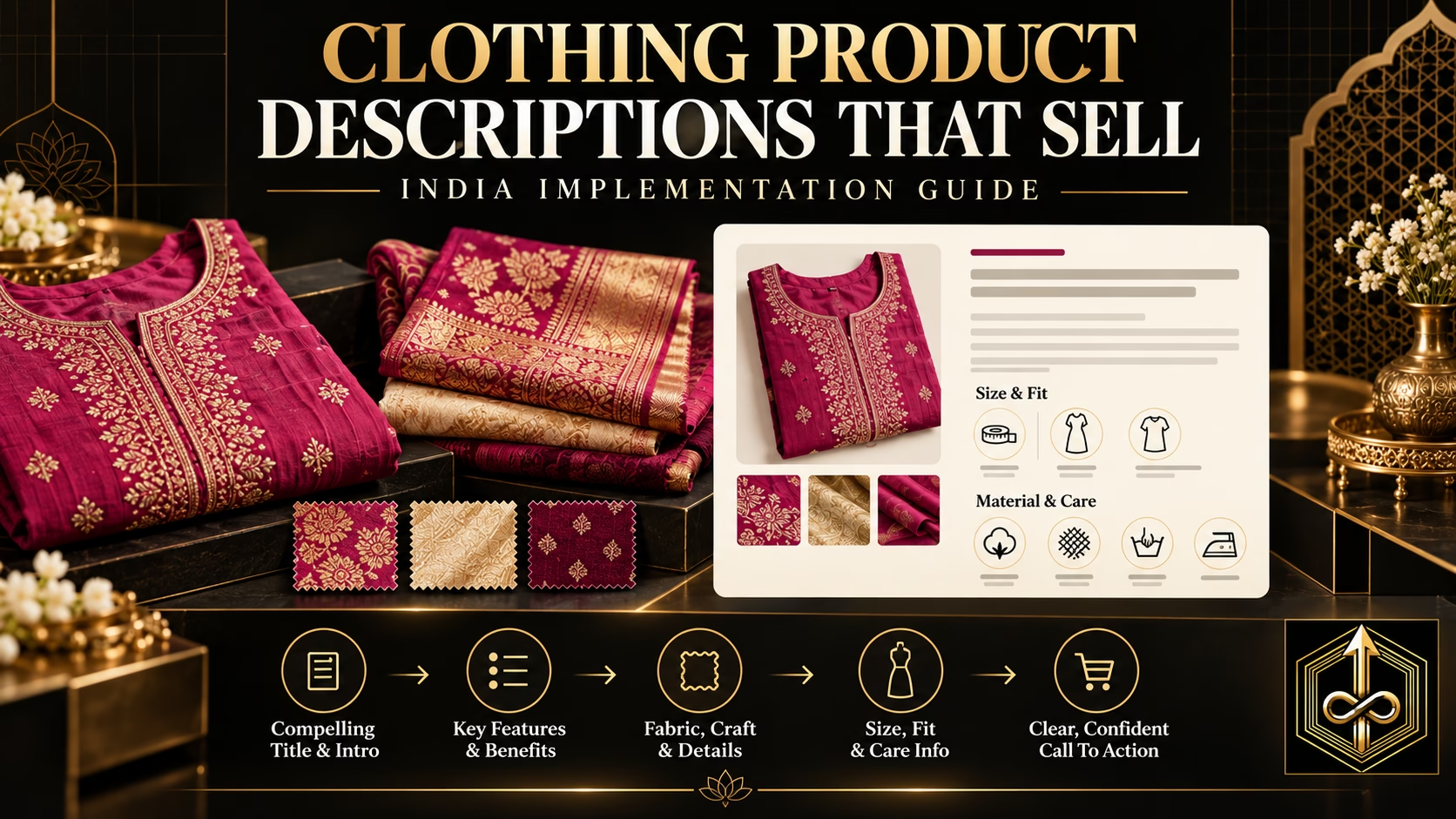
A clothing product description should help a buyer answer six questions quickly: What exactly is the garment? How will it look and feel? How will it fit? Where can it be worn? What is included? What should the buyer do next? For an Indian clothing brand, the strongest description combines a clear product title, a short benefit-led introduction, verifiable fabric and construction details, fit and size guidance, styling context, care instructions, dispatch information and a confident call to action. It must match the product images and the selected variant; persuasive language should never replace factual clarity.
This guide is for established Indian clothing, saree, kurti, ethnic-wear and boutique businesses that already have products or inventory. It is not a generic copywriting lesson and it does not assume that a beautiful adjective can rescue weak product information. The aim is to turn product knowledge into useful buying clarity, stronger product-page relevance and fewer avoidable doubts before checkout or WhatsApp.
- What a clothing description must do
- Information to collect before writing
- The MDP clothing-description framework
- Writing a clear product title
- The first two lines
- Features, benefits and evidence
- Fabric, craft and construction
- Fit, size and measurement language
- Colour, pattern and variation
- Set contents and inclusions
- Occasion and styling context
- Care, durability and expectations
- SEO without keyword stuffing
- Merchant feeds and structured data
- Before-and-after examples
- Templates by clothing category
- Scaling descriptions across a catalogue
- Using AI without inventing facts
- Descriptions inside the MDP Online Sales Engine
- Implementation checklist
- Frequently asked questions
1. What a Clothing Product Description Must Actually Do
A product description is not decoration below the price. It is part salesperson, part fitting assistant, part merchandising system and part source of product data. On a physical counter, a buyer can touch the fabric, hold the garment against the body, ask whether the sleeves are lined and check whether the dupatta is included. Online, the page must anticipate those questions.
The copy has four jobs. First, it must identify the item accurately. Second, it must translate relevant features into an understandable buying outcome. Third, it must reduce uncertainty about fit, fabric, colour, inclusions and care. Fourth, it must help search engines, shopping systems and internal site search understand the product without creating a mismatch between the page and the actual item.
Clarity comes before persuasion
“A breathtaking kurti for every beautiful moment” may sound polished, but it tells the buyer almost nothing. “Straight-fit cotton kurti with three-quarter sleeves, side pockets and a calf-length hem” provides a usable mental picture. The best description can include emotion, but emotion should sit on top of accurate facts.
One description cannot compensate for a weak page
Copy works with photography, size information, price, variants, delivery details and trust signals. If the colour swatch does not match the photograph, the size chart is generic, or the buyer cannot see the back of the garment, adding another paragraph will not solve the problem. Use this guide alongside MDP’s ecommerce product-page optimization guide and product photography guide.
2. Build a Product Fact Sheet Before You Write
The most common description failure begins before copywriting: the writer has incomplete product information. A supplier invoice or SKU name is not a product brief. Build a fact sheet for every style, and make the merchandising or production team responsible for accuracy.
Core identity fields
- Internal SKU and customer-facing product name
- Garment category and silhouette
- Brand, collection and product family
- Available colours and sizes
- Country of origin and manufacturer, packer or importer details where applicable
- MRP and selling price maintained in the correct product fields
Material and construction fields
- Fibre composition when verified, not merely a supplier nickname
- Fabric structure or weave when known
- Surface technique: print, embroidery, zari, sequins, mirror work, appliqué or handwork
- Lining details, opacity, stretch and fabric weight or seasonal feel
- Closure, pocket, slit, neckline, sleeve and hem details
- Whether motifs or placement can vary
Fit and measurement fields
- Intended fit: close, regular, relaxed, oversized, flared or made-to-measure
- Garment measurements by size
- Product length, sleeve length and rise or inseam where relevant
- Model height, worn size and important body measurements, only when recorded
- Alteration margin or elastic range when verified
- Size-chart method and measurement tolerance
Commercial and service fields
- What the customer receives in the box
- Whether accessories shown are included or only styled for photography
- Care instructions approved for that fabric and embellishment
- Dispatch lead time, made-to-order status and return eligibility
- Known reasons a buyer may choose or avoid the item
3. The MDP Seven-Layer Clothing Description Framework
A useful product page allows fast scanning and deeper evaluation. The following seven layers can be adapted to WooCommerce, Shopify or another ecommerce platform.
Layer 1: Searchable product title
Name the product using the garment type and its most decision-relevant attributes. Avoid making the buyer decode an artistic collection name before understanding the item.
Layer 2: Direct benefit-led introduction
Use one or two sentences to connect the product with the intended buyer, use case and differentiator. This is where you can create desire, provided the promise is supported by visible or documented evidence.
Layer 3: Quick decision bullets
List three to six facts a mobile buyer needs most: fabric, fit, key work, pocket or lining, set contents and occasion. Bullets are not a repetition of the paragraph; they are a fast decision layer.
Layer 4: Detailed product story
Explain the visual character, construction and wearing experience. Keep it product-specific. A paragraph that can be pasted onto every item is brand filler.
Layer 5: Fit and size support
Explain how the garment is intended to sit, which measurement the buyer should prioritise, and where to find the size chart. Do not use “true to size” unless your brand has defined what that means against a stable chart.
Layer 6: Care, inclusions and expectations
Clarify washing or dry-cleaning, set contents, accessories, possible handcrafted variation and colour-display limitations. This protects trust without making the page sound defensive.
Layer 7: Confident next step
Tell the buyer what to do: select a size, review the measurement chart, choose a colour, add to bag, or message for fit help. The call to action should resolve the next decision, not manufacture urgency.
4. How to Write Clothing Product Titles
The product title must work for people, onsite search, feeds and search engines. It should be descriptive enough to distinguish the item but not become a sentence containing every attribute.
A practical title formula
[Distinctive name or brand] + [colour/pattern] + [material or technique] + [garment type] + [important set detail]
Not every field is required. Use the attributes buyers actually use to differentiate products. “Aarohi Magenta Embroidered Straight Kurta Set with Dupatta” is clearer than “Aarohi Festive Dream 04.” A saree title might be “Ivory Floral Organza Saree with Unstitched Blouse Piece,” provided those details are accurate.
What to avoid
- All-capital titles and decorative punctuation
- Claims such as “best,” “number one” or “viral” without a defined basis
- Stuffing multiple near-identical keywords
- Putting size and colour in the parent title when the page has separate variants, unless the page represents one specific variant
- Using “silk,” “handloom,” “pure,” “organic” or regional craft labels without verification
Google Merchant Center treats title, description, colour, size and related attributes as separate pieces of product data. Its current product data specification emphasises accurate product information and consistency between the landing page and submitted data. That is another reason not to turn the title into a pile of keywords.
5. Write the First Two Lines for Decision-Making
The opening is the part most likely to be read before the buyer scrolls. It should identify the item, communicate the main reason to consider it and set realistic expectations.
Use buyer context, not empty praise
Weak: “Upgrade your wardrobe with this gorgeous must-have.” Stronger: “Designed for festive dinners and intimate celebrations, this straight kurta set pairs a fluid silhouette with detailed neckline embroidery and an easy matching bottom.” The second version supplies occasion, silhouette, visible detail and set context.
Do not overpromise the wearing experience
Words such as “breathable,” “lightweight,” “non-transparent,” “all-day comfort” and “wrinkle-free” are factual claims. Use them when the product team can support them. If the fabric feels lighter than a winter textile but you have not tested breathability, describe the construction rather than declaring a performance benefit.
6. Convert Features Into Benefits—With Evidence
A feature is part of the product. A benefit explains why that feature matters to the buyer. Evidence is the visible or verifiable reason the buyer should believe the benefit.
| Feature | Possible buyer benefit | Evidence or qualifier |
|---|---|---|
| Side pockets | Small essentials can stay within reach | Show pocket opening in a photo and state number/depth only if measured |
| Adjustable waist tie | Buyer can refine the waist fit | Show the tie and explain its adjustment range |
| Separate lining | More coverage and a cleaner fall | State lining fabric, placement and whether detachable |
| Three-quarter sleeves | Useful for buyers who prefer arm coverage without a full sleeve | Provide sleeve length by size if variation matters |
| Front opening | Easier dressing for some buyers | Identify functional buttons or zip; do not imply nursing-friendly unless designed and tested for it |
| Coordinated set | Reduces styling effort | List every included piece explicitly |
Do not force a benefit onto every detail. “Round neckline for a round-neck experience” adds no value. Some attributes are simply facts. The copywriter’s job is to explain relevance, not inflate the product.
7. Fabric, Craft and Construction Language
Fabric language is where many Indian clothing descriptions become misleading. Trade names, fibre composition, weave, finish and visual effect are not interchangeable. If a supplier calls a fabric “silk,” establish whether that means silk fibre, silk blend, art silk or only a silk-like surface.
Describe what is known
A strong line may include fibre content, weave or base fabric, weight or hand feel, stretch, opacity and lining. For example: “Non-stretch woven cotton fabric with a crisp hand feel; the yoke is lined, while the sleeves remain unlined.” This is more useful than “premium breathable fabric.”
Handle embroidery and handwork accurately
Identify whether work is machine embroidery, hand embroidery, hand-applied embellishment, print or weave. Do not use “handcrafted” as a mood word. If minor placement differences are expected, explain the type of variation without presenting defects as artistry.
For sarees, separate body, border, pallu and blouse information
A saree buyer may need fabric and work details for each component, overall length and width, blouse-piece status, tassels, fall and pico status, transparency, stiffness and drape. If a blouse shown on the model is styled separately, say so near the inclusions—not only in a distant disclaimer.
8. Fit, Size and Measurement Copy
Fit uncertainty is one of the most expensive forms of product-page ambiguity. The description should work with a product-specific size chart, not repeat it in vague language.
Explain the intended silhouette
Use terms consistently across the catalogue: fitted, close, regular, relaxed, oversized, A-line, straight, flared or boxy. Define these terms internally. If two merchandisers use “relaxed” differently, the buyer receives inconsistent guidance.
Body measurement versus garment measurement
State which type your chart uses. Body measurements help a buyer choose a size; garment measurements describe the physical item. Mixing them silently creates confusion. When both are provided, label them clearly and explain ease: the difference designed between body and garment measurement.
Use model information responsibly
“Model is 5’7” and wears size S” helps only when the buyer also knows the garment’s fit and relevant model measurements. Never estimate the model’s bust, waist or hip. If measurements were not recorded, omit them rather than inventing a complete-looking line.
Add a fit-help action
A useful callout is: “Compare the garment bust with a similar non-stretch kurta you already own. If you are between sizes or need help with ease, message us with your body bust and preferred fit.” This can connect the page to a controlled WhatsApp assistance process without turning every buyer into a manual-sales dependency.
9. Colour, Pattern and Product Variation
Colour names should be understandable and consistent. A poetic name such as “Moonlit Rose” may support brand storytelling, but pair it with a recognisable colour family such as dusty pink. Keep the same colour value across the page, structured data and Merchant Center feed.
Describe screen variation carefully
A standard note can say that colour appearance may vary slightly with lighting and screen settings. This is not permission to use inaccurate images. The primary photograph, variant swatch and delivered product should still represent the colour honestly.
Explain placement variation
With all-over prints, hand-block printing, tie-dye, hand embroidery or fabric cut from a repeating motif, placement may vary. State the expected variation specifically. “Print placement may differ slightly because each garment is cut from the same all-over fabric” is clearer than “actual product may vary.”
10. State Exactly What Is Included
In Indian fashion photography, styled layers and jewellery can make a set look more complete than it is. The description must separate included pieces from styling props.
Use an inclusions block
- Includes: kurta, trousers and dupatta
- Does not include: jewellery, footwear or handbag shown for styling
- Blouse status: unstitched blouse piece attached to saree / separate stitched blouse / blouse not included
- Lining: attached in kurta body / separate slip / not included
Put this near the quick facts, not at the bottom of a long accordion. The more the photograph can create a reasonable assumption, the closer the clarification should be to the image and purchase decision.
11. Occasion and Styling Context
Occasion language helps a buyer imagine use, but it should not turn every product into “perfect for weddings, festivals, offices, brunch and daily wear.” Choose contexts supported by the design, fabric, embellishment and comfort profile.
Use specific situations
“For festive office lunches and family get-togethers” is more useful than “for every occasion.” A heavily embellished set may suit a sangeet guest or festive dinner; a washable cotton kurti may suit everyday office dressing. The product does not need to serve everyone.
Give styling guidance that reduces effort
Recommend colour pairings, footwear category, jewellery scale, draping option or layering piece without claiming those accessories are included. For example: “Keep the neckline visible with small earrings, or add a longer necklace if you wear the dupatta over one shoulder.” Practical styling is especially valuable for customers buying for a defined event.
12. Care Instructions and Expectation Management
Care copy should come from fabric and production knowledge. “Dry clean only” is not automatically premium, and “machine wash” should not be used because it sounds convenient.
Make instructions operational
When verified, specify water temperature, wash method, separation of dark colours, drying approach, ironing temperature and protection for embellishment. If the item needs professional cleaning, explain it plainly. Keep care consistent on the website, garment label and packaging.
Disclose characteristics that affect expectations
Natural slubs, weave irregularities, minor handwork variation, colour transfer in deep dyes, shrinkage allowance or delicate embellishment may need explanation. Only describe characteristics that are genuinely associated with the product. A blanket “minor irregularities are not defects” note can undermine trust if it tries to excuse quality-control problems.
The Department of Consumer Affairs explains that packaged commodities in India carry mandatory declarations under the Legal Metrology framework, including manufacturer, packer or importer information and other prescribed details. Businesses should review the current official Legal Metrology guidance with a qualified compliance professional for their exact product and packaging situation. Product-description copy is not a substitute for statutory declarations.
13. Clothing Product Description SEO Without Keyword Stuffing
Search optimization begins with accurate product information and a page that satisfies a specific product intent. A product page is usually not the place to rank for every broad category term. It should be the best result for that exact item and its meaningful attributes.
Map one primary product intent
Identify the garment type, audience or use case and the most distinctive searchable attributes. A page for a black embroidered straight kurta set should naturally mention those facts. It does not need repeated phrases such as “buy kurta set online India” in every section.
Place information where systems can understand it
- Descriptive product title
- Unique visible description
- Variant fields for colour and size
- Image alt text describing the view, not a keyword list
- Product schema generated by the ecommerce system
- Consistent price, availability and SKU data
- Internal links from relevant collections and guides
Avoid duplicate supplier copy
If multiple retailers publish the same supplier paragraph, your page offers little unique decision support. Rewrite from your own verified fact sheet, add brand-specific fit guidance, product-specific image notes and original styling context. Do not change facts merely to appear unique.
Use collection pages for broader terms
A collection page can target an intent such as “festive kurta sets,” while each product page targets a specific style. This separation reduces internal competition and creates a clearer site architecture. The clothing ecommerce website guide explains how categories, products and supporting guides should connect.
14. Merchant Center, Variants and Structured Product Data
The visible description should agree with machine-readable data. Google’s official documentation explains that Product structured data can help Google understand product information, while Merchant Center feeds provide another route for rich product data. Eligibility does not guarantee a rich result, and markup must represent the visible product truthfully.
Keep variant information consistent
Colour, size, price, availability and image must follow the selected variant. Google also documents ProductGroup and Product variant structured data for grouping variants. Your platform or technical team should implement the markup; the copywriter’s responsibility is clean and consistent source information.
Do not hide critical facts only in images
A size chart image can be useful, but important sizing information should also be available as accessible text or structured fields. The same applies to material, set contents and care. Text improves accessibility, onsite search, customer support and data reuse.
WooCommerce product attributes are not prose
WooCommerce’s official variable-product documentation shows how attributes such as colour and size drive variations with their own price, stock and image controls. Keep structured attributes clean, and use the description to explain the wearing experience and decision context those fields cannot express.
15. Clothing Product Description Examples: Before and After
Example A: Kurta set
After: “A straight-fit magenta kurta set designed for festive dinners and family celebrations. The kurta features a detailed embroidered neckline, three-quarter sleeves and side slits, paired with coordinated straight trousers and a woven-border dupatta.
- Set of three: kurta, trousers and dupatta
- Non-stretch woven fabric; lining details as listed below
- Regular fit with garment measurements in the size chart
- Jewellery and footwear shown are styling references only
Select your usual size after comparing the garment bust with a similar kurta you own. Message us before ordering if you prefer extra ease.”
The revised version does not rely on “premium.” It identifies the silhouette, occasion, visible work, included pieces and next sizing action.
Example B: Saree
After: “An ivory organza saree with a softly structured drape, floral surface detailing and a coordinated unstitched blouse piece. The fabric has a translucent character; pair it with a suitable petticoat and blouse lining for coverage. The blouse worn by the model is styled for presentation and is not the stitched piece supplied. Review the product measurements and care instructions before placing the order.”
Example C: Everyday kurti
After: “A straight cotton kurti for regular office and everyday wear, finished with a round neckline, three-quarter sleeves and two side pockets. The woven fabric is non-stretch and intended for a regular silhouette. Compare the garment bust and hip measurements before selecting a size, especially if you prefer a relaxed fit through the hip.”
Example D: Co-ord set
After: “A two-piece printed co-ord set with a relaxed shirt and straight trousers, designed for easy day-to-evening styling. The shirt has a functional button front and curved hem; the trousers have an elasticated back waist and side pockets. The print placement may differ slightly because each piece is cut from an all-over printed fabric.”
16. Product Description Templates by Clothing Category
Templates should guide completeness, not make every product sound identical. Replace every bracket with verified information and delete fields that do not apply.
Kurta or kurti template
[Product name] is a [fit] [fabric] kurta designed for [specific use/occasion]. It features [neckline], [sleeve], [surface detail] and [pocket/slit/closure]. The fabric is [stretch/opacity/lining facts].
Fit: [fit guidance and measurement type]
Length: [verified length or size-based reference]
Includes: [piece list]
Care: [verified care]
Note: [relevant variation or accessory exclusion]
Saree template
[Product name] is a [fabric/weave] saree in [recognisable colour] with [border/body/pallu detail]. It creates a [soft/structured/fluid—verified] drape suited to [specific occasions].
Saree: [length/width when verified]
Blouse: [included status, material, stitched/unstitched]
Transparency/lining: [clear expectation]
Finishing: [fall, pico, tassels status]
Care: [verified instructions]
Note: [handmade/placement/colour variation where relevant]
Dress template
A [silhouette] [colour] dress with [key design detail], created for [specific occasion or use]. The [fabric] construction includes [lining/closure/pocket facts] and is intended to fit [fit statement]. Review [bust/waist/hip/length] garment measurements before ordering. Model information: [only verified data].
Three-piece ethnic set template
This coordinated set includes [piece 1], [piece 2] and [piece 3]. The [kurta/top] features [detail], while the [bottom] is shaped with [waist/fit detail]. The [dupatta/overlay] adds [verified visual or styling feature]. Designed for [occasion], the set can be styled with [non-included accessories].
17. Scale Product Copy Across a Large Catalogue
Scaling does not mean giving one prompt a spreadsheet and publishing every result. It means designing a controlled information system.
Create a product-information model
Define mandatory fields by product category. Sarees need different fields from trousers. Establish controlled vocabulary for fit, sleeve, neckline, opacity, work type and care. This reduces inconsistency and makes filtering, feeds and customer service more reliable.
Separate reusable policy from product-specific truth
Shipping, returns, payment and general colour-display guidance should live in central policy components. Do not paste a long generic policy into every product description. Product-specific dispatch, return exclusions or made-to-order conditions still need prominent placement.
Use quality-control gates
- Merchandising completes the fact sheet.
- Copy is drafted from approved fields.
- A second person compares copy with the physical item and images.
- Variant names, sizes, price and stock are checked.
- Compliance and care statements are reviewed by the responsible person.
- Page is previewed on mobile.
- Only then is the product published or syndicated.
Measure questions, not only clicks
Collect repeated pre-purchase questions from WhatsApp, calls, returns and reviews. If many buyers ask whether the dupatta is included, the page is unclear. If they ask which size to choose, examine chart structure and fit copy. Qualitative questions reveal gaps that traffic metrics alone cannot.
18. How to Use AI Without Inventing Product Facts
AI can help transform structured facts into readable alternatives, but it cannot inspect a garment that it has not received and verified. It should never decide fibre composition, handwork technique, durability, fit or care from a single photograph.
A safe input format
Give the system approved fields, target buyer, brand voice, output structure and prohibited claims. Tell it to mark missing information rather than filling gaps. Ask for a factual draft, then a human editor should compare every claim with the fact sheet and product.
Red-flag words for mandatory review
Pure, authentic, handmade, handloom, organic, sustainable, breathable, waterproof, anti-shrink, colourfast, wrinkle-free, hypoallergenic, luxury, limited edition and guaranteed are examples of terms that may create a factual, legal or expectation burden. This does not mean they are forbidden; it means they require support.
Do not create fake uniqueness
If five products share the same base fabric and construction, it is acceptable for factual sections to have a consistent structure. Make the visual details, fit notes and styling context product-specific. Artificially changing facts to avoid duplicate text is worse than using a controlled, accurate pattern.
19. Product Descriptions Inside the MDP Online Sales Engine
Descriptions affect more than Product Presentation. They connect every layer of the Meri Digital Pehchan Online Sales Engine.
Buyer Clarity
Know whether the buyer prioritises modest coverage, workwear practicality, festive impact, easy care, inclusive sizing or coordinated styling. Do not assume every clothing buyer values the same benefit.
Product Presentation
Copy, photography, video, swatches, size charts and merchandising must tell one consistent story. If text says “ankle length” while the photograph shows a calf-length garment, trust falls.
Converting Website
Place quick facts near the purchase controls, use readable accordions, keep the size guide easy to open and ensure the mobile page does not bury critical information.
Traffic
Accurate titles, attributes, descriptions and internal links help paid and organic systems understand the product. Traffic quality improves when the promise in an ad or search result matches the landing page.
WhatsApp and Sales Conversion
Use the page as the shared source of truth. Sales staff can link directly to fit, care or inclusions rather than typing inconsistent answers. MDP’s WhatsApp selling strategy shows how the channel should assist conversion rather than replace basic website information.
Retention and Scaling
Accurate expectations support better post-purchase experience. Catalogue standards also make it easier to train teams, onboard new products and reuse approved data across feeds and campaigns.
20. Clothing Product Description Implementation Checklist
- Product title identifies the garment and key differentiator.
- Opening explains the intended buyer or occasion without generic hype.
- Fabric and fibre claims are verified.
- Embroidery, print, weave and handwork are named accurately.
- Silhouette and intended fit use the brand’s controlled terminology.
- Body and garment measurements are not mixed.
- Model information contains only recorded facts.
- Set contents are explicit.
- Accessories shown but not included are disclosed near the decision area.
- Colour name matches the variant, image and feed.
- Placement or handcrafted variation is explained specifically.
- Transparency, lining, stretch and closure information is present where relevant.
- Care instructions are approved for the product.
- Dispatch or made-to-order timing is visible.
- Returns information is linked without copying the full policy.
- Quick bullets and detailed copy do not contradict each other.
- Primary keyword appears naturally in the page elements that describe the product.
- Product schema reflects visible price, availability and variants.
- Mobile view keeps type readable and critical facts scannable.
- Final page is compared with the physical product and photography.
- Repeated WhatsApp questions are fed back into page improvements.
21. Frequently Asked Questions
How long should a clothing product description be?
Use the length required to resolve the buying decision. A simple T-shirt may need fewer words than an embroidered three-piece set or handwoven saree. Prioritise completeness and scanning over a fixed word count. A short intro, decision bullets and structured details are usually more useful than one long paragraph.
Should every product description be unique?
Product-specific facts, fit guidance and visual details should be unique to the item. Reusable labels, care wording and policy links can remain consistent when the underlying information is genuinely the same. Do not invent differences merely to create different text.
Can I copy the supplier’s description?
Use supplier information as a source that still requires verification. Supplier copy often lacks your sizing method, customer context, photography notes and service information. Rewrite from an approved product fact sheet and preserve only accurate claims.
Where should I place keywords?
Use accurate searchable language in the product title, short description, headings where natural, image alt text, URL and product attributes. The exact fields depend on the site. Avoid repeating the same phrase unnaturally; useful product information is the priority.
Should I include price in the description?
Maintain price in the ecommerce platform’s price field so discounts, tax display, structured data and feeds remain consistent. Mention price in prose only when there is a clear merchandising reason and the text will be maintained whenever the price changes.
How should I write size information?
State whether the chart uses body or garment measurements, describe the intended fit, identify the measurements that matter most and provide product-specific lengths when possible. Tell buyers how to compare the item with a garment they own and offer fit assistance for uncertain cases.
What should a saree description include?
Include body, border and pallu details; fabric or weave when verified; measurements; blouse-piece status; transparency and drape expectations; fall, pico and tassel status; care; and any legitimate handcraft or motif-placement variation.
Can AI write all my clothing descriptions?
AI can draft from approved structured data, but a responsible person must verify every material, construction, fit, care and claim. Configure the workflow to flag missing fields rather than fabricate them.
Do product descriptions reduce returns?
They can reduce avoidable expectation gaps when paired with accurate photography, product-specific measurements and clear policies. No honest business should promise a particular reduction without measuring its own data and accounting for other changes.
Should I mention that colours may vary on screens?
Yes, when phrased reasonably, but it does not excuse inaccurate photography. Use calibrated, representative images and describe only the normal variation caused by lighting or display settings.
What is the best call to action?
Match the call to the unresolved decision: “Choose your size,” “Review the garment measurements,” “Select a colour,” “Add to bag,” or “Message us for fit help.” Avoid false scarcity or pressure that cannot be supported.
Should product descriptions contain shipping and returns information?
Show product-specific dispatch, made-to-order and return restrictions prominently. Link to the full site policy for general details. The page should not require a buyer to search elsewhere for a condition that materially affects the purchase.
What is the biggest clothing-copy mistake?
Replacing missing product information with adjectives. “Premium,” “stylish” and “comfortable” cannot tell a buyer what the product is, how it fits, what is included or whether it suits the intended occasion.
How often should descriptions be updated?
Review them when the product, supplier, construction, size chart, care advice, photography, policies or repeated customer questions change. Also check descriptions before restocking an old style because production details may have changed between batches.