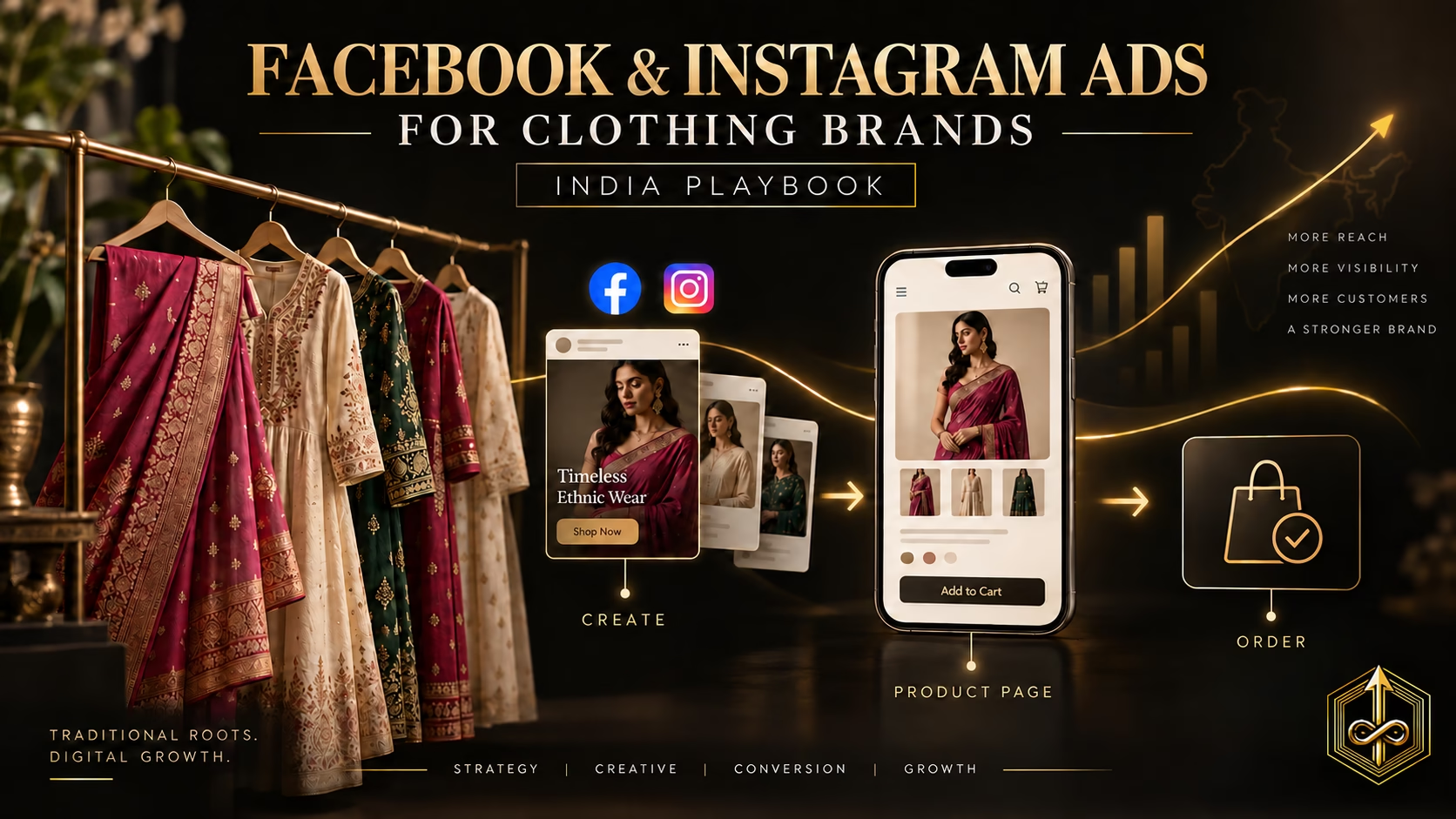
Facebook and Instagram ads can grow a clothing business when they are connected to the entire buying system—not treated as a shortcut for weak products, unclear positioning or a confusing website. The strongest setup starts with a defined buyer and commercially viable hero products, presents fit and fabric evidence through a disciplined creative system, sends traffic to a conversion-ready product page or an organised WhatsApp path, measures completed and delivered orders, and scales only what remains profitable after returns, shipping, discounts and advertising costs.
Direct answer: For an established Indian clothing, saree, kurti or boutique business, use Meta ads as a demand-and-conversion system. Prepare one clear buyer, one focused product collection, complete product evidence, reliable tracking and a fast mobile purchase path first. Then test multiple genuinely different creative angles inside a simple sales campaign, judge performance against contribution per delivered order, improve the page or WhatsApp handoff where buyers drop, and increase spend gradually only after the operating system can fulfil the additional orders.
What Facebook and Instagram Ads Must Actually Do for a Clothing Business
Clothing advertising has a difficult job. A potential customer cannot touch the fabric, confirm the drape, feel the lining, compare the colour under natural light or try the garment before paying. The ad must earn attention, but it must also begin reducing those uncertainties. A beautiful video that creates curiosity but leaves every practical question unanswered often produces clicks, comments and WhatsApp enquiries without producing enough confident orders.
A useful ad system performs four commercial functions. It attracts the right type of buyer, communicates why this product is relevant to her, transfers that interest to a product or assisted-sales experience, and gives the business enough reliable data to decide what to improve. Advertising is therefore not separate from merchandising, photography, website conversion, inventory, fulfilment or customer support. It exposes the strength or weakness of all of them.
Demand capture versus demand creation
Some people already know that they need a festive saree, office kurta set, wedding guest outfit or size-inclusive co-ord. Advertising can capture that existing demand by presenting a relevant option at the right moment. Other buyers are not actively searching. A styling transformation, fabric movement video or occasion-based story may create desire they did not have before seeing the product. These two situations need different creative messages. A search-aware buyer may respond to precise product evidence, while a discovery-stage buyer first needs a compelling reason to care.
The Online Sales Engine connection
The MDP Online Sales Engine provides a practical sequence: Buyer Clarity decides whom the advertising should persuade; Product Presentation turns physical quality into visible proof; a Converting Website or organised assisted-sales path removes friction; Traffic brings qualified people into that path; WhatsApp and Sales Conversion resolve remaining questions; Retention and Scaling improve the economics beyond the first purchase. If one layer is weak, more advertising spend usually magnifies the weakness.
This guide is deliberately different from the broader Meta Ads for ecommerce guide. It focuses on the category-specific decisions clothing owners face: fit communication, fabric credibility, colour representation, collection structure, creative fatigue, size questions, COD risk, return behaviour and the continuity between an ad and the exact garment page.
Advertising Readiness Audit: What to Fix Before Spending
Do not begin with Ads Manager. Begin with the business. A campaign cannot repair an undefined buyer, a randomly assembled catalogue, weak product images, unclear delivery promises or unreliable order confirmation. It may still generate activity, but the cost of that activity will hide the real problem.
Product readiness
Select products that deserve paid distribution. A suitable hero product has clear buyer relevance, enough available stock or a reliable replenishment plan, a price that supports acquisition costs, accurate size and fabric information, and visual characteristics that can be demonstrated. Avoid making the entire catalogue equally important. If the collection contains thirty unrelated garments for different buyers, the advertising message becomes vague and the landing experience becomes hard to navigate.
For a kurti business, the hero may be a workwear set known for breathable fabric and practical pockets. For a saree retailer, it may be a lightweight festive collection with drape videos and blouse details. For a boutique, it may be a limited made-to-measure occasionwear line with a clearly explained consultation process. The product should lead to a coherent promise, not merely have the highest available stock.
Operational readiness
Check whether the team can respond to WhatsApp enquiries, verify COD orders, update inventory, dispatch within the stated period, answer size questions consistently and process exchanges according to the published policy. A campaign that increases order volume while operations remain informal can create late dispatches, cancellations and negative feedback. Scaling demand before scaling fulfilment is not growth; it is deferred damage.
Conversion readiness
Open the purchase path on a mid-range mobile phone. Confirm that pages load, text is readable, product images are sharp, the size chart is usable, variants work, delivery and return information is easy to find, payment methods function and confirmation messages arrive. If the chosen path is WhatsApp, test how the conversation begins, who owns the response, which product details are available to the salesperson and how the buyer reaches a trackable order.
Readiness decision
Classify gaps into three groups: must fix before launch, can improve during the first test and can wait until scale. Broken checkout, inaccurate inventory, absent policy information and missing purchase tracking are launch blockers. A limited creative library or incomplete post-purchase sequence can be improved during testing. Advanced segmentation can wait. This prevents perfectionism without allowing fundamental defects into the campaign.
Buyer Clarity and Brand Positioning Before Targeting
Audience targeting begins before an audience is created in Meta. The business must know who the collection is for, what situation makes the product relevant, what alternatives the buyer is comparing and what risk prevents her from ordering. Interest selections cannot compensate for an unclear market position.
Build a buying-situation profile
Describe the buyer through decisions rather than generic demographics. “Women aged 25 to 45” is too broad. A stronger description is “working women who want polished Indian officewear that remains comfortable through a long day and is easy to repeat-style.” Another might be “saree buyers preparing for family functions who want a rich appearance without managing a very heavy drape.” This tells the creative team what to show and the copywriter what to explain.
Document five elements: occasion, desired outcome, practical constraint, emotional concern and proof needed. A premium jewellery buyer and a kurti buyer may both be women in the same city, but their decision process is different. For clothing, proof commonly includes garment movement, close fabric detail, front-and-back fit, model measurements, garment measurements, transparency, lining, sleeve and neckline views, wash care, exchange eligibility and real colour guidance.
Choose the positioning sentence
Create one internal sentence: “For [specific buyer and situation], this collection provides [valuable outcome] because [credible product or service difference].” Do not place the sentence mechanically in every ad. Use it to keep the campaign coherent. If a garment is positioned as premium, the visual treatment, product page, packaging, copy, discount strategy and service must support that position.
Translate clarity into creative angles
A creative angle is a reason to care, not merely a format. The same kurta set can be presented through comfort, fit confidence, fabric detail, versatile styling, office-to-dinner use, craftsmanship, inclusive sizing or occasion readiness. Each angle should answer a different buyer concern. Changing only the music or first line does not create a genuinely different test.
For a deeper foundation, use the ideal-customer identification guide for product businesses before finalising campaign briefs.
Products, Collection Architecture and the Offer
Advertising works better when the destination feels curated. A collection should make the next choice easier. Group garments by buyer need, occasion, silhouette, fabric, price level or seasonal purpose. Sending every ad to the homepage forces the visitor to restart the discovery process and often breaks the promise created by the ad.
Choose the right destination
Use a product page when the ad focuses on one garment and the product has enough evidence to support a decision. Use a tightly filtered collection page when the promise applies to several coordinated products, such as cotton office kurtis or lightweight wedding guest sarees. Use a guided WhatsApp path when meaningful customisation, premium consultation or stock confirmation is genuinely required. Do not use WhatsApp simply because the website is weak.
Design the offer without damaging the brand
An offer is the complete reason to act, not necessarily a discount. It can combine a relevant product, clear value, shipping terms, exchange confidence, bundle logic, limited availability, styling support or a useful bonus. Premium clothing brands should be especially careful with permanent sale messaging. If every ad trains people to wait for a lower price, the business creates dependence on discounting.
Examples include a coordinated kurta-and-dupatta set with clear set contents; a saree with an explained blouse piece and fall-pico option; a capsule officewear edit that reduces styling decisions; or a festive collection with dispatch cut-off guidance. State only conditions the business can honour. Do not invent scarcity, countdowns or customer results.
Protect unit economics
Before advertising a product, calculate the money remaining after product cost, packaging, shipping subsidy, payment fees, discount, expected return or RTO burden and other variable fulfilment costs. That contribution is what can fund acquisition and profit. Revenue alone is not a reliable scaling signal. The ecommerce profit, CAC and contribution-per-order guide explains the calculation in detail.
Tracking and Data Foundation
Tracking should represent real customer actions accurately enough to support decisions. It should not manufacture extra events to make dashboards look active. Before launch, verify the Meta Pixel, any Conversions API connection, domain configuration, product catalogue and checkout events through the tools available in Events Manager and the website platform.
Map the buying events
For a typical ecommerce path, important standard events include product viewing, adding to cart, starting checkout and purchasing. Meta’s official developer documentation provides implementation examples for events such as ViewContent, AddToCart and Purchase. Use the event that matches the action; do not send a Purchase event for a lead, WhatsApp click or unconfirmed COD enquiry. See Meta’s official Pixel event implementation documentation.
Keep browser and server events consistent
If the same conversion is sent from the browser and server, implementation must allow the platform to recognise the two signals as the same real-world action. Names, values, currency, product identifiers and order references should be consistent. Test that a single order is not counted as two. Tracking accuracy matters more than displaying a high event count.
Use product identifiers carefully
Catalogue ads depend on matching website product identifiers with catalogue items. Variants, sizes and colours can complicate this relationship. Decide whether identifiers represent the parent product or purchasable variant and keep the implementation consistent across the feed and events. An ad that shows an unavailable colour or leads to a mismatched variant damages both conversion and trust.
Respect consent and data responsibilities
Use customer information only through lawful, transparent processes appropriate to the business and location. Publish a clear privacy policy, configure consent mechanisms where required and avoid uploading lists whose collection or advertising use cannot be justified. Technical capability is not permission.
Create a tracking QA sheet
Record each event, trigger, expected URL or action, parameters, browser/server source, test result and owner. Repeat the test after checkout, theme, plugin, catalogue or payment changes. Tracking is infrastructure and must be maintained like payment or inventory infrastructure.
Unit Economics, Measurement and Budget Decisions
There is no universal “best daily budget” for clothing ads. A useful budget depends on product margin, conversion rate, expected signal volume, creative production capacity, fulfilment capacity and the amount the business can risk while learning. Copying another brand’s spend ignores these variables.
Define the primary commercial measure
For a prepaid ecommerce flow, cost per valid purchase and contribution after advertising are more meaningful than likes or clicks. For COD, placed orders can overstate performance if confirmations, cancellations, RTO and returns are ignored. Build a delivered-order view wherever operational data allows. For a consultation-led boutique, the path may require qualified appointments and paid orders rather than immediate online checkout.
Understand leading and lagging indicators
Leading indicators help locate friction: thumb-stop or early-video engagement indicates whether the opening earns attention; link click behaviour indicates whether the promise creates interest; landing-page views compared with clicks can expose load or handoff problems; product views, add-to-cart activity and checkout starts show deeper movement. The lagging indicators are valid purchases, delivered orders, contribution, repeat purchase and customer value.
Do not optimise one metric in isolation. A sensational hook may lower the apparent cost of attention while attracting people who never wanted the garment. A high click-through rate with poor product-page conversion can indicate message mismatch, unexpected price, weak evidence, slow load or a misleading creative.
Set a decision framework before launch
Write down what evidence is needed to keep, revise or stop a creative. Use both quantitative and qualitative information. Review comments, WhatsApp questions, size objections, checkout failures and cancelled-order reasons. When data is limited, avoid pretending that a small number of actions proves a permanent pattern. The purpose of the first test is learning, not declaring a winner forever.
Choose the Objective and Conversion Location
The campaign objective should match the business outcome. If the website can accept and track purchases, a sales objective aligned with purchase activity is normally more coherent than chasing engagement. If a premium boutique requires a real consultation before purchase, the chosen lead or messaging setup should measure meaningful progress rather than cheap unqualified conversations.
Website purchase path
Use the website path when customers can understand the product, select the correct option, pay or choose COD and receive confirmation without requiring a salesperson. This creates a scalable experience and clearer event measurement. It also makes the quality of the product page critical.
WhatsApp purchase path
Use messaging when the buyer reasonably needs assistance: customised blouse work, made-to-measure garments, premium styling consultation, complex set coordination or availability confirmation. The ad should pre-qualify by showing the style, price context and key conditions. Otherwise the sales team receives many “price?” chats from people who were never suitable buyers.
Do not mix incompatible outcomes
A campaign cannot simultaneously be judged as a reach exercise, follower campaign, lead campaign and purchase campaign. Choose a primary outcome and treat secondary behaviour as diagnostic. This makes creative and landing decisions clearer and prevents the team from defending a campaign with whichever vanity metric looks best that week.
A Practical Campaign Structure for Clothing Brands
Simplicity improves diagnosis. Newer advertisers often build too many campaigns, tiny audiences and overlapping ad sets. Budget becomes fragmented and each segment receives too little evidence. Begin with a structure the team can explain on one page.
Prospecting
Prospecting introduces products to people who have not recently interacted with the brand. Organise tests around a clear product group and outcome. Keep genuinely different creative angles together where the platform can compare them, unless a specific controlled experiment requires separation. Broad or automated audience expansion can be appropriate when tracking and creative signals are strong, but it is not a substitute for a clear buyer and offer.
Retargeting
Retargeting can address known visitors, product viewers, engaged users, cart users or checkout users when the audience size and business volume justify it. The message should advance the decision. A product viewer may need fabric, fit or policy evidence. A cart user may need delivery or exchange clarity. Repeating the exact prospecting ad does not necessarily resolve the remaining objection.
Existing customers
Customer campaigns should focus on complementary products, new collections, replenishment categories or relevant seasonal needs. Exclude recent purchasers from acquisition promotions when the same offer would create dissatisfaction. Retention advertising should complement owned channels such as WhatsApp and email, not replace them.
Campaign naming and governance
Use names that reveal objective, market, product group, audience role and date or test. Maintain a change log. If several people edit campaigns without recording changes, the business cannot distinguish a platform shift from an internal intervention. Give each test one owner and one written hypothesis.
Audience Strategy Without Overcomplication
Meta’s delivery systems increasingly use campaign signals, creative and conversion data to find responsive people. This does not remove the need for customer knowledge. It changes where that knowledge is expressed: in the product, creative, copy, landing page, customer lists and conversion events—not only in a long list of interests.
Broad and automated audiences
A broad setup gives the system room to learn, but it needs strong creative that clearly calls the intended buyer. If an ad shows an officewear problem, realistic price context, appropriate styling and garment evidence, it naturally filters attention better than a generic fashion montage. Use necessary location, age or other constraints only when they reflect genuine commercial limits.
Interest-based audiences
Interests can provide a useful comparison or starting point when data is limited, but they are imperfect proxies. Avoid stacking so many conditions that delivery becomes narrow and unstable. Test interests as a deliberate hypothesis: for example, an occasion or lifestyle related to the collection. Do not assume an interest label guarantees purchase intent.
Customer and lookalike inputs
Customer lists can be useful when consent and platform requirements are satisfied. Build inputs from meaningful groups such as delivered purchasers, repeat purchasers or high-value category buyers instead of mixing every lead and enquiry. A source audience is only as useful as the business meaning of its members.
Geography and serviceability
Target only locations the brand can serve reliably. Separate regions when logistics, language, climate, buying occasion or economics genuinely require different creative or operational decisions. Do not create city-level fragmentation merely because the interface allows it.
The Clothing Ad Creative System
Creative is where buyer understanding becomes visible. Clothing brands need more than periodic shoots. They need a repeatable system that produces assets for different objections, stages and placements while preserving accurate representation.
Build the evidence library
For every hero garment, capture a clean front view, back view, side or movement view, close fabric texture, neckline, sleeves, closures, lining, pockets where relevant, waistband or fit details, embroidery or print detail, full set contents, model measurements, size worn, garment measurements and colour guidance. Sarees require drape movement, border, pallu, blouse piece and close weave or work. The ecommerce product photography guide explains how to create evidence instead of decoration.
Create angle families
Organise assets into angle families. A problem-solution angle begins with a familiar frustration such as stiff festive wear or uncertain online fit. A transformation angle shows the finished look and how it comes together. A product-proof angle demonstrates fabric, construction and movement. An occasion angle places the garment in a relevant use context. A comparison angle explains a meaningful difference without making unverifiable claims. A styling angle shows several legitimate ways to wear the same piece.
Design strong openings
The first moment should communicate product, buyer or tension quickly. Open with the garment on-body, a visually clear transformation, a direct buyer question, a close movement shot or the strongest proof. Avoid long logo animations. Branding should be recognisable but should not delay relevance.
Create for placements
Build vertical video deliberately for Reels and Stories, with essential text and product details kept away from interface-obstructed areas. Meta’s official Reels advertising guidance recommends creating for the vertical environment, using audio appropriately, keeping messages in safe areas and testing through the platform’s available placement and A/B-testing tools. Review the current official Meta Reels ads guidance because product controls and recommendations can change.
Static images and carousels still have roles
A sharp static image can communicate one silhouette or offer quickly. A carousel can sequence front, detail, fit, colour and set contents. Use the format that best carries the evidence. Do not force every idea into video merely because video is popular.
Creator and customer content
Creator content can demonstrate fit and styling in a relatable context. Give creators accurate product facts, required disclosure guidance and freedom to speak naturally without inventing results. When there is a material connection, follow applicable disclosure requirements. The ASCI influencer advertising guidelines explain disclosure responsibilities in India.
Creative quality control
Check colour accuracy, garment details, spelling, price, inclusions, availability, policy claims and landing-page match before launch. Never use generated or heavily edited visuals that misrepresent embroidery, fabric, jewellery, body fit or set contents. The creative promise must be deliverable by the actual product.
Ad Copy and Calls to Action That Support the Sale
Clothing copy should help the buyer interpret what she sees. It does not need to repeat every product detail, but it should establish relevance, clarify the valuable difference, reduce a key uncertainty and tell the buyer what to do next.
A practical copy sequence
Begin with the buying situation or desired outcome. Introduce the product as the relevant response. Add two or three concrete proofs. Clarify any essential condition such as set contents, fabric, dispatch or exchange. End with a direct action linked to the destination. Avoid empty adjectives such as “best,” “luxurious” or “premium” unless the visual and product evidence explain what the term means.
Kurti example
“Officewear that still feels comfortable at the end of the day. This cotton kurta set includes a straight kurta, coordinated bottom and lightweight dupatta, with garment measurements available on the product page. View colours, fit details and delivery information before choosing your size.” This copy sets a situation, identifies the product and points to evidence without fabricating urgency.
Saree example
“Want a festive saree with presence but an easier drape? See the border, pallu, blouse piece and fabric movement in the complete product video. Open the page for length, care, dispatch and return details.” The copy addresses a decision tension rather than announcing a sale without context.
Call-to-action continuity
“Shop now” should lead to a purchasable product or relevant collection. “Message us” should open a prepared conversation with product context. “Learn more” should lead to meaningful information. A vague call to action followed by an unrelated homepage creates avoidable friction.
Product Page and Website Conversion After the Click
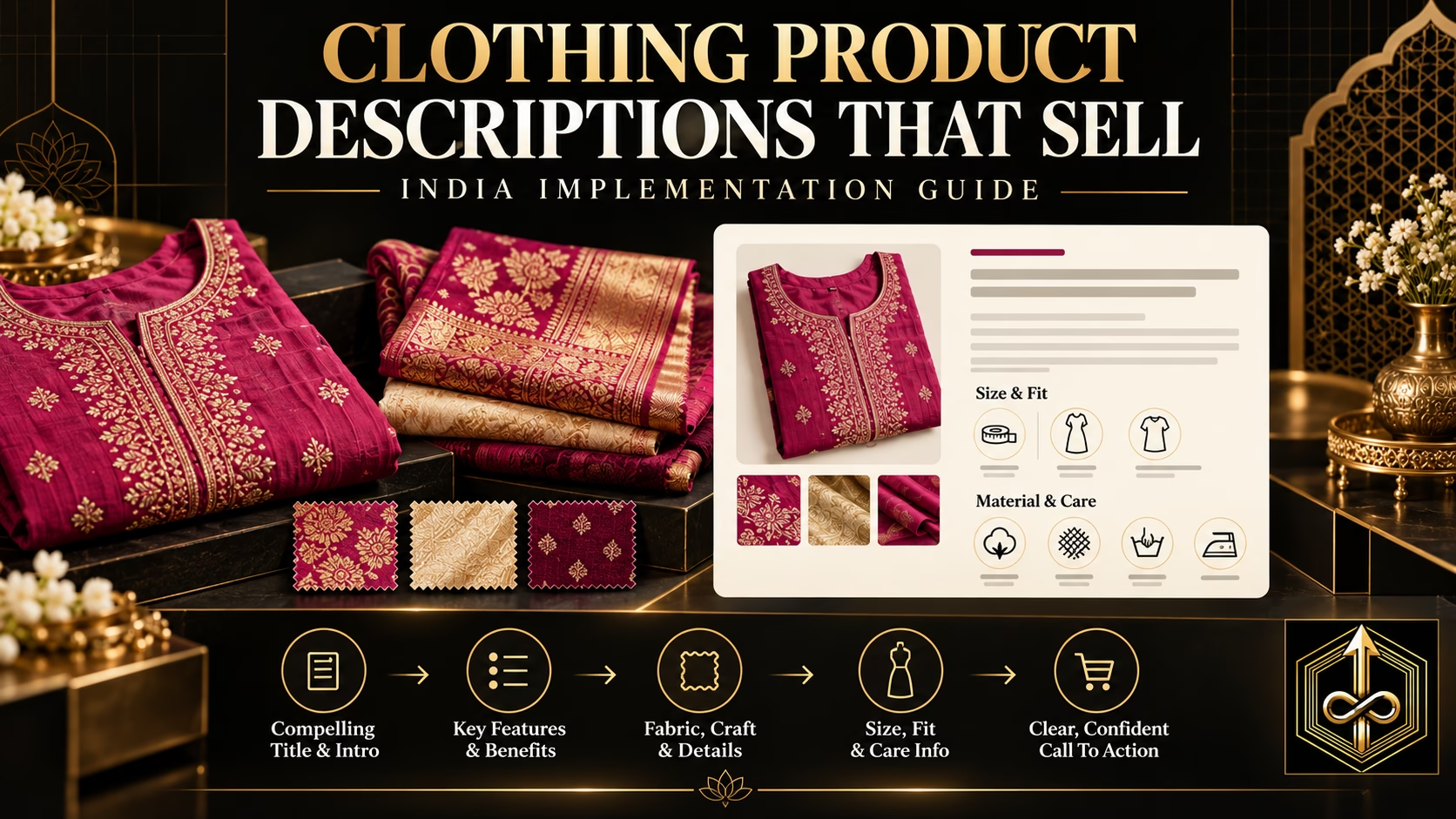
The product page must continue the ad’s promise. If the ad features a magenta kurta set, the click should not open a general category with dozens of unrelated items. Preserve the same product, colour context, offer and evidence so the visitor knows she arrived in the right place.
Above-the-fold requirements
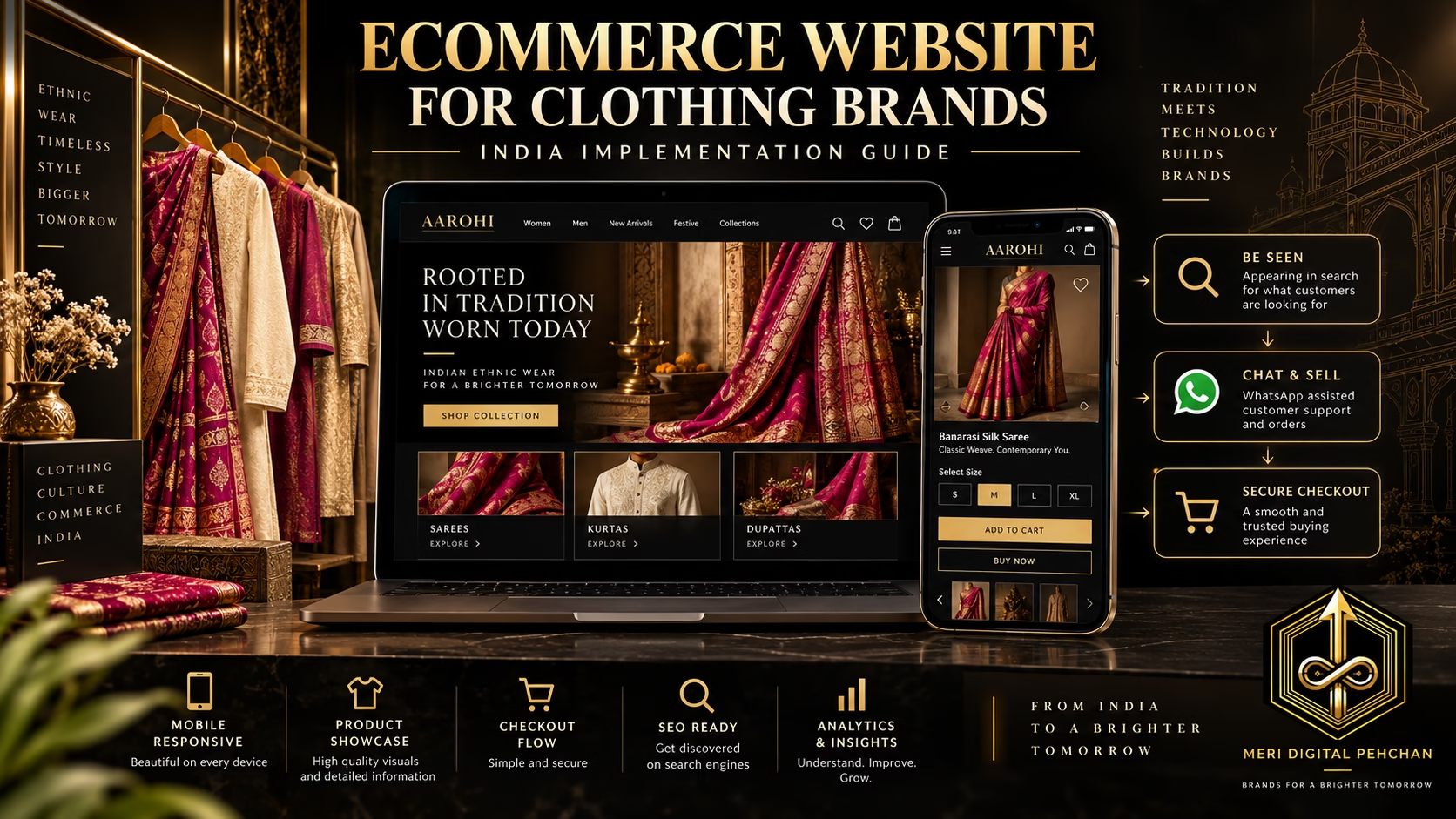
On mobile, show the product clearly, provide the price, selectable options, concise value, availability context and a usable purchase action. Important information should not be hidden behind decorative design. Sticky actions can help when they do not cover content or interfere with variant selection.
Fit and fabric confidence
Use garment measurements, model information, measurement instructions, fit notes and size support. Explain fabric composition where known, feel, stretch, lining, transparency, weight or drape in accurate language. Do not replace measurable information with “free size” or “premium quality.”
Trust and policy clarity
Display delivery expectations, shipping charges, COD terms, exchange or return conditions, care instructions, secure payment cues and reachable support. Buyers should not need to start a chat to discover basic rules. For a detailed page framework, use the ecommerce product-page optimisation guide.
Speed and technical QA
Compress images responsibly, avoid excessive scripts, test variant interactions and check checkout on real devices. Compare outbound clicks with landing-page visits. A large difference can indicate slow load, broken handoff, accidental clicks or measurement inconsistency. Do not respond by changing targeting before checking the destination.
WhatsApp and Assisted Sales Conversion
WhatsApp can increase confidence when the conversation is designed as part of the buying journey. It becomes expensive when every ad sends poorly qualified people into an unstructured inbox.
Pre-qualify in the ad
Show the product, price context and important conditions before asking for a message. A premium boutique should say when customisation is available and what the process involves. A saree seller should attach product context automatically so the salesperson knows which item the buyer saw.
Use a response framework
Start by acknowledging the exact product and question. Ask only the information needed to recommend correctly. Provide evidence such as size details, fabric video, delivery estimate or policy link. Confirm the selected product and variant before payment. Share an order record and fulfilment updates. The WhatsApp selling strategy for product businesses provides the complete operating system.
Measure meaningful outcomes
Track conversations by source, qualified enquiries, payment links issued, orders placed, confirmations and delivered orders where feasible. A cheap message is not useful if the person had no product fit or purchase capacity. Feed operational learning back into creative: repeated questions often reveal missing ad or product-page information.
Creative Testing and Optimisation
A test should answer a question. “We launched six ads” is not a learning plan. Define the variable, hypothesis, primary outcome and review method before spending.
Test angles before minor variations
Start with genuinely different reasons to buy: comfort, fit confidence, craftsmanship, occasion, styling versatility, fabric behaviour or convenience. Within a promising angle, test openings, demonstrations, copy length, format or offer presentation. This hierarchy prevents the team from producing many near-identical ads and calling it diversification.
Separate creative learning from business noise
Record product stock, price changes, website incidents, delivery delays and promotional changes during the test. Performance may shift because the best size sold out, the page slowed down or a coupon failed. Ad data without operational context can create the wrong conclusion.
Use a creative scorecard
For each asset, record buyer, angle, product, format, opening, proof, offer, destination, launch date and result. Add qualitative feedback: common comments, questions, confusion and reasons given by salespeople. Over time, the business develops an evidence-based creative library rather than relying on personal taste.
Avoid constant intervention
Do not edit campaigns simply because hourly or daily results fluctuate. At the same time, do not protect obviously broken experiences in the name of “letting it learn.” Fix tracking, disapproved claims, unavailable products, broken pages and misleading creative immediately. Judge normal performance with enough business context to make a responsible decision.
Diagnose Performance by Finding the Broken Layer
When clothing ads do not produce profitable orders, locate the constraint instead of changing everything at once. The existing guide on why clothing business ads fail covers the wider diagnosis; the framework below can be used during weekly reviews.
Weak attention
If relevant people do not stop or engage, inspect the opening, product visibility, visual clarity, buyer relevance and format. The creative may look like a catalogue image without a reason to care. Improve the first frame and angle before assuming the audience is wrong.
Attention without qualified clicks
If people watch but do not continue, the content may entertain without presenting a product decision. Clarify what is sold, for whom, at what positioning and why the next step is useful. Make the action visible.
Clicks without landing-page progress
Check load speed, destination accuracy, product availability, price surprise, mobile layout and tracking. Compare the ad promise with the page. If the creative shows one garment but the page opens another colour or general collection, correct the continuity.
Product views without cart activity
Investigate fit confidence, fabric evidence, value perception, size availability, delivery, policy visibility and page usability. Review session behaviour and customer questions where available. Do not immediately add a discount; identify the unanswered decision first.
Carts or checkouts without purchase
Test payment methods, shipping charges, COD availability, coupon behaviour, account requirements, error messages and mobile checkout. Follow up only with appropriate consent and frequency. A checkout problem is not a targeting problem.
Placed orders without delivered profit
Study COD confirmation, cancellations, RTO, return reasons, product accuracy, sizing, dispatch and courier performance. Optimising only for placed orders can direct spend toward segments or offers that look good in Ads Manager but lose money operationally.
Scaling, Retention and the 30-Day Operating Plan
Scaling means increasing profitable delivered demand without breaking creative quality, customer experience or fulfilment. It is not simply raising budgets.
Conditions for scaling
Confirm that tracking is stable, the product has stock or replenishment, contribution remains acceptable, customer complaints are controlled, the site can handle traffic, support can respond and fulfilment can dispatch on time. Identify whether performance depends on one creative, one product or one temporary promotion. Fragile success needs diversification before aggressive spend.
Ways to scale responsibly
Increase budget gradually, expand proven creative angles to new executions, introduce adjacent products for the same buyer, improve conversion rate, strengthen repeat purchase and test new markets with deliberate localisation. Maintain a control set so the team can distinguish a new test from the existing engine.
Retention improves acquisition economics
The first order should begin a customer relationship. Capture product and preference data appropriately, send useful order and care information, request feedback, recommend relevant complements and announce collections based on genuine interest. Repeat purchase can improve the amount the business can responsibly invest in acquiring a customer, but only if the retention system is real rather than assumed.
Days 1–7: foundation
Choose the buyer, hero product group and offer. Complete contribution calculations. Audit inventory, product evidence, mobile pages, policies, checkout, tracking and WhatsApp handoff. Create the campaign brief and QA sheet. Do not launch until critical blockers are resolved.
Days 8–14: creative production
Produce assets across at least several distinct angle families. Write copy that matches each angle. Create vertical, static and carousel adaptations where the evidence suits those formats. Confirm every price, product detail and landing URL. Prepare catalogue items if the strategy uses them.
Days 15–21: controlled launch
Launch a simple structure with documented hypotheses. Monitor technical integrity, comments, stock and the buying path. Avoid unnecessary edits. Record signals consistently and investigate any sudden discrepancy between clicks, page views, checkout and recorded orders.
Days 22–30: diagnosis and iteration
Review by creative angle, product and commercial outcome. Identify the strongest constraint. Produce the next creative batch from actual learning. Improve the landing page or sales process where needed. Scale only the combination that remains viable after operational costs and order quality are considered.
Facebook and Instagram Ads Implementation Checklist
Buyer and positioning
- One primary buyer and buying situation are documented.
- The product promise and credible difference are clear.
- Major purchase objections and proof requirements are listed.
- Creative angles reflect real buyer decisions, not random trends.
Product and economics
- Hero products have adequate stock or replenishment.
- Prices, set contents, variants and delivery promises are accurate.
- Contribution per delivered order has been calculated.
- Discounts and shipping subsidies fit the economic limit.
- Return, cancellation and RTO effects are part of reporting.
Website and sales path
- Every ad opens the correct product or collection.
- Mobile page speed and layout have been tested.
- Fit, fabric, model and garment measurements are available.
- Delivery, COD, return and exchange information is visible.
- Checkout, payment and confirmation work.
- WhatsApp conversations carry product context and have an owner.
Tracking
- Pixel and server implementation have been tested where used.
- Standard events match real actions.
- Browser and server versions of the same action are not double-counted.
- Currency, value and product identifiers are consistent.
- Catalogue items match website variants and availability.
- Consent and privacy processes have been reviewed.
Creative and campaigns
- Assets show the actual garment accurately.
- Front, back, movement, fabric, fit and detail evidence exist.
- Tests contain genuinely different angles.
- Vertical assets respect placement safe areas.
- Claims, prices, captions and URLs have been quality-checked.
- Campaign names and hypotheses are documented.
- Prospecting, retargeting and customer roles are clear.
Review and scaling
- Primary commercial outcome is defined.
- Leading indicators are used for diagnosis, not vanity reporting.
- Delivered orders and contribution are reviewed where possible.
- Stock, support and fulfilment can handle increased volume.
- The next creative batch is based on recorded learning.
- Retention communication is ready before scale.
Frequently Asked Questions
Are Facebook or Instagram ads better for a clothing business?
They are placements inside the same Meta advertising ecosystem, and the best mix depends on the buyer, creative and objective. Build assets suitable for the placements available, review performance by meaningful outcomes and avoid assuming one platform is universally better. Younger or more visual audiences do not automatically make Instagram profitable, and Facebook delivery should not be rejected without evidence.
How much should an Indian clothing business spend on Meta ads?
There is no responsible universal amount. Start from contribution per delivered order, the amount the business can risk during learning, the expected volume needed for decisions, creative capacity and fulfilment capacity. A budget copied from another brand can be too small for its structure or dangerously large for your economics.
Should a new clothing advertiser use broad targeting or interests?
Either can be tested. Broad delivery needs clear creative and reliable conversion signals. Interests can provide a deliberate starting hypothesis but are imperfect proxies. Keep the comparison simple, avoid excessive fragmentation and judge buyer quality plus commercial results rather than only reach or click cost.
Should clothing ads lead to a website or WhatsApp?
Use a website when the product can be understood and purchased independently. Use WhatsApp when meaningful consultation, customisation or complex selection is necessary. Whichever path is chosen, the ad must provide enough context and the destination must preserve product, price and promise continuity.
Is boosting an Instagram post enough?
Boosting can distribute existing content, but an ecommerce sales system requires deliberate objectives, conversion tracking, destination design, creative testing and commercial reporting. Use Ads Manager or the appropriate platform workflow when the business needs control over those decisions.
Which clothing ad creative usually works best?
No format wins universally. Strong clothing creative normally makes the product and buyer relevance clear, demonstrates fit or fabric truthfully and resolves a meaningful concern. Test angle families such as comfort, fit confidence, occasion, craftsmanship, styling and convenience before producing many cosmetic variations.
How many ads should run at the same time?
The number should fit the available budget and learning plan. Too many ads can fragment delivery; too few can make the account dependent on one idea. Start with several genuinely distinct concepts that the budget can support, then replace or expand them through a documented creative cycle.
How long should a clothing ad test run?
Use evidence rather than a fixed universal number of days. Consider spend relative to the expected outcome cost, the amount of conversion activity, normal weekly demand variation and whether technical or inventory issues affected the period. Avoid both hourly overreaction and unlimited spending on a clearly broken path.
Why do clothing ads get clicks but no sales?
Common causes include curiosity-driven creative, price or product mismatch, slow landing pages, insufficient fit and fabric evidence, unavailable sizes, unclear delivery or exchange conditions, checkout problems and unqualified traffic. Diagnose the exact transition where buyers stop before changing the whole campaign.
Should a clothing brand offer COD in ads?
COD is a business decision, not merely an advertising tactic. Evaluate buyer demand, confirmation process, fraud controls, courier serviceability, RTO economics and the effect on delivered contribution. If offered, explain conditions clearly and measure confirmed and delivered outcomes, not only orders placed.
Do Meta ads require a product catalogue?
Not every campaign requires one. A catalogue becomes valuable for structured product advertising, retargeting and showing relevant items at scale. It must remain accurate, with consistent identifiers, prices, availability, images and destination URLs. A poor feed creates a poor customer experience.
Can ads fix a clothing business that is not selling organically?
Ads can reveal demand and accelerate learning, but they cannot reliably repair unclear positioning, weak products, misleading presentation, broken checkout or poor fulfilment. Fix fundamental readiness first, then use paid traffic to test and scale a coherent system.
What should be reviewed every week?
Review tracking integrity, spend, valid purchases, delivered-order quality, contribution, stock, creative performance, landing-page progress, repeated objections, checkout problems, cancellations, returns and fulfilment capacity. Finish the review with specific actions and owners rather than a dashboard screenshot.
Does this setup guarantee profitable sales?
No advertising structure or SEO article can guarantee sales or ranking. Results depend on demand, product-market fit, competition, economics, execution, platform delivery and customer experience. This framework improves decision quality and reduces preventable waste, but it must be tested against the business’s real data.
Final Principle
The winning advantage for an established clothing business is not a secret audience or one viral creative. It is the ability to connect customer clarity, accurate product evidence, a conversion-ready buying path, trustworthy measurement, disciplined creative production, assisted selling, fulfilment and retention. Meta ads then become a controllable source of learning and demand rather than a repeated gamble.
Build the system in that order. Advertise products the business can fulfil, show what buyers need to believe, send them to a path that continues the promise, measure the real commercial outcome and scale only when the complete engine remains healthy.